The Explosive History of the MAGA Slogan—America’s Most Divisive Battle Cry
On December 16, 2025, Reuters/Ipsos reported President Donald Trump’s approval rating at 39%, with economic concerns dragging it down.
That’s one snapshot of why “Make America Great Again” is still relevant now: it’s no longer just a campaign line. It’s a brand, a coalition label (“MAGA”), and—depending on who you ask—a promise of restoration or a warning flare about where the country is headed.
But the phrase didn’t start with Trump. Its political history is longer, and its meaning has shifted with each era that picked it up.
Who used it first—and what it meant then
1) Ronald Reagan and the “crusade” mood of 1980
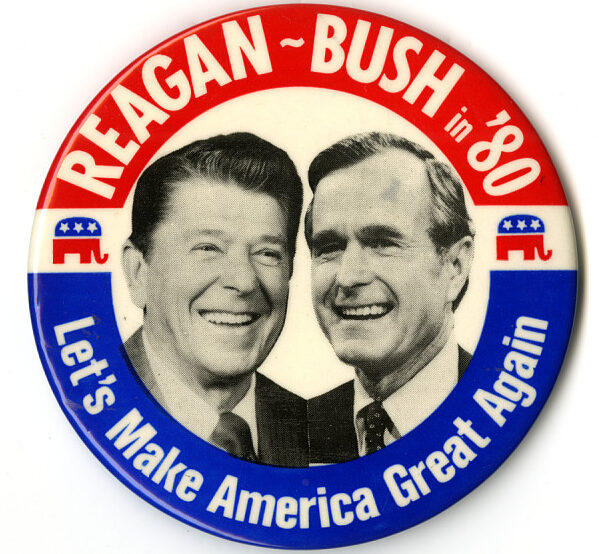
The earliest high-profile presidential use is tied to Ronald Reagan’s 1980 campaign. The Smithsonian’s National Museum of American History describes a 1980 Reagan campaign button and notes that Reagan “originated the slogan.”
In Reagan’s July 17, 1980 Republican National Convention acceptance speech, he framed the country as drifting—economically and geopolitically—and called for a “great national crusade to make America great again.”
The 1980 Republican Party platform echoed that same restoration theme (“let us now, together, make America great again”).
What “great again” meant in 1980: a response to perceived national decline—stagflation, energy anxiety, and Cold War unease—packaged as optimism through renewal.
Who else used it—and what they meant
2) Bill Clinton: “great again” as community and hope
Before the slogan became shorthand for right-wing populism, Bill Clinton used essentially the same phrase in his October 3, 1991 announcement speech: “Together we can make America great again, and build a community of hope…”
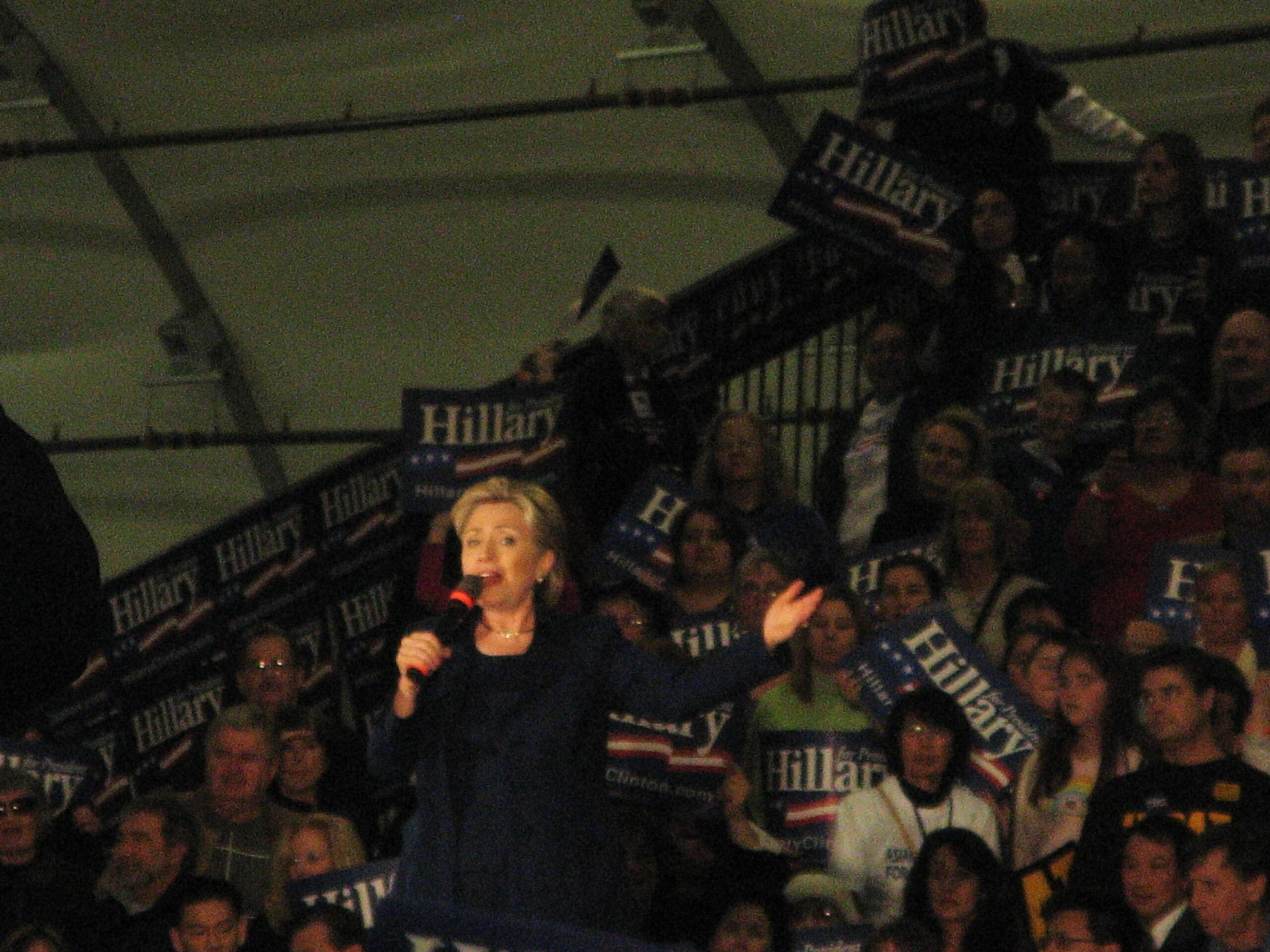
And during Hillary Clinton’s 2008 campaign, her team released a radio ad featuring Bill Clinton, again leaning on the “great again” language in the context of economic opportunity and shared progress.
What “great again” meant for Clinton: less “return to a lost past,” more “rebuild the middle class” and “restore opportunity” after recession and political cynicism—still nostalgic, but aimed at inclusion and growth.
What it means now—and who is using it
3) Donald Trump: a slogan becomes “MAGA,” a movement label
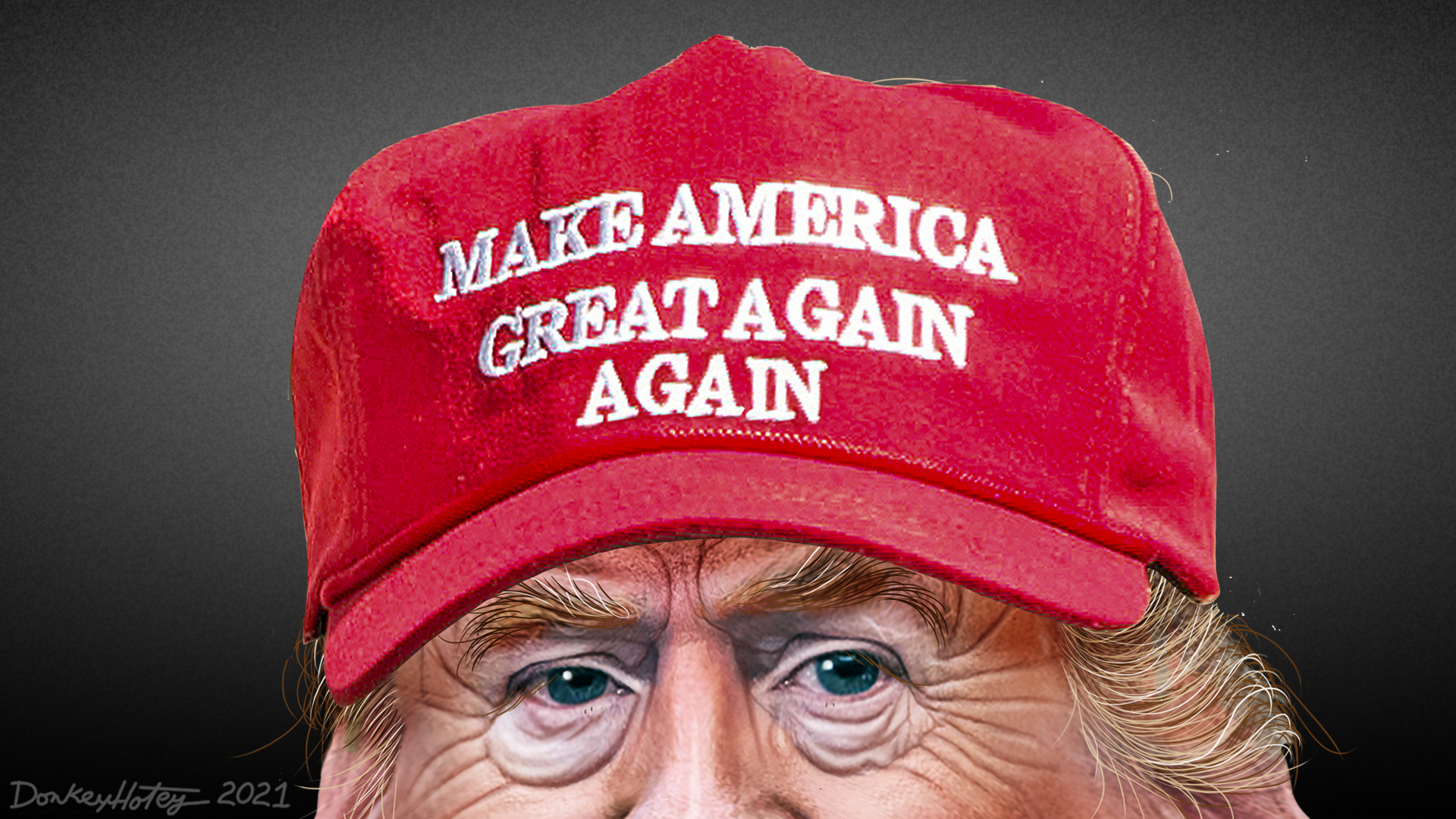
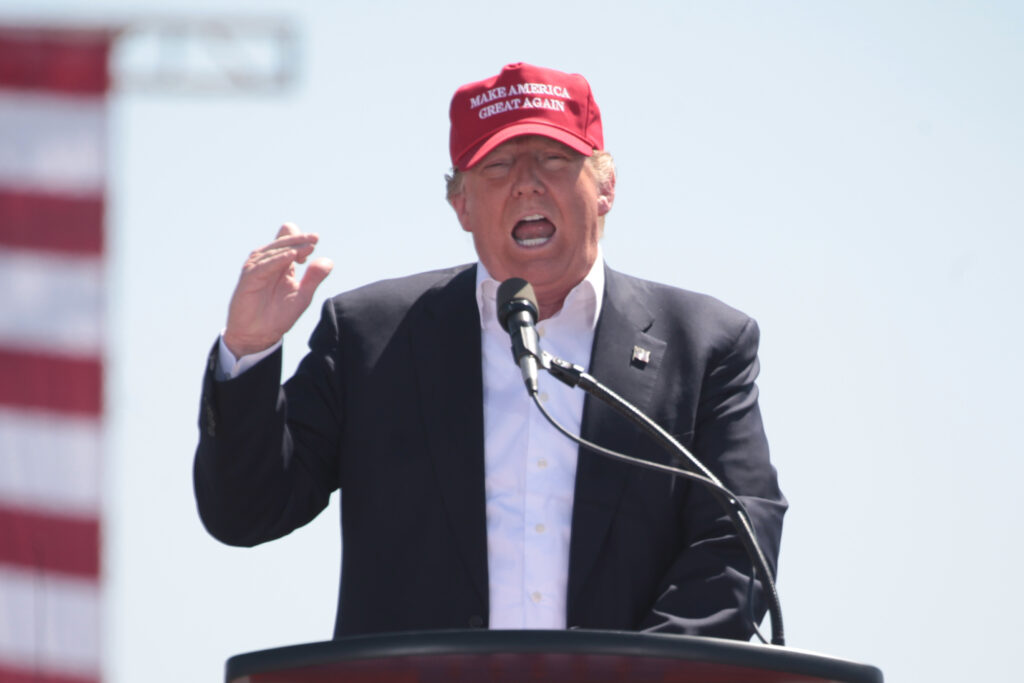
Trump embraced the phrase as a signature rallying cry—so much so that MAGA became a political identity, not just a line on a podium. Britannica describes the MAGA movement as a nativist movement emerging with Trump’s 2016 campaign, named directly from the slogan and used as a continuing rallying cry.
By 2024, the Republican Party platform itself carried the banner headline “MAKE AMERICA GREAT AGAIN!”
And in 2025, Trump is not merely associated with MAGA—he is the sitting president, with a governing coalition and messaging ecosystem that still speaks fluent “great again.”
The infrastructure around the slogan is also literal: the Make America Great Again trademark was filed in 2012 and later registered (documentation appears in USPTO records and third-party summaries of those filings).
What “great again” means now: often a sharper form of restoration—less bipartisan uplift, more boundary-drawing: who counts as “real America,” what culture should dominate, what changes should be reversed, and which institutions should be distrusted.
Why the phrase is problematic
The MAGA slogan’s power is also its biggest problem: it asks a seductive question—“Remember when?”—without ever specifying when. That ambiguity lets different listeners imagine different “golden ages,” and it can quietly smuggle in a version of the past that was “great” mainly for some Americans.
Research backs up the emotional mechanism. Scholars describe “Make America Great Again” as a direct appeal to national nostalgia, and studies find that this kind of nostalgia can shape political attitudes and intergroup perceptions.
Other academic work has described the slogan’s “nostalgia” as intertwined with exclusionary politics—because nostalgia often implies restoring status to groups who feel they’ve lost it.
So the critique of MAGA isn’t just “it’s rude” or “it’s catchy.” It’s that the slogan can function as a Rorschach test that rewards myth-making:
- If “great” means social hierarchy, then civil rights gains can be framed as “decline.”
- If “great” means global dominance, then endless war can be reframed as “strength.”
- If “great” means economic nostalgia, then deindustrialization becomes a political weapon rather than a policy challenge.
“Was America ever great?” Slavery, war, rights—and the competing definitions of greatness
This is the heart of the fight over the MAGA phrase: America has never had one moral biography. It has competing ones.
The case against the nostalgia
If greatness is measured by liberty and equal citizenship, then it’s impossible to tell a clean “great past → fallen present” story without confronting:
- Slavery and its long afterlife in law, economics, and violence.
- Dispossession of Indigenous peoples.
- Wars sold as necessity, sometimes later judged as tragic, destabilizing, or unjust.
- Periodic “greatness” defined by rights restrictions—who could vote, marry, work, immigrate, or simply live safely.
In that reading, “great again” risks becoming a demand to forget who paid the price for earlier versions of “order.”
The case for “the great experiment”
There’s another American story that doesn’t deny the harm—but locates “greatness” in the country’s aspiration and self-correction: the idea that the founding principles were radical but incompletely applied, and that the nation’s moral arc has been a struggle to make the promises real for more people over time.
In that framing, America can be “great” not because it was ever pure, but because it has periodically expanded the circle of rights—and because its institutions (when functioning) allow reform, accountability, and peaceful transfers of power.
The catch: both stories can be true at once. America can be an experiment in ordered liberty and a history of exclusion and coercion. That tension is real—and the MAGA slogan’s simplicity is part of why it inflames rather than resolves it.
Why the MAGA slogan endures
Even people who think the current president and administration are a poor model (a view many Americans share, and others sharply reject) can recognize why the MAGA slogan endures: it compresses fear, pride, resentment, and hope into four words—then lets the audience fill in the blanks.
That’s the political genius and the civic hazard:
- Genius: it mobilizes.
- Hazard: it divides by inviting incompatible fantasies of the past—and turning disagreement into a referendum on who “belongs.”
Bottom line
“Make America Great Again” has moved through U.S. politics as a shape-shifting promise: Reagan’s renewal, Clinton’s uplift, Trump’s identity politics.
The MAGA phrase is problematic because it often turns history into nostalgia—without naming what must be ignored to make the story feel clean. At its best, MAGA can be read as an argument for national improvement. At its worst, it becomes a coded invitation to restore a past that was only “great” if you weren’t on the losing end of it.

These are genuinely great ideas. You have touched some nice things here. Any way keep up wrinting.
I do not even know how I ended up here, but I thought this post was great.
I do not know who you are but certainly you
are going to a famous blogger if you are not already 😉 Cheers!