Storylines Beneath the Headlines
Democracy is defended by ordinary people who are ready. Readiness starts with understanding.
Start with something you already feel, follow it back to what caused it, and walk away able to explain it to anyone.
-
The Death of the Price Tag
More of what you pay is now set by software built to find out how much you’ll pay. Sometimes it’s one company studying you: what you click, what you post, how badly you need it. Sometimes it’s a whole industry feeding its prices into the same program, and landlords, gas stations and the biggest french fry makers in the country have all been sued for it. With so few companies left in so many industries, there’s often no store across the street to walk to. Next come AI agents that do your shopping for you, so you never see the price at all. The price tag used to protect us from this. It’s going away.
-
The Trash Problem
Every bag of trash you leave at the curb gets weighed, priced, and driven somewhere. Where it lands isn’t chance. It follows almost the exact map federal regulators drew when they graded neighborhoods for lending in the 1930s, the practice known as redlining. That’s the trash problem: the poorest places take in the most of it, get paid a dollar a ton for keeping it, and lose far more than that in property values and school funding for decades after.
-
-
The Stock You Never Bought
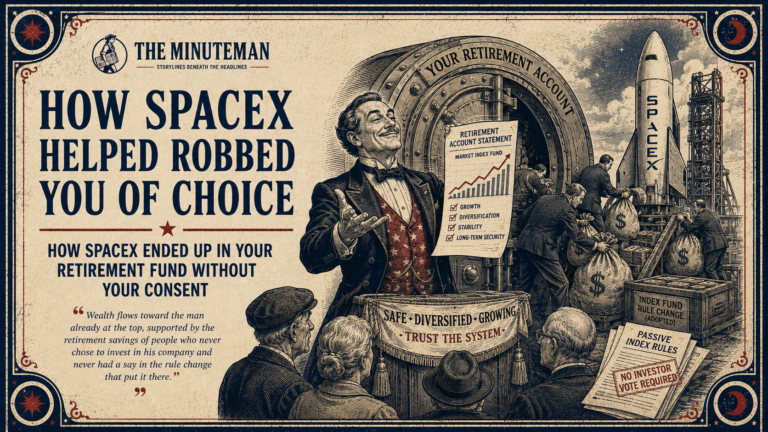
You never bought SpaceX, and you may not even like Elon Musk. Within weeks of the largest IPO in history, it could be sitting in your retirement account anyway. An exchange quietly rewrote the rules that once made a new company prove its price was real before millions of people were made to own it, and no one asked the people whose savings would carry the result. A story about money, diversification, and the consent you were never given the chance to withhold.
-
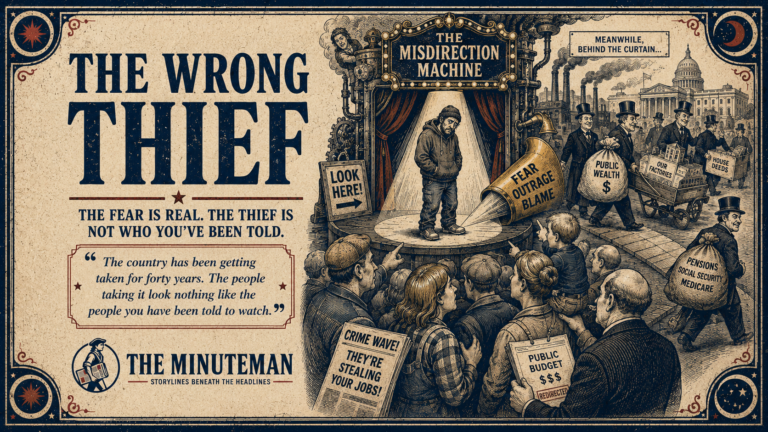
The Wrong Thief
A man in Pennsylvania is one paycheck from losing the house his grandfather bought outright in 1962. He knows his rent went up. He knows his grocery bill went up. He knows that when he turns on the television, someone is shouting at him about a caravan. He is right that something has been taken. But he has been handed the wrong thief.
-
-
-
-
-
-
-
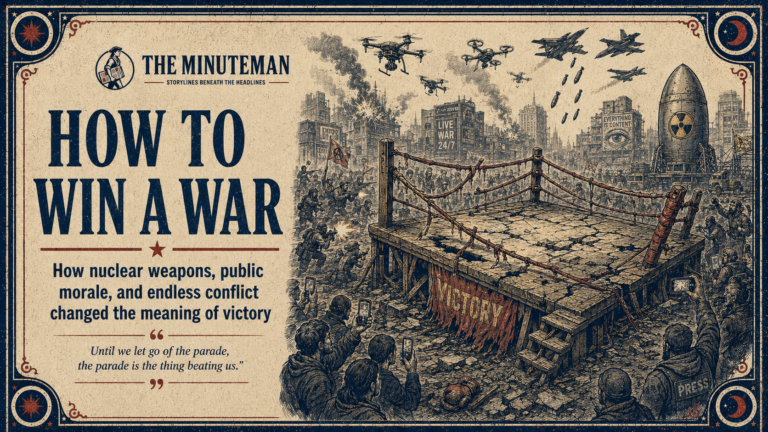
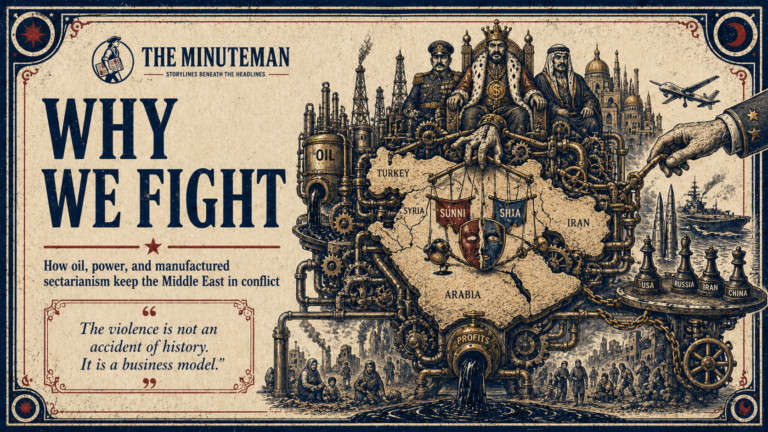
Why We Fight. The Middle East Conflict, Explained
The Middle East’s constant conflict isn’t an unavoidable clash of ancient religions. It’s a deliberate power play by authoritarian leaders who use oil wealth, water scarcity, and religious identity as tools to keep themselves in charge. The violence is not an accident of history. It is a business model.
-
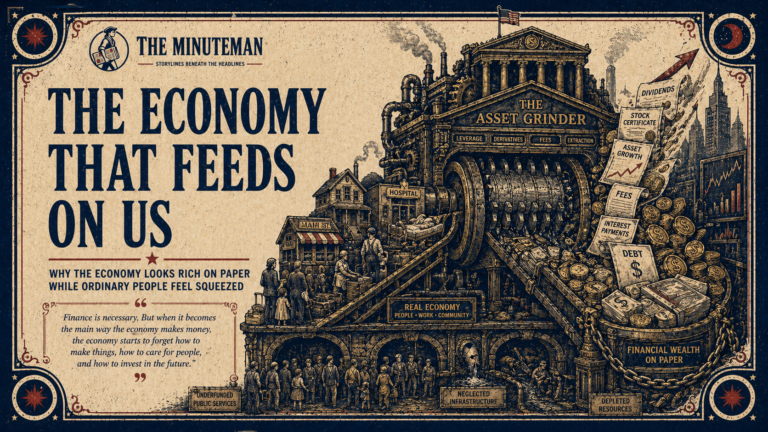
Why The Economy Feels Broken: It’s Over-Financialized
A starter home is no longer just a starter home. It is a yield target. A hospital is no longer just a hospital. It is a balance-sheet play. Over-financialization is the quiet shift that turned the basics of life into tradable “assets,” rewarding extraction over creation and leaving the real economy thinner, pricier, and more fragile. This piece explains how we got here, who benefits, who pays, and what it would take to rebuild an economy that makes things again instead of just making fees.

-
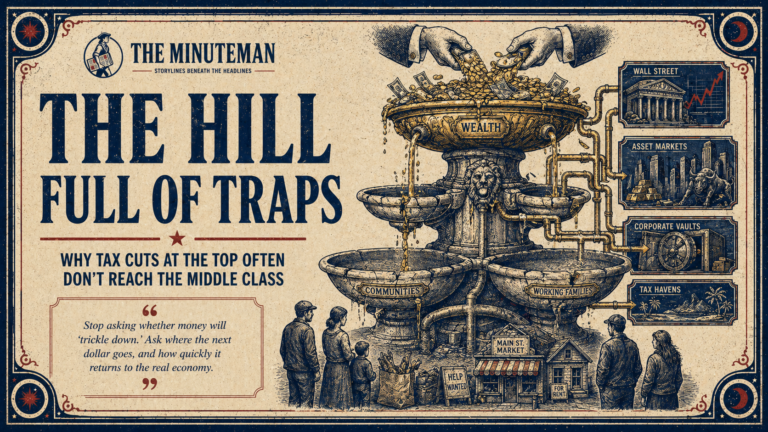
The Myth of Trickle-Down Economics: Why the Next Dollar Doesn’t Reach the Middle Class
Cut taxes at the top, the argument goes, and the benefits will flow down through investment, jobs, and higher wages. Everybody wins. But the economy does not run on promises. It runs on what people do with the next dollar. That is what “marginal propensity to consume” really means. When a family living close to the edge gets an extra thousand dollars, it tends to become tires, groceries, a dentist appointment – in other words, it becomes a paycheck for another person. When a household that is already comfortable gets that same thousand, it is more likely to become savings. The money does not vanish. It just takes a route that does not have to pass through a local cash register.
-
-
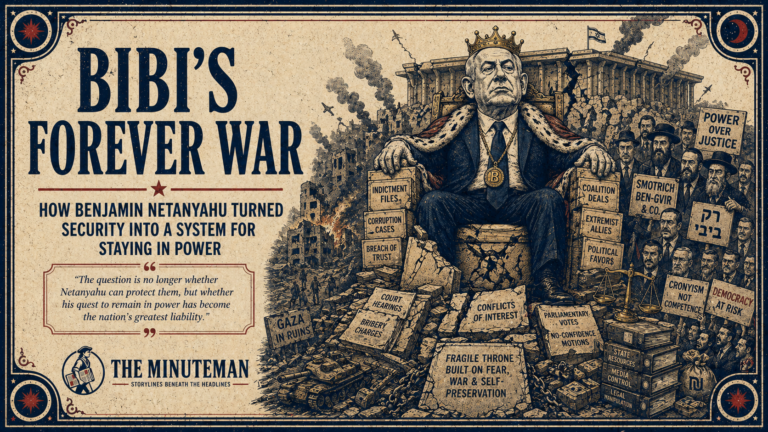
Benjamin Netanyahu: Israel’s Longest-Serving Prime Minister and the Cost of His Power
Benjamin Netanyahu has ruled Israel longer than anyone in its history — but his relentless grip on power has come at a staggering cost. From corruption scandals and alliances with extremists to the devastating Gaza war that’s left tens of thousands dead, this in-depth report traces how one man’s pursuit of survival has reshaped Israel’s democracy, its global standing, and the future of the Middle East.
The Minuteman is written by Chris Connors Jr.
The Minuteman is written by Chris Connors Jr. A playwright covering American politics. Each week I pick one thing from your life, a bill, a fruit, a missed call, and write the story of the system that put it there, until you have a lens you can carry into tomorrow’s conversation.
Playwright & journalist | Master’s degree from Syracuse University’s Newhouse School. Founder & editor-in-chief of Morristown Minute – a hyperlocal newspaper.