How to Win A War
Two nations declared victory in the same war on the same day. The bombs kept falling. The prices kept climbing. And the rest of us are still paying for a win that nobody can find. Something about the way we fight wars broke after 1945, and we never learned the new rules. So how do you win a war?
You turn on the TV and some politician is talking about U.S. troops overseas. Maybe they’re talking about the cost or a budget. And after listening for a while, you ask yourself, “Which country are they talking about?“
You can think of at least three potential answers off the top of your head. One started under a president you voted for, another started under a president you didn’t, and a third one you can’t remember when it started at all.
But the common thread is none of them have seemed to end.
Meanwhile there’s an endless supply of debate. Prices keep rising. Gas costs more now than it did a month ago. Your grocery bill keeps climbing. Utilities are through the roof. And it seems impossible to wrap our heads around why or how any of this started in the first place.
I’m writing this as headlines flash in front of my eyes. And what I am seeing seems like two contradictory stories from two completely different sides of the spectrum. Neither of them seems grounded in reality.
Trump said we won the war in Iran. Iran said they won the war with us. Yet bombs are still falling, people are still dying, and those prices are still rising.
So either somebody is lying to us, reality is not what it seems, or the word “winning” doesn’t mean what it used to.
This is the age of the forever war. And we didn’t just get here. We’ve been living in it for over 80 years.
If you want to know why every conflict the United States enters overseas seems to feel like a never-ending war that we can’t seem to win, then we have to ask ourselves an important question.
How do we win a war in today’s age?
Listen to the podcast on Substack.
We are still trying to win wars with a pre-nuclear mind.
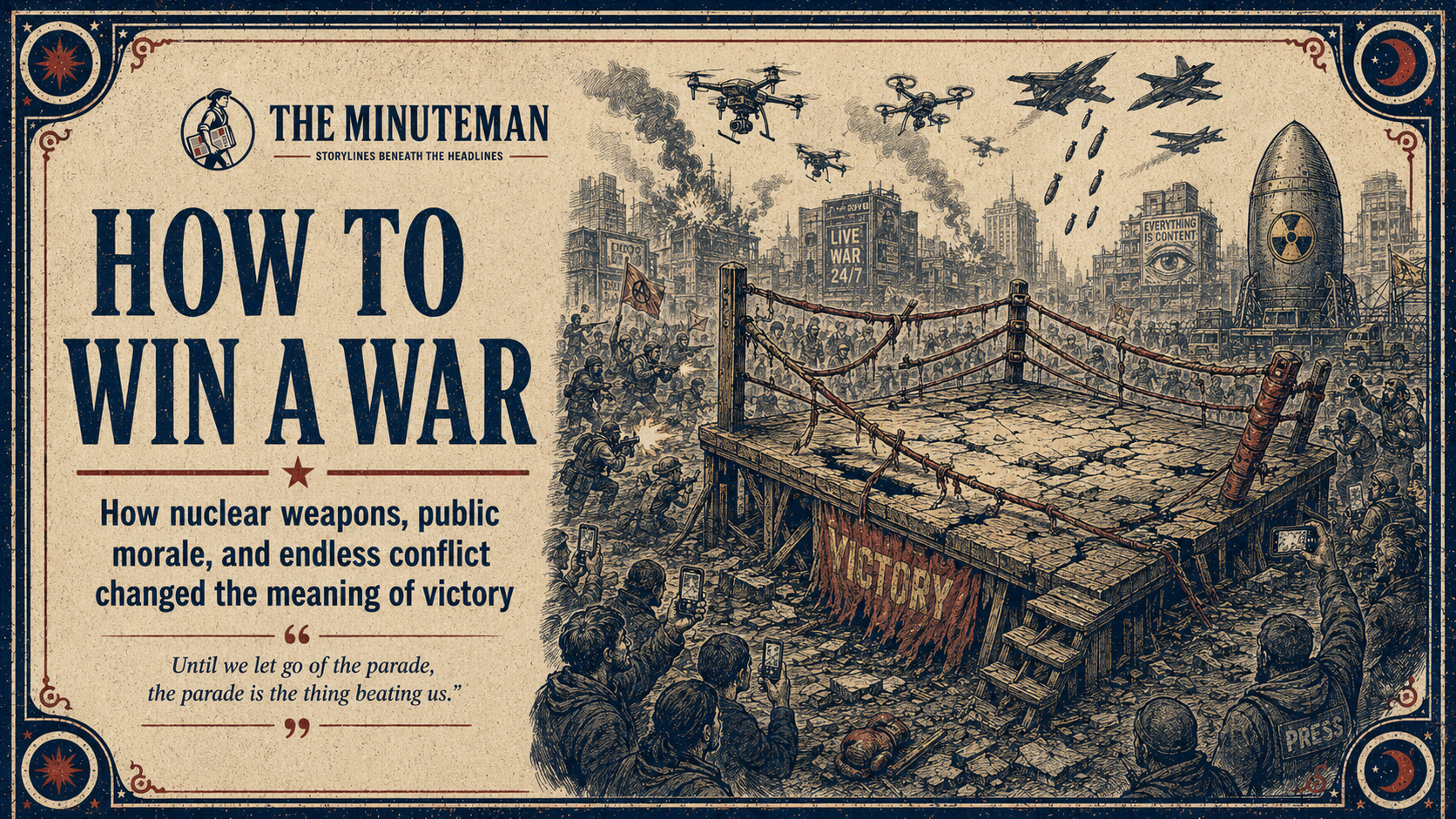
Before 1945 you fought a war like a heavyweight boxing match. Two states step into a ring, a referee, a center of gravity. You aim for the weak spots. You try to get a knockout.
Carl von Clausewitz, a Prussian army officer of the 19th century, called it the “Center of Gravity” (Schwerpunkt, German words are fun). It’s the hub of all power and movement on which everything depends, your opponent’s primary source of strength, the thing that holds the combatant’s system together.
The old principles of war were designed around this objective. You mass enough troops. You outmaneuver the enemy. You overwhelm them at the point that matters. Once the machine is broken, the war is over.
You took the capital. You broke the factories. You signed the papers. You threw a parade.
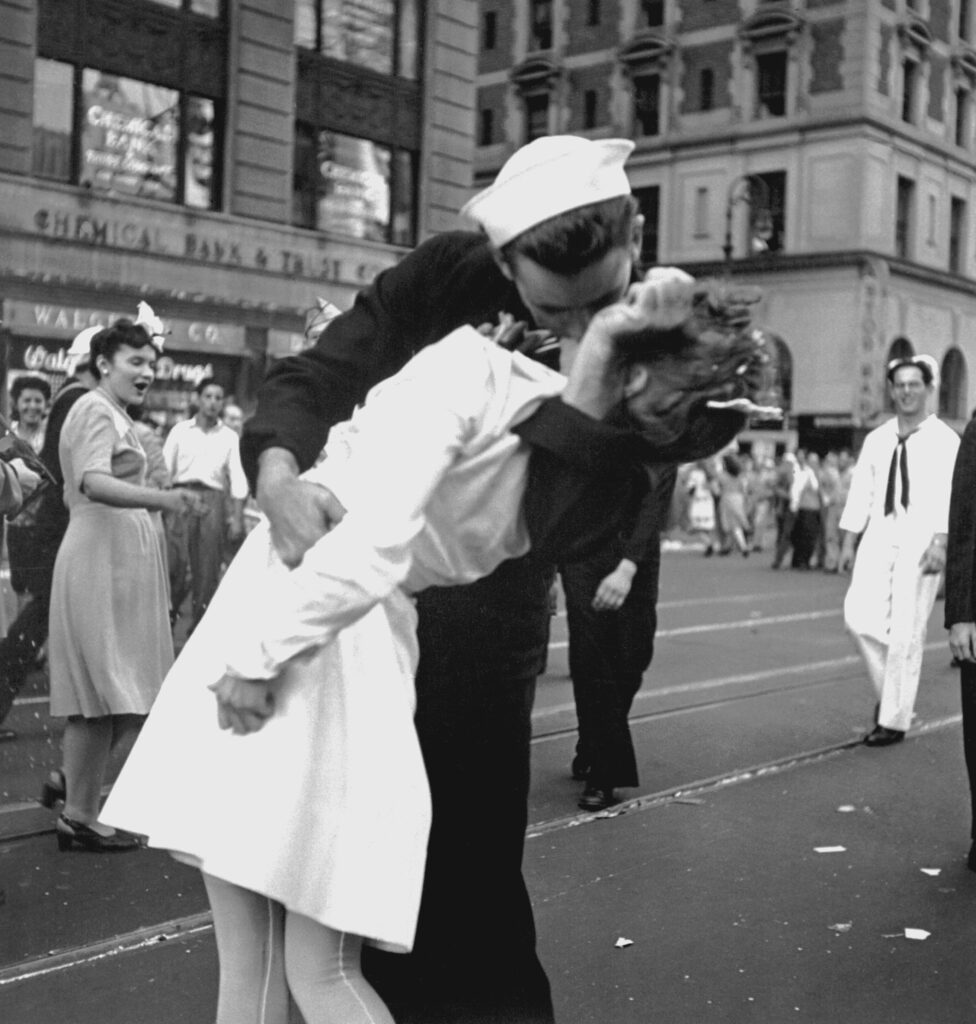
You’ve probably seen the famous photo from Times Square. A US Navy sailor dipping a stranger (a dental assistant, Greta Zimmer Friedman) in a kiss on the celebration of V-Day.
That was how a war ended, with a parade.
We danced around the ring, raised our fists in victory. The confetti fell and we got handed the heavyweight belt.
But we weren’t just celebrating the end of a war that day. We were celebrating the end of “the end” of war.
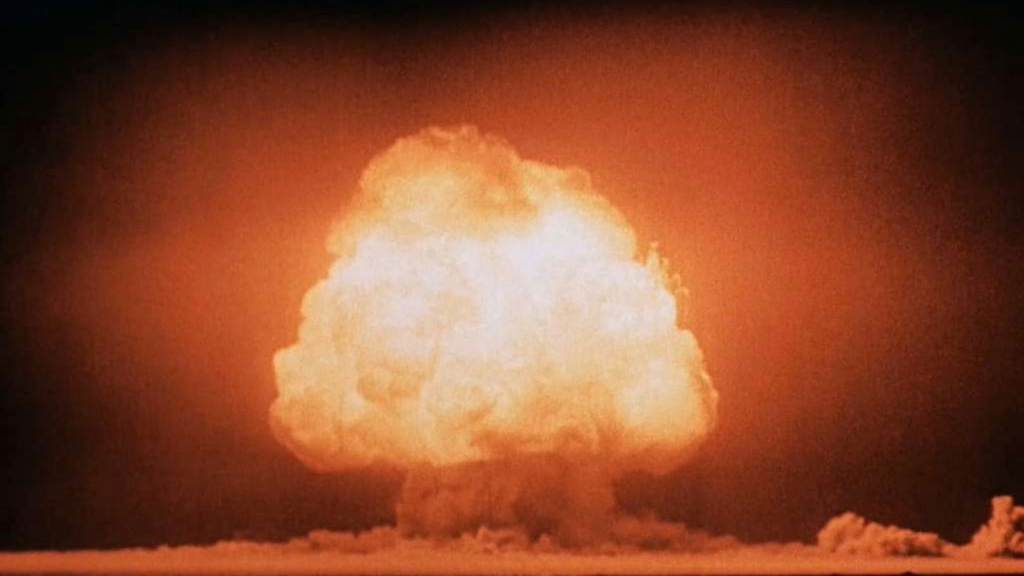
While we were busy parading around the ring, celebrating our victory, what we failed to realize was that in that victory we had built a glove that vaporizes the arena.
The same month that sailor and that dental assistant kissed on the celebration of V-Day, we had dropped bombs on Hiroshima and Nagasaki that killed an estimated 150,000 to 250,000 people.
The nuclear revolution didn’t end interstate conflict as it was once predicted. It just changed the game we were playing.
When two superpowers have nuclear weapons that can knock the other out entirely with missiles and submarines scattered across the oceans that neither side can fully map, then any total war between them is mutually assured destruction.
Now the idea was that this mutually assured destruction would prevent either side from initiating conflict. But that clearly didn’t happen.
Instead we put down our gloves and stepped out of the ring. We migrated into the parking lot of the bar across the street.
We turned to proxies, to insurgents, to civil wars, and no one could decisively end them. The rivalry remained. The ring disappeared. The fighters started using new equipment with no clock, no referee, and very different rules.
That migration is when the center of gravity moved.
The capital city is no longer the thing that wins or loses a war. The phone in everyone’s pocket is.
War today is more about public morale and international legitimacy than it is about overwhelming and overpowering your enemy. It’s about perception.
Think about it like this. You see a video on the news of a low-ranking soldier in an international conflict doing something terrible, committing a war crime. That video spreads across the world faster than that soldier’s commanding officer can respond. Within a day it’s on everyone’s phone. It’s playing on every TV. It’s being talked about across the world.
The United States Marine Corps four-star General Charles Krulak named this figure the Strategic Corporal: one private with a camera can now produce consequences that a four-star general’s entire career could not.
A state now loses faster from a single image than from a defeated army.
Take the Russian invasion of Ukraine. Which party in that conflict have you heard more horror stories about on the news?
American voters tend to lack the endurance for prolonged international conflict, especially when the perception is that US troops are not actively involved and our main contribution is financial. But the more we learn about the horrors committed by this invading force, the more willing we are to support a nation’s sovereignty to fight back against bad actors.
The way we measure victory is broken.
We used to measure wins by counting: damage delivered, targets destroyed, infrastructure flattened, leaders eliminated.
Today a different kind of winner counts survival. We’re still here. The campaign against us did not erase us therefore we won.
A state can claim victory by counting damage done or a smaller opponent can claim victory by not getting knocked down.
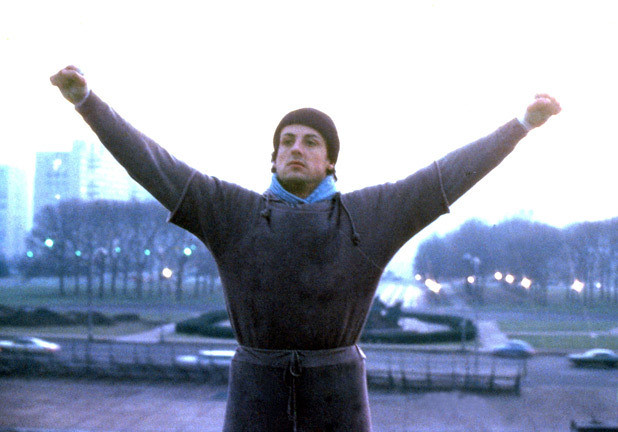
Ever seen Rocky? He loses the fight but he doesn’t care. He’s still standing there, screaming for Adrian. Watch Rocky and tell me who you think wins that fight. An argument can be made for either side.
That’s the same problem we have at war today. The two sides are no longer measuring the same thing so both sides can declare victory in the same war on the same day.
This is what’s happening right now between Trump and Iran.
On March 11th at a rally in Hebron, Kentucky, Trump said, “We won.”
Here is exactly what Trump said: “You never like to say too early you won. We won“; “In the first hour it was over.” “We got to finish the job.”
On April 7th after a “ceasefire,” he called it “total and complete victory.”
“Total and complete victory. 100 percent. No question about it.” – Trump
On May 1st in a letter to Congress, he declared the hostilities terminated.
“The hostilities that began on February 28, 2026, have terminated.”
At the same time Iran announced victory, claiming it had forced America to accept Iran’s own ten-point proposal.
Do you see a problem here? Are we fighting two different wars? Are we existing in two separate realities? This is the same day, the same war, two different governments both claiming the win.
And then six days after the president told Congress that the war was over, U.S. and Iranian forces exchanged fire near the Strait of Hormuz. The day after that U.S. strikes hit Iran-linked vessels and UAE air defenses engaged Iranian missiles and drones.
As of May 14th, a U.S. admiral told the Senate Iran retains the capability to threaten Gulf shipping and neighboring states, and violence has periodically flared since the “ceasefire.”
The hostilities that both sides claim to have ended and both sides claim to have won have not stopped killing people.
And yet both sides have an argument for victory.
The problem is they’re using two different metrics.
Trump is measuring damage. Iran’s ability to threaten its neighbors has been, in the Admiral’s word, “dramatically degraded.”
Iran is measuring survival. The state still functions, the leadership is intact, the Strait of Hormuz, through which about a fifth of the world’s oil moves, is still contested.
And the rest of us still have to pay for it.
Gas prices averaged around $2.94 in late February. This week (the week I’m writing this, May 15th), gas prices average over $4.50. The Bureau of Labor Statistics puts the gasoline index up 28% over the past year. And prices everywhere else are following. Go to the grocery store and tell me that things haven’t gotten more expensive.
We have over 50,000 troops in the Middle East. The 82nd Airborne deployed a brigade in late March. The Marines moved an Amphibious Ready Group. By April there were three carrier strike groups in the region. There has been no verified drawdown since the President’s May 1st letter.
The country that “won” is still showing up to the fight.
But Iran is just one room. Look at all the others.
We are in Iraq, over twenty years after the invasion.
We just pulled the last of our roughly 1,000 troops out of Syria in April after more than a decade fighting ISIS alongside Kurdish allies. No parade for that one either.
We are in Somalia. The US carried out 49 air strikes in 2026, so far, on top of 124 strikes in 2025.
These are five, ten, twenty-year-old wars the country has stopped watching. They did not end. They got quiet. And a parade didn’t come after them either.
We are addicted to the ring.
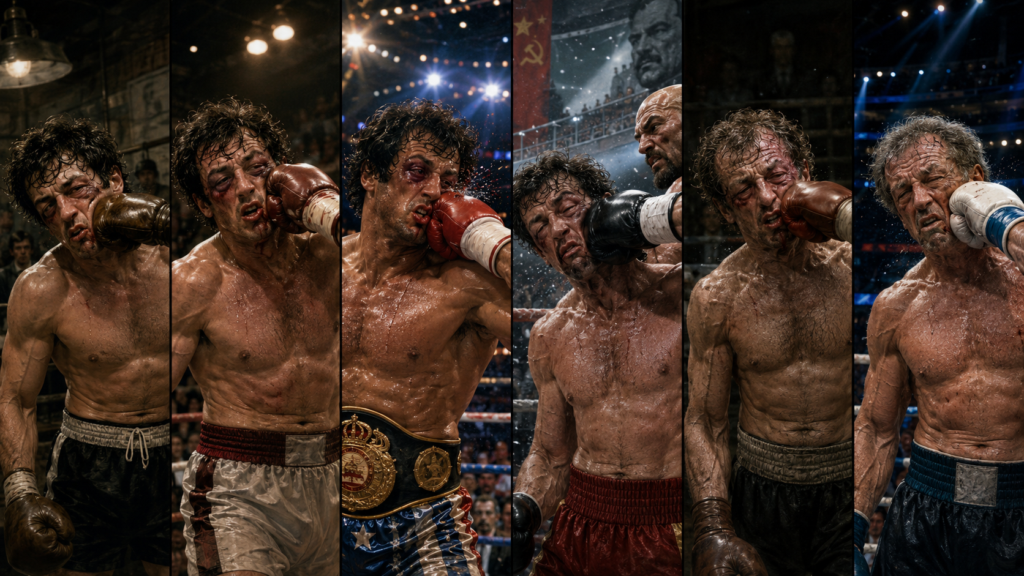
The United States of America cannot let go of the heavyweight boxing match because the heavyweight match is who we think we are.
V-Day is an American identity. The soldier in uniform, the kiss in Times Square, the ticker tape: we have been trying to replay that ending for 80 years because we do not know how to be a country that does not get one.
Political scientist Dominic Tierney put it best: Before 1945 the United States won virtually all of its major wars. After 1945, with the strongest, best-funded military in human history, clear-cut victories disappeared. The country got more powerful and less able to produce the only result it recognizes.
So we walk into every new conflict throwing punches in a ring that is not there, against an opponent that has disappeared, still listening for a bell that’s not gonna ring, still expecting the parade and the belt.
And every time we get tired before the other side does, the news moves on. We pull our attention away from the room. Depending on the politics, depending on how we can use this situation to benefit us, we call it losing or winning.
The reality is this is an outcome that our country doesn’t have a name for.
The harder we try to win the old way, the more enemies we make and the more legitimacy we lose, and the longer the war runs on. Overwhelming force against an insurgency can destroy a thousand fighters and create ten thousand recruits.
Sri Lanka “destroyed” the Tamil Tigers in 2009 and it cost tens of thousands of civilian lives and a generation of international condemnation.
The British “defeated” the Malayan Emergency in the 1950s by interning hundreds of thousands of ethnic Chinese and starving the insurgency of support. The success the British claimed did not truly end the conflict. A second communist insurgency began in 1968 and lasted until 1989, nearly three more decades of armed conflict before Malaysia achieved “lasting peace.”
The victories these countries have claimed ultimately spiraled into decades-long, never-ending, generational conflict and the United States falls into the same trap.
Both of those victories ended the fighting. Neither ended the conflict.
There is a distinction we keep missing.
War termination is when the shooting stops. Conflict termination is when the thing that caused the shooting goes away. Those are not the same event, and most of the time they don’t happen in the same century.
British General Rupert Smith spent his career watching that distinction get ignored. He served in the Gulf, in Northern Ireland, in the Balkans. He came out of it with a phrase that explains what the old playbook keeps getting wrong: war amongst the people.
The fight is no longer between states with armies. The fight is in living rooms and on phones, in the space where a population decides whether the cause is worth the cost.
Smith was pointing at where the real target lives. In belief. In a population’s running calculation about whether the cause is worth what the cause costs.
Which is why you can win every battle and still lose the war.
In Israel, Netanyahu’s own spokeswoman declared in October 2025 that all of the prime minister’s military objectives in Gaza had been achieved. Netanyahu himself said on the same day that “there is no end to the war yet.” The military objective was met. The political stalemate did not move.
In Afghanistan, twenty years of “operational success” ended with a withdrawal that handed the country back to the same people the U.S.A. showed up to defeat. In Iraq, “Mission Accomplished” was six weeks in. The U.S. spent the next twenty years losing the country.
The military problem and the political problem are not the same problem, and we keep solving the first one and calling it the second.
Strategists have a name for this. They call it the paradox of strategy. The quicker and more decisive the military victory, the worse the long-term outcome can be, because nothing about the underlying grievance got touched.
The enemy gets defeated. The reasons the enemy existed in the first place stay intact. So another enemy shows up. And another.
What modern war runs on is belief. A population fighting for what it considers a just cause is not defeated when its army is. It is defeated when it stops believing the fight is worth what the fight is costing. Until then, every funeral makes a recruit.
The bell isn’t going to ring. The audience is the war.
If you want to see all of this happening at once, look at Ukraine.
In February 2022, Russia tried to win a war the old way.
The plan, according to RUSI’s early-war assessment, was to invade over about ten days, seize Kyiv, collapse the government, and wrap the whole thing up by August. Classic schwerpunkt.
Russia treated Ukraine’s center of gravity as the capital and the president: take the city, remove the leader, and the country folds. They even achieved a 12:1 force-ratio advantage north of Kyiv.
By every principle of old war, that should have been enough.
Ukraine’s center of gravity was spread across the entire country: national will, military adaptation, the Western support that RUSI called Ukraine’s “strategic depth,” and a population that decided the fight was worth the cost.
Russia punched the capital and the country absorbed the blow.
Ukraine’s air defenses partially reconstituted by the ninth day. Russia never got the air superiority it needed for the quick kill. The knockout failed, and the war became something else entirely.
Russia’s nuclear arsenal did one thing well: it kept NATO from entering the war directly.
No NATO troops fought in Ukraine. But NATO and EU countries kept Ukraine alive through weapons, training, intelligence, and money. NATO later created mechanisms to make that assistance long-term and stated that Ukraine’s future was in NATO.
The nuclear threat stopped a direct war. Everything short of a direct war kept going.
Once the quick victory failed, the war became war amongst the people. Russia shifted toward grinding civilian infrastructure. Power grids. Heating systems. The conditions that let a country function as a country.
The U.S. Army described electricity in Ukraine as both a tactical necessity and a strategic target. The goal was to break morale, to make the Ukrainian population decide the fight was no longer worth the cost. The target was belief.
Ukraine responded with its own version of the same logic.
It started hitting Russian oil refineries, knocking out roughly 700,000 barrels a day of refining capacity across 16 refineries. Oil and gas taxes are about a quarter of Moscow’s federal revenue.
Ukraine was doing what the old playbook cannot imagine: making the war expensive enough, visible enough, and painful enough for the other side’s population that the calculation starts to shift.
That is perceived worthiness as a weapon. You aim at the other side’s belief that the fight is worth what it costs.
And the paradox of strategy is visible too. Even if Russia had taken Kyiv in ten days, then what? Occupy a country of 44 million people who just watched you invade?
The root political problem, the thing that caused the war, doesn’t get solved by a fast military win. It gets worse. Every funeral makes a recruit. Russia would have terminated the war and guaranteed the conflict would last a generation.
So Ukraine has been fighting the new way. Denying Russia its political objective. Sustaining international support. Imposing cost. Managing the long grind. Russia has not won. By the old scoreboard, that means nobody has. By the new one, that is what winning looks like.
But here is the cost of the new way of winning.
A Gallup poll from July 2025 found that 69% of Ukrainians favored a negotiated end to the war as soon as possible. In 2022 that number was almost reversed.
The strategy is working. The population is exhausted. Both of those things are true at the same time. You can win the new way and still watch the public will to keep winning erode underneath you, because democracies are bad at patience and modern war runs on exactly that.
The way wars work changed in 1945 and it changed again with the internet and then even faster with the smartphone but this country’s idea of victory is still set on the parade.
So how do you win a war?
You learn to manage it.
Winning today is the careful management of a difficult situation indefinitely: a long quiet, a maintained equilibrium, fewer dead, fewer escalations, fewer reasons for the conflict to spread.
General Charles Dunlap calls this “culminating power”: deciding what is enough and stopping there. Stopping may never give us another V-Day parade but going further almost always makes it worse.
The problem is we do not know how to do that yet. Our muscle memory is set to V-Day. We’re still throwing the kind of punch that wins a heavyweight match in a parking lot against an opponent who only has to be standing when we get tired and go home.
Look back at the news: two nations are claiming victory in a war that is not over. Bombs are still falling, the prices are still climbing, the troops are still arriving, and we feel like we are losing because the only kind of winning we know how to recognize ends in a parade.
Until we let go of the parade, the parade is the thing beating us.