The Voting Rights Act of 1965
TL;DR
The Voting Rights Act (VRA) of 1965 is a landmark civil rights law that prohibits racial discrimination in voting. It combines broad prohibitions (Section 2) with special oversight of jurisdictions with historic discrimination (Sections 4 & 5). Over time, key provisions have been narrowed—especially after Shelby County v. Holder (2013). Today, its role is contested in court, particularly in redistricting cases.
Few laws in American history have reshaped democracy as profoundly as the Voting Rights Act of 1965. But the struggle it sought to address was nearly two centuries in the making. From the nation’s founding—when states limited the ballot largely to white male property owners—through Reconstruction’s brief expansion of Black political power and the swift backlash of poll taxes, literacy tests, and “grandfather clauses,” the right to vote was repeatedly defined, restricted, and reclaimed. By the mid-20th century, civil rights activists in the streets and lawyers in the courts forced the country to confront the gap between its democratic ideals and its discriminatory reality.
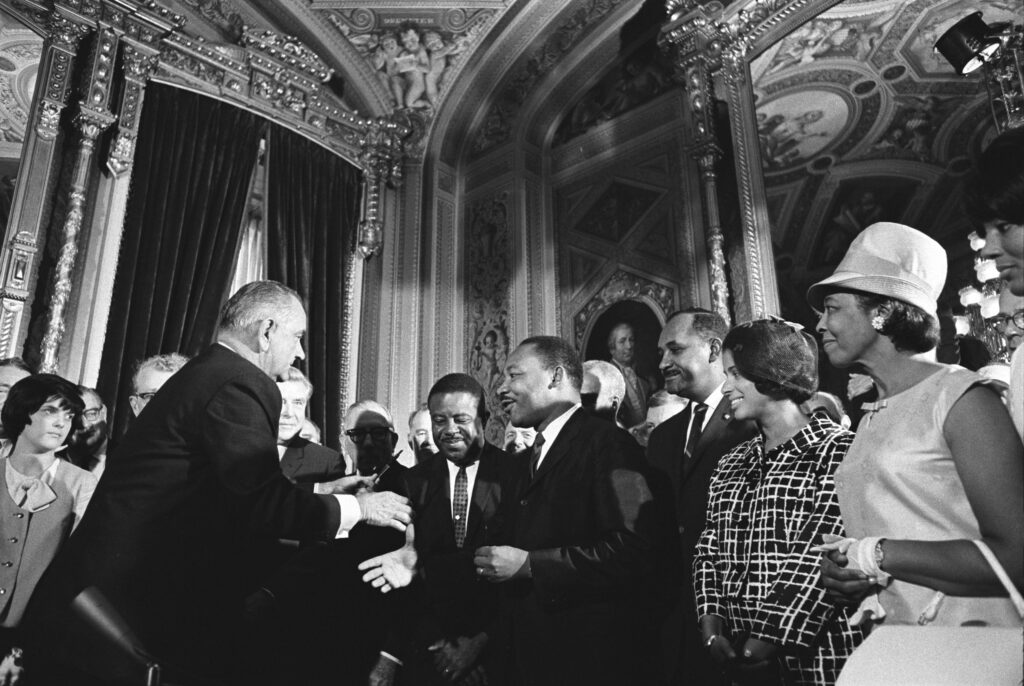
When President Lyndon B. Johnson signed the Voting Rights Act on August 6, 1965, it marked a turning point: for the first time, the federal government assumed sweeping authority to block discriminatory voting rules before they could take effect. The VRA’s early decades brought dramatic gains in voter registration, political representation, and enforcement through powerful tools like Section 5 preclearance and the nationwide protections of Section 2. Yet the law’s trajectory has never been static. Amendments strengthened it, court battles tested it, and recent Supreme Court rulings have weakened core provisions—leaving states, advocates, and voters navigating a landscape where the VRA remains essential, but no longer as robust as it once was.
Definition & Purpose
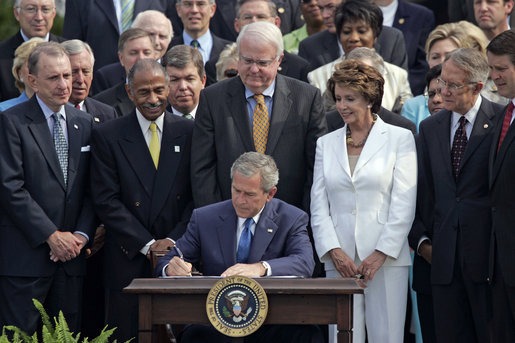
The Voting Rights Act of 1965 prohibits denying voting rights on the basis of race, color, or previous condition of servitude. The VRA gives the federal government tools to prevent states or election jurisdictions from imposing laws or practices that discriminate in voting.
Historical Background & Legislative History
- Pre‑1965: Many jurisdictions—particularly in the South—used literacy tests, poll taxes, “grandfather clauses,” and intimidation to suppress Black votes, even after the 15th Amendment.
- Selma and Civil Rights Movement: National outrage following the 1965 Selma to Montgomery marches led to political pressure for federal enforcement of voting rights.
- Passage: Signed by President Lyndon Johnson on August 6, 1965, the Act passed with strong bipartisan support. It was reauthorized and amended in 1970, 1975, 1982, 1992, and 2006.
- Coverage formula: Section 4 created a formula to identify jurisdictions with histories of voter suppression subject to preclearance (Section 5).
Timeline
- 1789 / Early Republic: Voting qualifications left to states; many restricted voting to white male property owners.
- 1865–1870: 15th Amendment ratified to prohibit voting discrimination by race; Southern states soon undermined it with poll taxes and literacy tests.
- 1896 onward: Grandfather clauses and similar tools drastically reduced Black voter registration in the South.
- 1950s–1960s: Civil rights movement and legal activism (e.g., Selma marches) intensified calls for federal voting protections.
- August 6, 1965: President Lyndon B. Johnson signed the Voting Rights Act (VRA).
- 1966: The Supreme Court upheld the VRA in South Carolina v. Katzenbach.
- 1970: Banned literacy tests nationwide.
- 1975: Extended protections to language minority groups.
- 1982: Made Section 2 permanent and eased the burden to prove discrimination.
- 1992: Added provisions for voting assistance and bilingual requirements.
- 2006: Congress reauthorized key provisions nearly unanimously.
- 2013: Shelby County v. Holder – June 2013, the Supreme Court invalidated Section 4(b) coverage formula, disabling Section 5 preclearance.
- 2021: Brnovich v. DNC: Court narrowed standards for Section 2 cases.
- 2025: Louisiana Redistricting: Supreme Court reviewing whether race-conscious redistricting violates the Constitution under the current VRA interpretation.
Key Provisions
- Section 2: Prohibits any voting rule that results in racial or language minority discrimination. Plaintiffs can prove a violation by showing discriminatory effect, even without intent.
- Section 4: Originally created a formula to determine which jurisdictions were subject to oversight. This section is now largely inoperative.
- Section 5: Requires covered jurisdictions to obtain federal approval (“preclearance”) before changing voting laws or practices.
- Federal observers: Permits appointment of federal election monitors in jurisdictions with a history of violations.
- Bail-in/bail-out: Courts can add or remove jurisdictions from coverage based on their conduct.
Major Court Decisions
- Shelby County v. Holder (2013): The Supreme Court invalidated Section 4’s coverage formula, effectively halting preclearance enforcement under Section 5.
- Brnovich v. DNC (2021): Limited the reach of Section 2 by establishing a narrow test for vote denial claims.
- 2025 – Louisiana redistricting case: The Supreme Court is now considering whether race-conscious redistricting under Section 2 remains permissible. Conservative justices appear willing to restrict how race may factor into voting map decisions.
Contemporary Relevance
- Section 2 litigation burden: Without preclearance, challenges to voting laws must happen after implementation, causing delay and cost.
- Redistricting and minority vote dilution: Cases increasingly revolve around whether maps fairly represent minority communities.
- State-level reforms: Some states (e.g. California, New York) have passed their own Voting Rights Acts to restore protections.
- Emerging suppression tactics: New laws limit early voting, mail voting, or registration access in ways that disproportionately impact minority voters.
Limitations & Criticisms
- Section 5 is unenforceable unless Congress enacts a new coverage formula.
- Section 2 lawsuits are slow and reactive, not preventive.
- The Supreme Court has narrowed the legal definition of discriminatory voting rules.
- Some argue VRA enforcement has been politicized or overused, while others see recent rollbacks as threatening core protections.
FAQ
- Q: Does the Voting Rights Act still exist?
Yes, but key provisions like preclearance under Section 5 are inactive without an updated coverage formula. - Q: What is vote dilution?
It refers to redistricting that weakens the influence of minority voters by dividing or concentrating them into specific districts. - Q: Can Congress restore preclearance?
Yes, but any new formula must meet constitutional scrutiny and receive enough bipartisan support to pass.
Sources
- Wikipedia – Voting Rights Act of 1965
- National Archives – Voting Rights Act milestone
- NPR – “A Supreme Court ruling on voting rights could boost Republicans’ redistricting efforts.”
- New York Times – “Supreme Court Appears Poised to Weaken Voting Rights Act.”
- Reuters – “Voting Rights Act faces pivotal test at US Supreme Court.”