
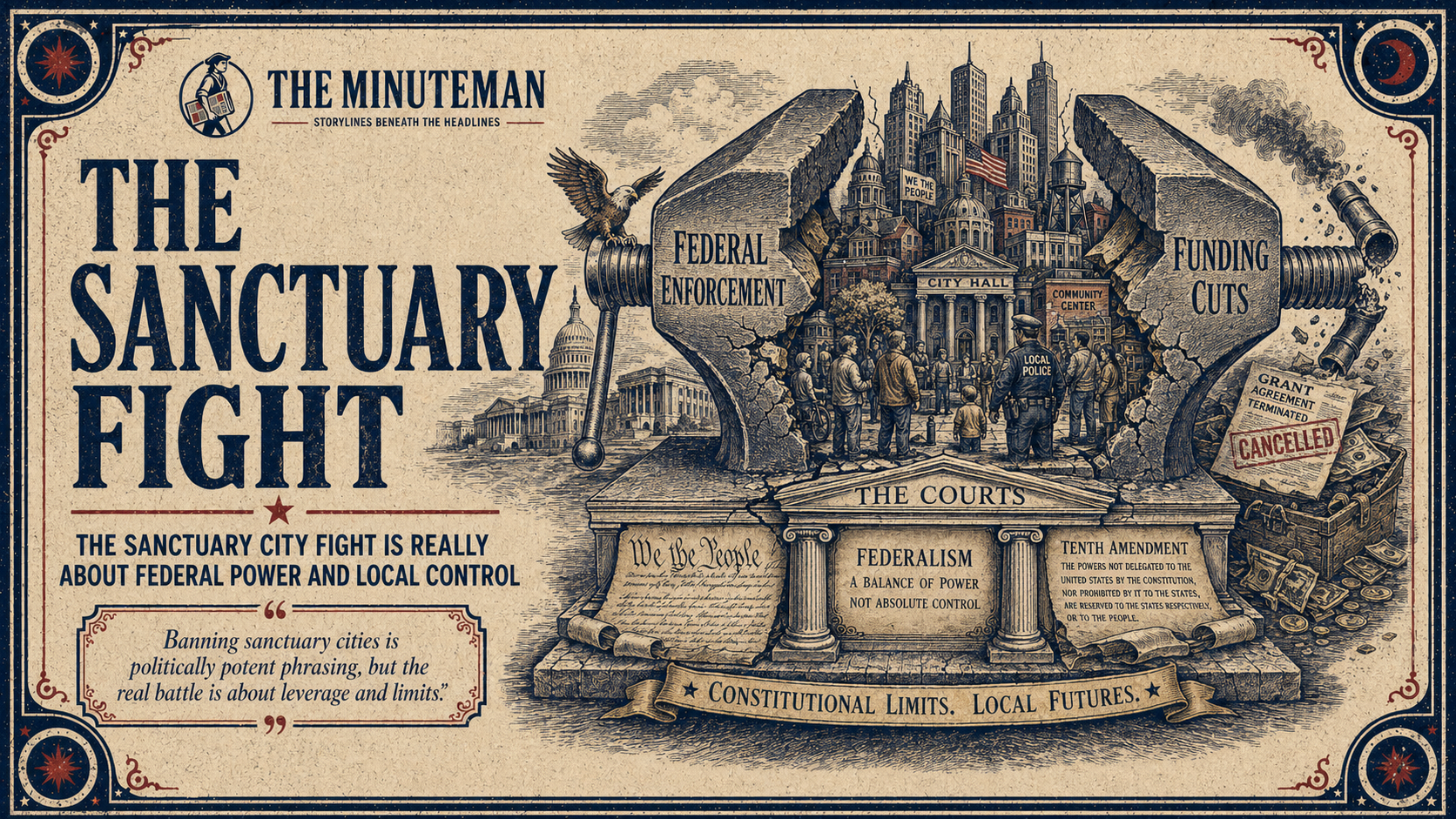
Sanctuary Cities, Federal Power, and the Real Fight Behind the “Ban”
Sanctuary cities are back in Washington’s crosshairs
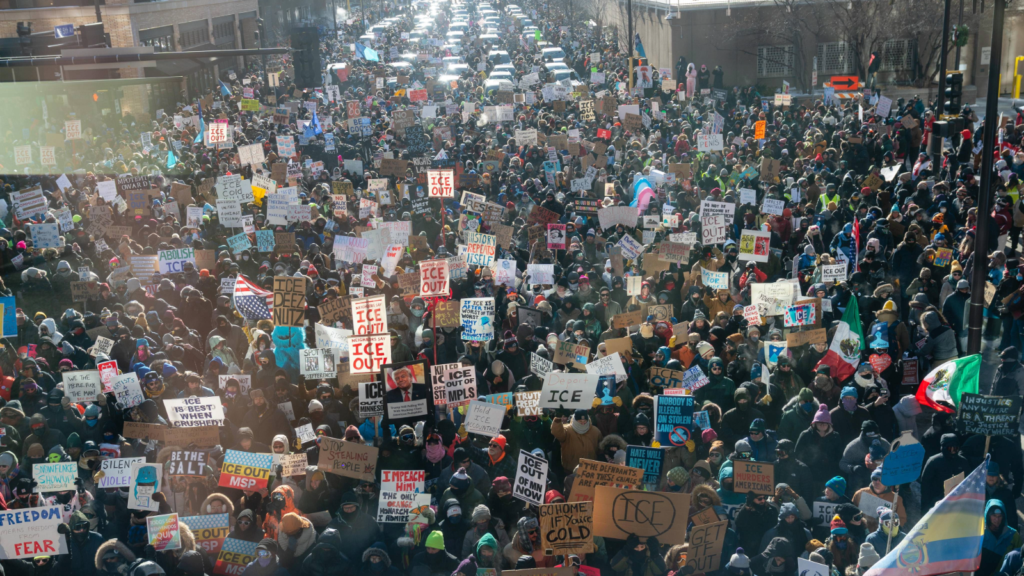
In Minneapolis, the grief came first. Then the protests. Then the lawsuits.
After a high-profile federal immigration enforcement surge in Minnesota that sparked public outrage and court fights, the politics of “sanctuary cities” snapped back into the center of national power.
And right on schedule, the fight moved to the lever Washington reaches for most often: money.
On January 13, Donald Trump said his administration would begin denying federal funding to “sanctuary cities” and even to states that contain them, starting February 1, 2026. Details were thin, but the threat was broad.
A day’s news cycle later, it was no longer just a speech-line. Senate negotiations over government funding collided with a push to force votes on measures aimed at compelling sanctuary jurisdictions to cooperate with federal immigration enforcement.
That is the key to understanding what is actually happening: the “ban sanctuary cities” story is less about a single law that flips a switch, and more about a sustained effort to make sanctuary policies politically, financially, and legally harder to maintain.
What a “sanctuary city” is (and why the term is slippery)
There is no single legal definition of a sanctuary city in U.S. law. Even supporters and critics use the same word to describe very different policies.
In practice, “sanctuary cities” usually means some combination of these local choices:
- Police do not arrest people solely for civil immigration violations.
- Jails do not hold someone past their release time just because U.S. Immigration and Customs Enforcement asked them to, unless there is a judicial warrant.
- Local agencies limit how, when, or whether they share information with federal immigration officials.
- Cities or counties refuse to sign “287(g)” agreements that deputize local officers to help enforce federal immigration law.
- City staff are told not to ask residents about immigration status when providing public services.
Those policies sit on top of a basic legal reality: immigration enforcement is federal, but policing and detention are largely local. So the recurring question is not “Can Washington enforce immigration law?” It can. The question is, “Can Washington make cities do it for them?”
That question is where the modern “sanctuary cities” fight lives.

What the federal government is trying to do now
There are three main tools showing up in the current round.
1) Use federal funding as a pressure point
In April 2025, the administration issued an executive order directing federal officials to identify “sanctuary jurisdictions,” publish a list, and pursue enforcement measures against places deemed noncompliant.
In January 2026, the White House escalated the message publicly: funding would be cut for sanctuary cities beginning February 1.
The practical impact depends on what “funding” means in implementation. Federal dollars touch everything from housing and transportation to public health and law enforcement grants. That breadth is precisely why this strategy keeps returning, and also why it keeps colliding with constitutional limits.
2) Sue cities to force policy changes
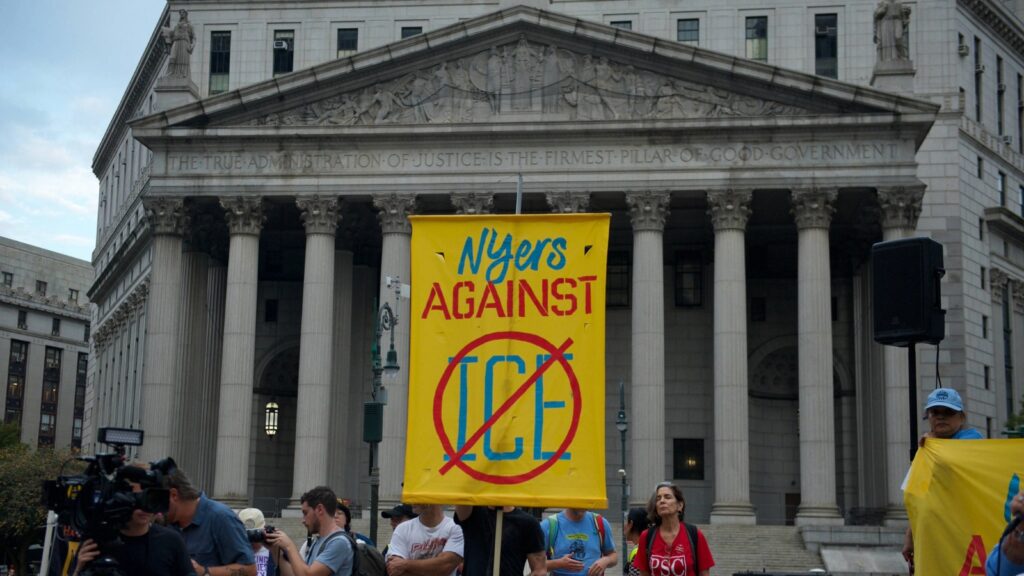
The administration has also leaned on direct litigation. One prominent example: federal lawsuits challenging Boston’s policies, framed by federal officials as obstruction that leads to “dangerous people being released.” Local officials respond that they are following the Constitution and local public-safety strategy.
3) Pass legislation to make “sanctuary” expensive
In Congress, lawmakers have introduced bills designed to make sanctuary cities and jurisdictions ineligible for certain federal assistance. One example is a 2025 House bill explicitly aimed at cutting off federal financial assistance for sanctuary cities.
Meanwhile, Lindsey Graham has pushed legislation and leverage tactics explicitly framed as ending sanctuary cities, tying the issue to high-stakes negotiations in Washington.
The constitutional wall: why “ban” is harder than it sounds
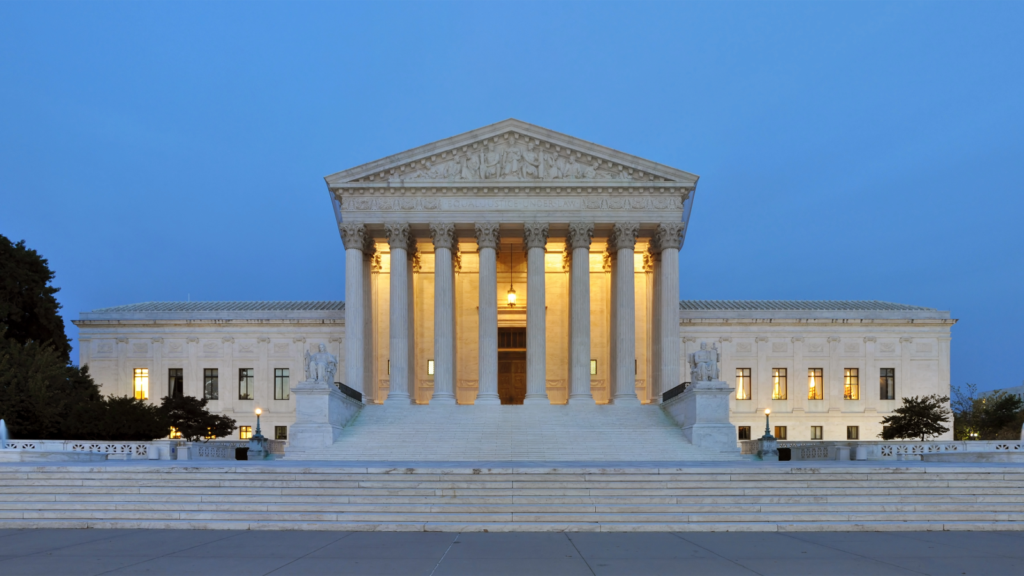
Sanctuary fights keep returning to the same legal constraint: the federal government generally cannot “commandeer” state and local officials and force them to carry out federal programs.
That is not a loophole. It is a core design feature of federalism, and it sits behind many of the court battles over sanctuary policies.
Courts have repeatedly been skeptical of sweeping attempts to punish sanctuary cities by yanking unrelated funds through executive action. A key modern repeat of that fight is playing out in San Francisco, where litigation has challenged funding threats and related directives.
Congressional researchers have laid out the same basic map: ICE “detainers” are requests, not commands, and local jurisdictions face legal and liability concerns if they hold people without proper authority.
So the federal government has a narrower set of viable routes:
- Congress can attach conditions to specific grants (within limits).
- The executive branch can prioritize enforcement resources and tactics.
- DOJ can sue if it believes a local policy violates federal law.
- Washington can create political and financial friction that makes sanctuary policies harder to sustain.
That is why this fight looks like a series of moves rather than one clean “ban.”

The public-safety argument, and what the research does and doesn’t say
Supporters of cracking down on sanctuary cities make a simple claim: if local police and jails cooperate more with ICE, dangerous people are removed faster, and the public is safer.
Supporters of sanctuary policies make a different claim: if immigrants fear that any contact with local police can lead to deportation, they are less likely to report crimes, serve as witnesses, or seek help, which makes communities less safe.
So what does the evidence show?
A substantial body of research finds that sanctuary-style limits on immigration cooperation are not associated with higher crime, and some studies find decreases in certain crime measures after adoption, though causation is complicated and varies by policy type and place.
At minimum, the “sanctuary equals more crime” claim is not supported in the simple, universal way it is often presented. That does not mean every sanctuary policy is perfect, or that enforcement choices have no trade-offs. It means the debate is being driven as much by competing theories of public safety and political accountability as by clear empirical slam dunks.
Why this fight is flaring right now
Part of it is timing.
- The administration has an executive-order framework already built, including a published list of “sanctuary jurisdictions.”
- Immigration enforcement actions and the political backlash to them are generating fresh pressure on both parties, which is now bleeding into must-pass funding negotiations.
- States are also moving in the opposite direction, trying to limit their entanglement with federal civil immigration enforcement. Kathy Hochul, for example, has proposed legislation to restrict local law enforcement from being deputized by ICE through 287(g) agreements.
The result is a familiar American dynamic: Washington wants cooperation, cities want control, and courts become the arena where power gets sorted out.
What happens next
Watch three dates and three venues.
- February 1, 2026: whether the administration actually attempts to cut funding from sanctuary cities in a concrete, enforceable way, and which funding streams it targets.
- The courts: especially the ongoing litigation over whether the executive branch can condition or freeze broad categories of funding tied to “sanctuary” designations.
- Congress: whether anti-sanctuary measures move from messaging bills into binding law through budget fights or standalone legislation.
The bottom line
“Banning sanctuary cities” is politically potent phrasing, but the real battle is about leverage and limits.
The federal government can enforce immigration law aggressively. What it cannot easily do is force cities to become its front-line workforce, especially by threatening sweeping, unrelated funding cuts through executive action. That is why each new crackdown effort tends to produce the same arc: bold announcement, legal challenge, negotiation, and then a narrower version of the original demand.
In the meantime, sanctuary policies will continue to evolve because they are not one thing. They are a patchwork of choices about policing, detention, community trust, and the role of local government in a national immigration system that remains under sustained strain.