Why We Fight. The Middle East Conflict, Explained
So you want to understand the Middle East. Get in line.
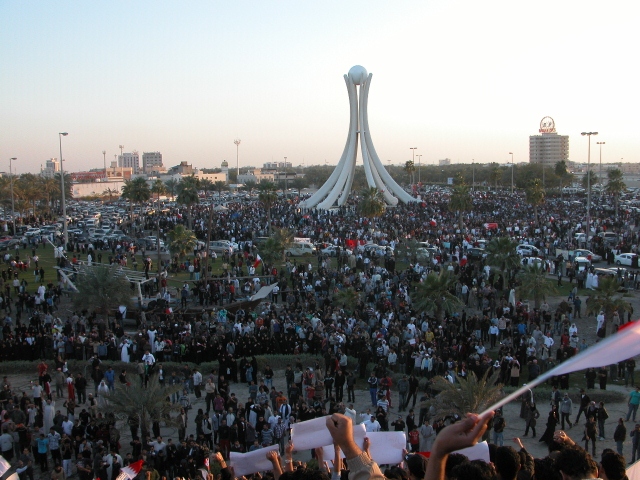
In February 2011, tens of thousands of protesters flooded Pearl Roundabout in Manama, Bahrain. They chanted a phrase that should have rewritten every Western headline about the Middle East: “Not Sunni, Not Shia, Just Bahraini.”
They were not fighting a religious war. They were demanding basic governance rights from an authoritarian monarchy that had ruled without meaningful accountability for decades.
Within weeks, the Bahraini government, backed by Saudi tanks rolling across the causeway, crushed the protests and reframed the entire uprising as a Shia sectarian rebellion backed by Iran.
The world accepted the framing. The regime survived.
That sequence tells you more about the Middle East than most textbooks do.
We are taught that the region’s violence is ancient, that Sunnis and Shia have been killing each other for over a thousand years, that Europeans drew arbitrary borders on a blank map and doomed the region to perpetual instability. This narrative is comforting because it makes the chaos seem inevitable. It removes responsibility. It lets us turn off the news and say, “Well, they’ve always been fighting.”
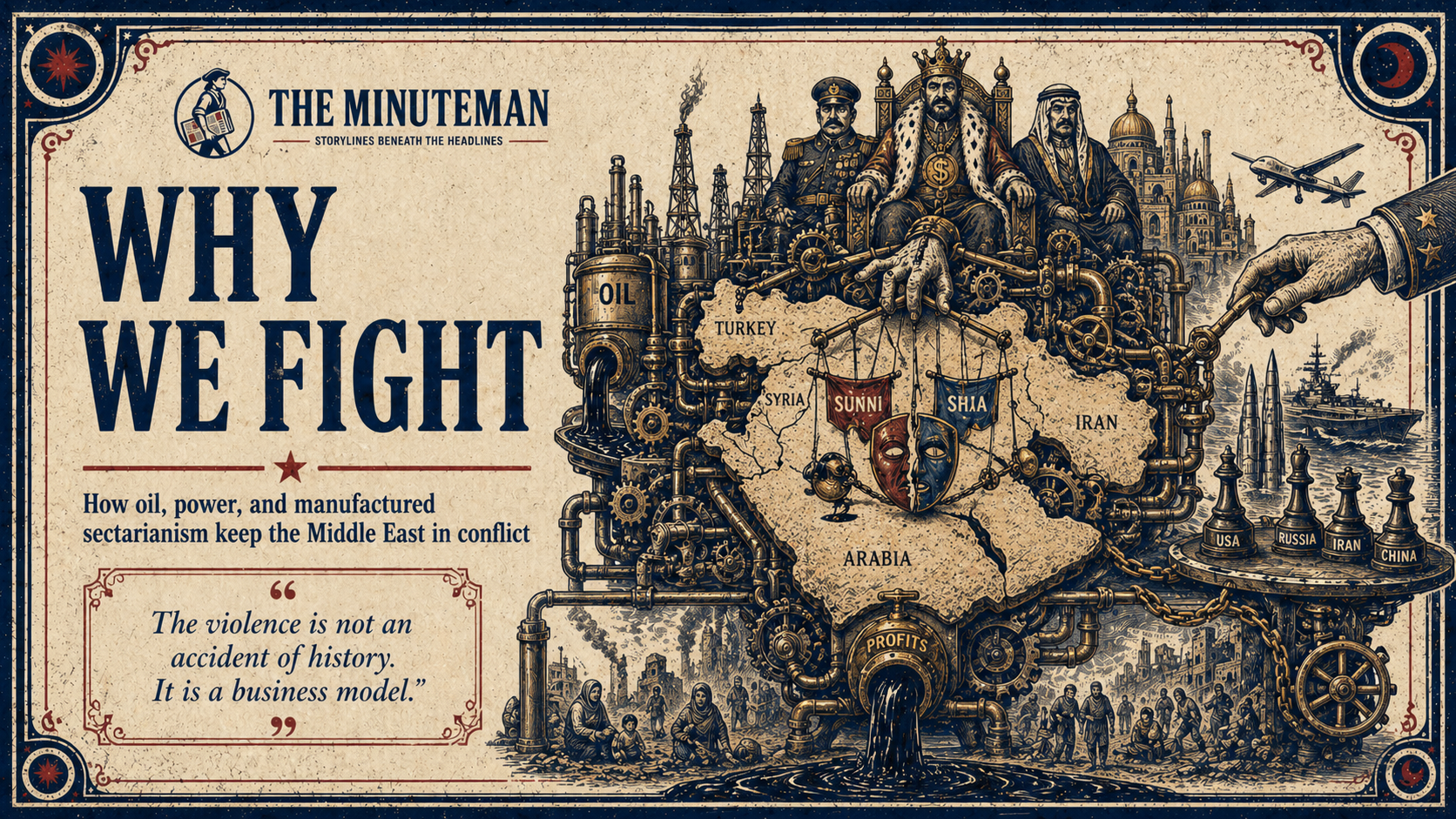
But the Middle East’s constant conflict isn’t an unavoidable clash of ancient religions. It’s a deliberate power play by authoritarian leaders who use oil wealth, water scarcity, and religious identity as tools to keep themselves in charge. The violence is not an accident of history. It is a business model. And the question that cuts through every layer of complexity is deceptively simple: who stays in power because of this?
To answer that, we need to understand three interlocking systems that sustain the cycle: how oil wealth flips the social contract between governments and citizens, how religious identity is manufactured into a weapon of political survival, and how foreign military intervention feeds the very instability it claims to solve. Then we need to look at what happens when the oil runs out and something far more essential takes its place.
The Soil Beneath the Sand
Before we get to the mechanics, we need to understand the ground these systems were built on, because the mythology matters as much as the history.
The land between the Tigris and Euphrates rivers is where human civilization started. Sumer, in modern-day Iraq, gave the world its first written language around 3200 BCE. For thousands of years, empires rose and fell across this territory, from Akkad to Babylon to Persia to Rome to the Ottomans, and none of them fell because of a Sunni-Shia rivalry. That split didn’t exist until 632 CE, when the Prophet Muhammad died without naming a clear successor.
One group believed the community should choose its leader (they chose Abu Bakr, and their descendants became Sunni). Another group believed leadership should pass through the Prophet’s bloodline to his cousin and son-in-law Ali (they became Shia). In 680 CE, Ali’s grandson Husayn was killed at the Battle of Karbala by the Umayyad caliph, an event that became foundational to Shia theology of martyrdom and resistance to unjust authority. It was a real and meaningful theological divergence. And it did produce periods of violence, including imperial wars between the Sunni Ottoman and Shia Safavid empires that lasted centuries. But those conflicts were contests over territory and political power, not perpetual holy wars driven by theological hatred.
For the vast majority of the 1,400 years that followed the split, Sunnis and Shia lived, traded, intermarried, and coexisted across the same cities. The idea that this theological dispute has been producing nonstop sectarian violence for fourteen centuries is not supported by the historical record.
What did shape the modern Middle East was the collapse of the Ottoman Empire after World War I. The Ottomans had governed the region through a vilayet system of provinces and districts for centuries. When the empire fell, Britain and France divided the territory through a series of agreements, the most famous being the 1916 Sykes-Picot pact. You’ve probably heard that this agreement drew arbitrary lines on a blank map and created fake countries, and that this is why the region is unstable. It’s become almost a reflex explanation. It’s also a myth.
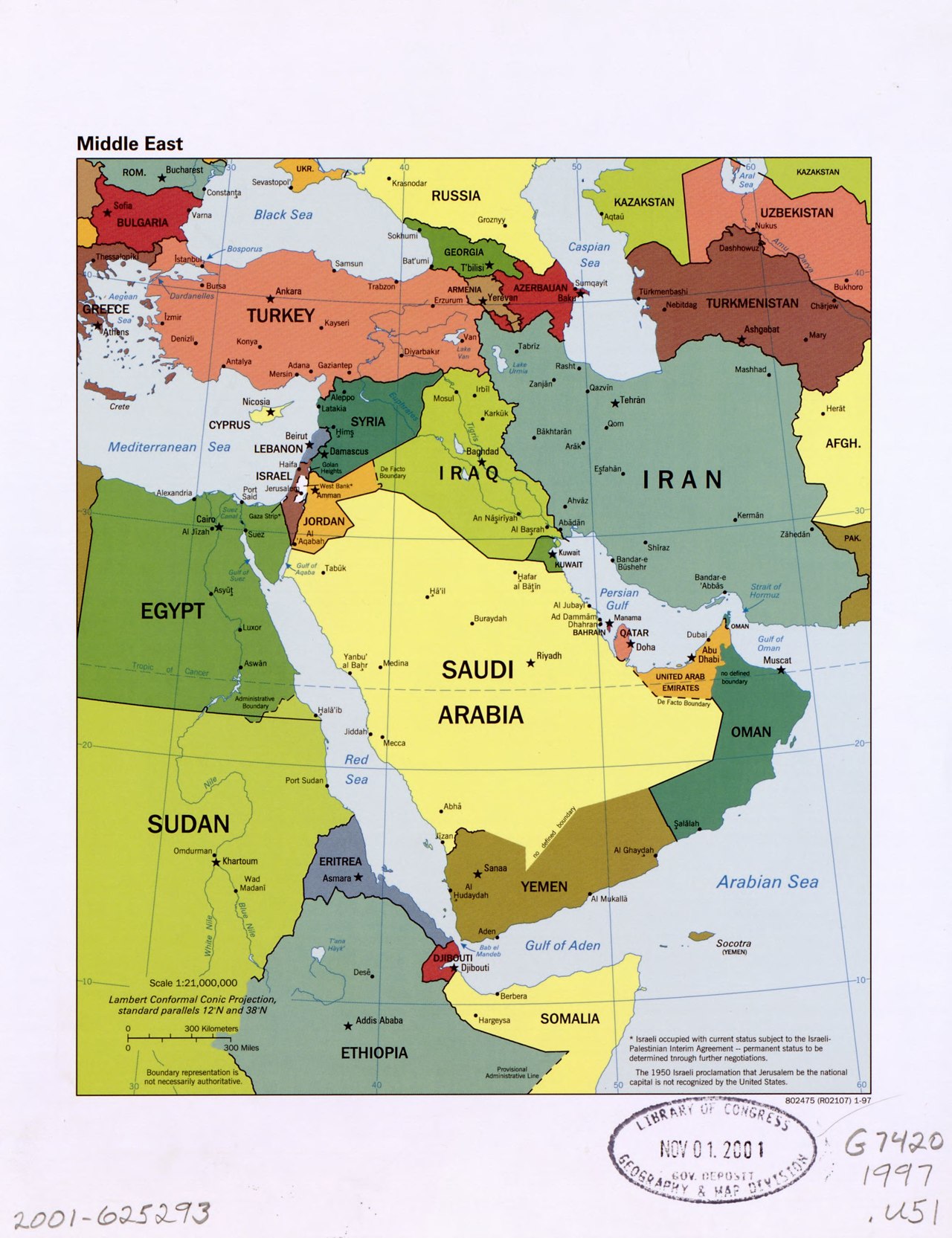
Political scientist David Siddhartha Patel of Brandeis University has shown that the Sykes-Picot agreement was never fully implemented. The borders that actually emerged were heavily influenced by Ottoman administrative structures that had been in place for decades, by local nationalist movements demanding inclusion, and by complex negotiations between colonial powers and regional actors at conferences like San Remo in 1920.
The borders weren’t drawn on a blank slate. They were adapted from existing governance realities. And despite every prediction that they would collapse, Middle Eastern state borders have remained remarkably stable since the 1970s.
When Egypt and Syria attempted to merge as the United Arab Republic in 1958, it fell apart within three years and the borders reemerged. When ISIS released its propaganda video titled “The End of Sykes-Picot” in 2014 and literally bulldozed the earthen barrier between Iraq and Syria, the states reasserted themselves and the borders held.
So why does the myth persist? Because it’s useful.
When authoritarian leaders blame their countries’ problems on colonial borders, they externalize responsibility. “Our problems are from Sykes-Picot, not from how we govern.” It mobilizes nationalism, justifies strong-arm rule, and distracts from the real question: not why the borders were drawn, but who benefits from the way things are run within them.
The Oil Curse: How Wealth Becomes a Weapon
In most democracies, the social contract works like this: citizens pay taxes, and in exchange, the government provides services and remains accountable to the people who fund it. This is the engine behind the principle of “no taxation without representation.” When people pay, they demand a voice. When governments depend on their citizens for revenue, they have to listen.
Oil flips that contract upside down.
When a government sits on vast petroleum reserves, it doesn’t need to tax its citizens. It generates revenue by selling oil to foreign buyers. And because citizens aren’t funding the government, they have far less leverage to demand political rights. The government provides healthcare, education, housing, and public sector jobs, not out of democratic obligation, but as a transaction: we give you material comfort, you accept our authority.
Political scientist Michael L. Ross documented this pattern extensively in his research on what he called the “resource curse.” His findings are stark. Ross and other scholars have found that oil wealth is associated with lower levels of democracy and higher risk of conflict in many states. Oil-rich countries are 50 percent more likely to be ruled by autocrats than countries without oil. They are twice as likely to descend into civil war. And the effect only became pronounced after the late 1970s, when most oil-producing countries nationalized their petroleum industries and captured the bulk of the revenue themselves.
This is the rentier state model, and it describes most of the Persian Gulf. Saudi Arabia is the clearest example.
When the Arab Spring protests broke out in 2011, the Saudi response was not reform. King Abdullah announced $37 billion in direct cash handouts to citizens, approved $130 billion to create 120,000 new public sector jobs, and green-lit the construction of 500,000 new houses. The message was unmistakable: we can afford to buy your silence. And it worked. Saudi Arabia avoided the kind of mass uprising that toppled neighboring governments.
The oil doesn’t just fund comfort. It funds control.
Saudi Arabia spends about 7 percent of its GDP on its military, the second-highest rate in the world after Ukraine (which is fighting an active land war). Qatar spends just under 7 percent. Oman about 5 percent. These aren’t investments in national defense against foreign armies. They are investments in the internal security apparatus that monitors dissent, prevents political organization, and eliminates challengers. The money buys loyalty through patronage and silence through surveillance.
Researchers call it the “authoritarian bargain”: the state restricts political rights in exchange for material benefits, and the citizens who accept the trade become dependent on the system that controls them.
There is even a relationship between resource wealth and the likelihood of civil war that follows an inverted U-shape. Countries with almost no natural resources rarely have civil wars because there’s nothing to fight over. Countries with enormous resource wealth also rarely have civil wars because the state can afford to monopolize violence and buy off dissent. The danger zone is in the middle, countries with moderate resource wealth where the prize is big enough to motivate rebellion but the government isn’t rich enough to crush it. The risk peaks when those resources are located in regions inhabited by ethnic minorities who have been marginalized by the central government. Iraq, Syria, Nigeria: the pattern repeats.
But there’s a fatal flaw in the model.
The entire system depends on oil revenue continuing to flow. When prices collapsed between 2014 and 2016, falling from $111 per barrel to $62, Middle Eastern oil exporters lost more than a third of their revenue. Saudi Arabia was forced to do something it had never done in modern history: impose a tax. A value-added tax was introduced in 2018 at 5 percent and tripled to 15 percent by 2020. The UAE followed. Bahrain and Oman joined.
The social contract is being rewritten in real time.
History tells us what happens when governments start taxing citizens who have never been taxed before. People begin to ask where the money goes. They begin to demand a voice. And oil is not the only resource under pressure. The Middle East sits on some of the planet’s most water-scarce land, and the same regimes that use oil wealth to buy loyalty also control access to water, a resource that will matter long after the last barrel is pumped.
The question is whether these regimes will grant their citizens a voice, or whether they’ll double down on the other tools in their arsenal.
Sectarian Entrepreneurs: Manufacturing the Enemy
If oil is the fuel that powers authoritarian control, religious identity is the steering wheel. And the people driving are not theologians. They are political operators who scholar Simon Mabon and others call “sectarian entrepreneurs,” leaders whose political survival depends on amplifying the Sunni-Shia divide, not because theology demands it, but because manufactured enemies keep populations loyal and rivals destabilized.
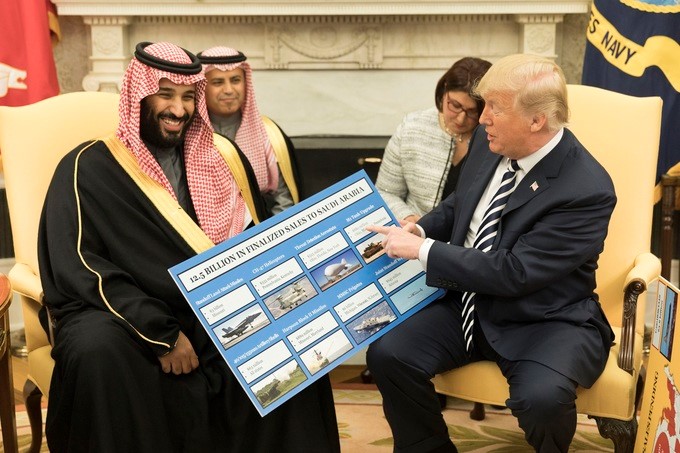
The Saudi-Iranian rivalry is the most visible example, and it is almost always misunderstood. Western media frames it as a religious conflict: Sunni Saudi Arabia versus Shia Iran, locked in an ancient theological struggle. But the rivalry is primarily about regional power. Both governments use sectarian rhetoric to justify political objectives. Saudi Arabia’s Crown Prince Mohammed bin Salman has used the “existential threat” of Iran to consolidate his own authority, marginalize rival princes within the royal family, and justify massive military spending. Iran, for its part, frames Saudi Arabia as a Wahhabi oppressor to mobilize Shia populations across the region and project influence far beyond its borders.
The theology is real, but it is the instrument, not the cause.
The proof is in how sectarianism actually operates in specific conflicts.
In Syria, scholar Christopher Phillips documented that sectarianism was “Plan B.” When the civil war began in 2011, both Saudi Arabia and Iran initially backed inclusive, non-sectarian actors. Saudi Arabia supported the Free Syrian Army, which positioned itself as a broad-based nationalist opposition. Iran backed the Syrian Arab Army under Assad. Both sides turned to overtly sectarian militias only after those inclusive options failed. By 2017, the conflict had drawn in 8,000 Hezbollah fighters and 12,000 Afghan and Pakistani fighters organized along explicitly sectarian lines.
Sectarianism didn’t start the war. It was the fallback strategy when politics collapsed.
Yemen tells the same story from a different angle.
Western and Saudi media consistently frame the conflict as an Iranian-backed Shia insurgency, a proxy front in the Saudi-Iranian rivalry. But as scholar May Darwich demonstrated, the war is rooted in local political struggles over governance and tribal leadership.
The Houthi movement practices Zaydism, a branch of Shia Islam that is theologically closer to Sunni Islam than to the Twelver Shiism practiced in Iran.
A UN Panel of Experts reported in January 2017 that there was “no sufficient evidence” of large-scale Iranian arms supply to the Houthis. Saudi Arabia and its allies imposed the sectarian narrative because it was easier to mobilize an international coalition against “Iranian-backed Shia rebels” than against a local political movement with legitimate grievances against a corrupt central government.
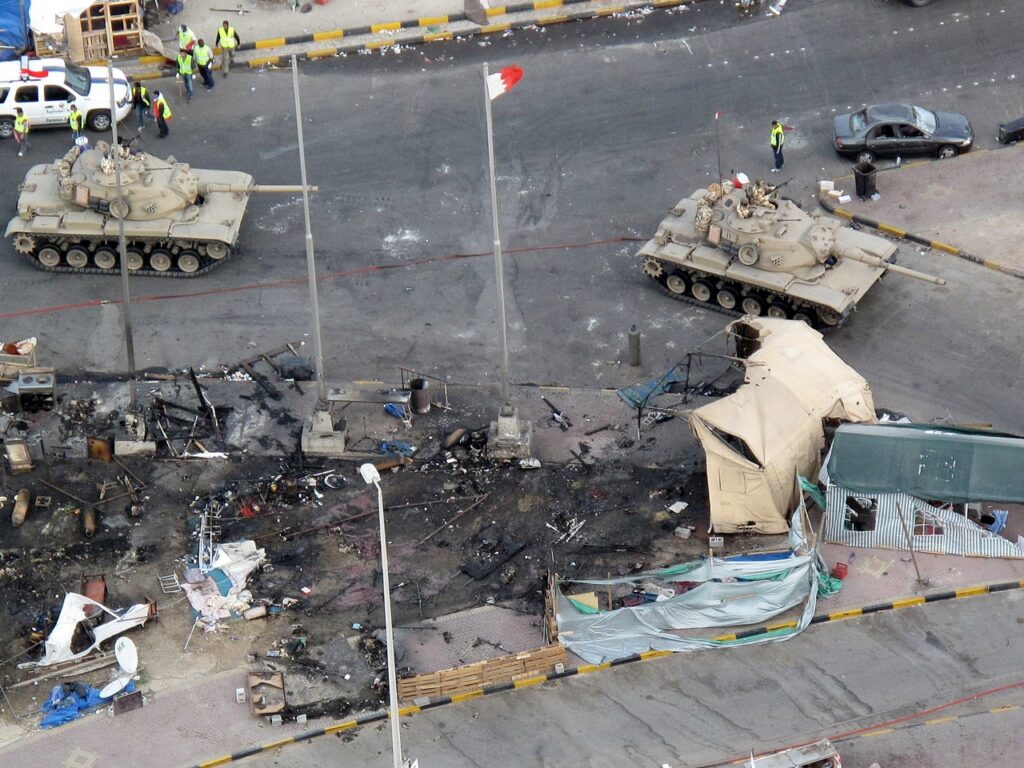
Then there is Bahrain in 2011, the example we started with. The protesters were explicit about rejecting the sectarian frame. “Not Sunni, Not Shia, Just Bahraini.” The government could not allow that narrative to stand. A cross-sectarian demand for governance reform threatened the monarchy in a way that a “Shia rebellion” did not, because a Shia rebellion could be contained by mobilizing Sunni nationalism and calling in Saudi troops. The government deliberately imposed the sectarian lens on a movement that had rejected it. The opposition was divided. The protest was crushed. The monarchy survived.
This is the pattern.
Scholars Nader Hashemi and Danny Postel describe the process as “sectarianization,” the deliberate, top-down amplification of sectarian identity for political purposes. It is, as they put it, “deeply artificial.” Leaders create constituencies where none naturally exist. They turn local political disputes into religious proxy wars. They make belonging to the nation synonymous with loyalty to a sect.
But a harder question remains: if sectarianism is manufactured from above, why does it stick? Why do populations accept the frame?
Because the frame gets woven into the material fabric of daily survival.
In Iraq, a system called muhasasa ta’ifia, or sectarian apportionment, structures the entire government around sectarian quotas. If you want a government job, and government employment is the dominant source of work, you must align yourself with a party representing your sect. You are, in the language of scholar Toby Dodge, “interpolated” as a member of an exclusive Sunni, Shia, or Kurdish community whether you chose that identity or not.
The system forces people into sectarian boxes as the price of economic survival.
In Lebanon, where the state has been weak for decades, Hezbollah provides schools, health clinics, and social services that the government cannot. The community becomes dependent on the sectarian organization for basic needs, and that dependency entrenches the identity.
When sectarian groups are the ones keeping your children fed and your family healthy, sectarian loyalty isn’t abstract. It’s how you stay alive.
Fear does the rest.
Regimes amplify the threat of the sectarian “other” until opposition to the government becomes indistinguishable from treason. In Saudi Arabia, the Iranian threat is framed as existential, an attempt to destroy the Sunni order itself, and any domestic dissent can be branded an Iranian conspiracy. In Syria, the Assad regime cast itself as the protector of minorities against Sunni extremism, and state propaganda glorified the image of the heroic soldier willing to die for the nation. What scholar Rahaf Aldoughli calls the “logic of protection” places the population in a subordinate role. You are the protected. The state is your shield. To question the shield is to invite annihilation. That framing works because the threats, in many cases, are real enough.
When sectarian militias are killing people in the next province, the argument that you need a strong protector doesn’t require much embellishment.
Local actors also have a practical incentive to adopt the sectarian frame even when their grievances are not religious. Rebel groups and political factions across the region have learned that borrowing sectarian narratives unlocks money and weapons from regional patrons. If you frame your local struggle as part of the Sunni cause, Saudi Arabia may fund you. If you frame it as Shia resistance, Iran may arm you. The sectarian label becomes the currency of international support, and groups adopt it strategically even when their actual motivations are economic or political.
This is why Bahrain’s non-sectarian movement failed. Not because the population truly wanted sectarian politics, but because the government had the institutional tools to impose them. By redefining the protests as a Shia rebellion, the monarchy divided the opposition, secured Sunni loyalty through fear, and convinced its allies that this was an existential security matter rather than a governance rights issue. The protesters chanted “Just Bahraini.” The state made that identity unavailable.
So sectarianism sticks not because populations are primitive or irrational. It sticks because the political and economic systems are designed to make it the only viable path to jobs, safety, services, and survival. Dismantle the institutional structures that enforce it, and the identity loses its grip. But dismantling those structures would require the people who built them to give up power. And that brings us back to the question at the center of this article.
The Permanent War: How Foreign Intervention Feeds Itself
Andrew Bacevich, a retired Army colonel and professor emeritus at Boston University who spent 23 years as a commissioned officer and holds a PhD from Princeton, frames it this way: post-WWII and pre-1980, few American soldiers had been killed in action in the Greater Middle East. Since then, the region has consumed the overwhelming majority of American combat deaths. Bacevich wrote that U.S. involvement has been defined by “blunder after blunder, fed by hubris along with cultural, historical, linguistic, and religious illiteracy.” The numbers don’t tell the whole story (American soldiers have died in Somalia, the Balkans, and elsewhere), but the weight of the pattern is undeniable. The Middle East became America’s war, and America never left.
The turning point was 1979, a year that reshaped the entire region in a span of twelve months. In January and February, the Iranian Revolution overthrew the Shah and established an Islamic Republic hostile to the United States. In November, Iranian students seized the U.S. Embassy in Tehran, holding 52 Americans for 444 days. The same month, Islamic extremists seized the Grand Mosque in Mecca, the holiest site in Islam. In December, the Soviet Union invaded Afghanistan. And on January 23, 1980, President Jimmy Carter delivered a State of the Union address containing a single sentence that committed the United States to a military presence in the Middle East that continues 46 years later: “An attempt by any outside force to gain control of the Persian Gulf region will be regarded as an assault on the vital interests of the United States of America, and such an assault will be repelled by any means necessary, including military force.”
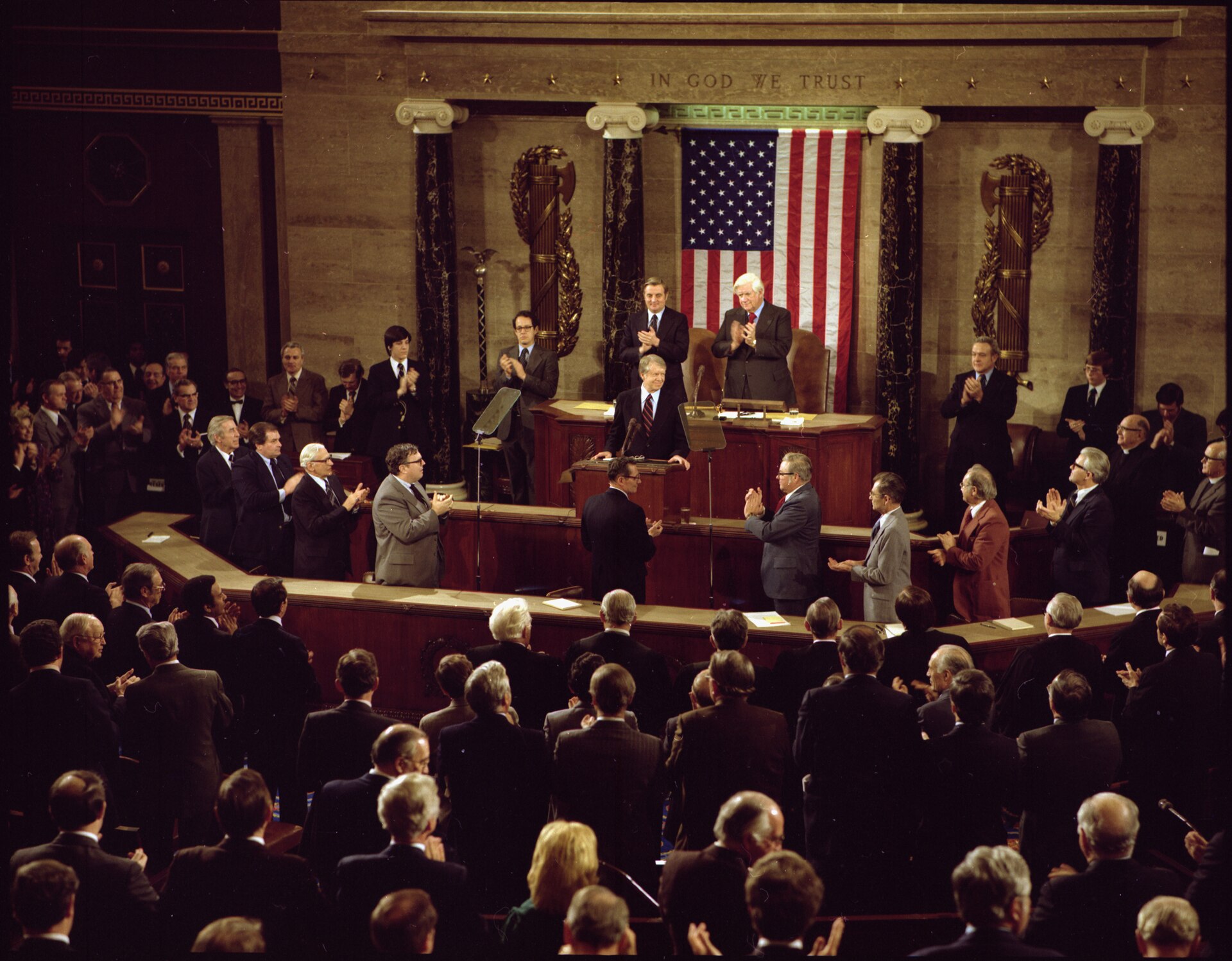
This became known as the Carter Doctrine, and it established the framework for everything that followed. Reagan escalated involvement. The CIA spent billions supporting the Afghan mujahideen through Operation Cyclone, building a jihadist infrastructure that, while not directly producing al Qaeda, created the training camps, supply lines, and ideological ecosystem from which Osama bin Laden and his network emerged. The Gulf War in 1991 liberated Kuwait but left 50,000 American troops permanently stationed in the region. The September 11 attacks led to the invasion of Afghanistan in 2001 and Iraq in 2003. The case for Iraq rested on claims that Saddam Hussein possessed weapons of mass destruction. Secretary of State Colin Powell presented satellite images and intelligence assessments to the United Nations Security Council in February 2003. The intelligence was wrong. No weapons of mass destruction were found. The war proceeded anyway, killing hundreds of thousands of people, displacing millions, and dismantling the Iraqi state without a viable plan for what came after. The power vacuum that followed empowered sectarian militias and enabled the rise of ISIS in 2014. Each intervention produced the conditions that justified the next one.
The Pentagon’s own Defense Science Board acknowledged this dynamic in 1997, finding a “strong correlation between U.S. involvement in international situations and an increase in terrorist attacks against the United States.”
The cycle is self-perpetuating: intervene, create instability, use that instability to justify more intervention, repeat.
The financial cost of the War on Terror has reached approximately $8 trillion. The human cost, according to Brown University’s Costs of War project, is approximately 940,000 people killed by direct violence, with total deaths including indirect causes estimated between 4.5 and 4.7 million.
And this is the part most Americans don’t think about: the United States has been the world’s leading oil producer since 2018. It does not need Middle Eastern oil for its own energy supply.
So why does the commitment continue?
Because the goal is no longer oil for America. It is global power.
It is controlling other nations’ access to resources, particularly strategic competitors like China. It is maintaining influence over the Strait of Hormuz, through which roughly 34 percent of the world’s crude oil trade passes every day (about 15 million barrels). It is supporting Israel as a strategic ally. It is preventing power vacuums that could be filled by Russia or China. And it is sustaining a defense industry whose largest contractors have earned trillions in revenue since 2001 from weapons systems, missile programs, and surveillance technology deployed across the region. The incentive structure is not hidden. Continuous unrest means continuous demand for the products these companies sell.
There is a counterargument.
American military presence in the Persian Gulf has, by some measures, prevented larger wars. The U.S. Navy’s Fifth Fleet guarantees freedom of navigation through the Strait of Hormuz, and that guarantee has kept oil flowing to the global economy for decades. Without it, regional powers might escalate conflicts that could spike energy prices worldwide and draw in even more destructive interventions. The argument is that American power, however imperfect, provides a stability floor that the region cannot provide for itself.
But this argument has a structural problem.
The “stability” it describes is stability for the regimes, not for the people living under them. The U.S. security umbrella removes the pressure that might otherwise force authoritarian governments to reform. It guarantees the survival of monarchies and dictatorships that would have to negotiate with their own citizens if they couldn’t rely on American aircraft carriers and arms shipments. And the economic incentives that sustain the commitment are not subtle.
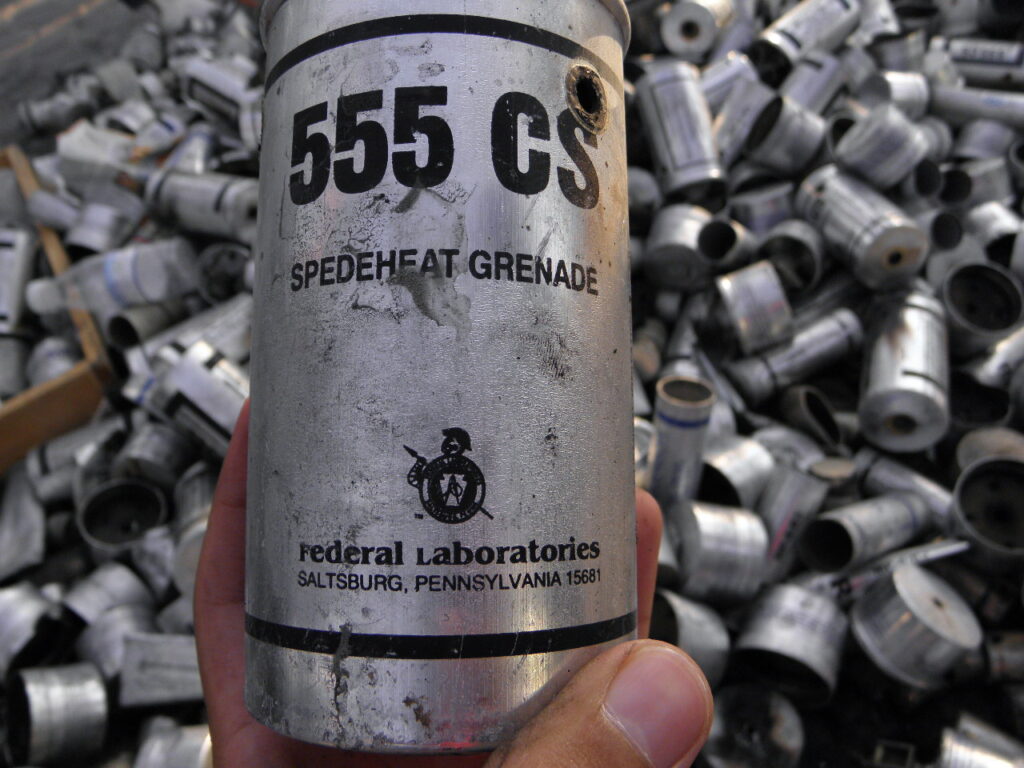
According to Brown University’s Costs of War project and the Quincy Institute for Responsible Statecraft, the top five U.S. defense contractors received $2.1 trillion in Pentagon contractsbetween 2001 and 2020. The defense sector spent $191 million lobbying Congressin 2025 alone, employing over 900 lobbyists.
These companies do not profit from peace. They profit from the permanent perception of threat. And the revolving door between the Pentagon, defense contractors, and congressional committees ensures that the people making policy decisions about Middle Eastern intervention are often the same people who benefit financially from its continuation.
The result is that American military presence in the Middle East functions as another pillar holding up authoritarian regimes. The regimes get security guarantees. The United States gets strategic positioning. The arms industry gets contracts. And the populations who live under these governments get none of the political agency that might come if their rulers had to earn legitimacy without foreign military backing.
Water Is Power
Throughout every section of this article, a resource has been quietly present beneath the oil, the religion, and the military hardware. It isn’t traded on commodities markets. It doesn’t generate sovereign wealth funds. But it determines, at the most fundamental level, who lives and who dies. And three of the most influential leaders of the twentieth century tried to warn us about it.
In 1979, Egyptian President Anwar Sadat said: “The only matter that could take Egypt to war again is water.” In 1985, Boutros Boutros-Ghali, then Egypt’s Minister of State for Foreign Affairs and later the Secretary-General of the United Nations, warned: “The next war in the Middle East will be fought over water, not politics.” And in 1995, Ismail Serageldin, then Vice President of the World Bank, took the global view: “Many of the wars of this century were fought over oil, but wars of the next century will be over water, unless we change our approach to managing this precious and vital resource.”
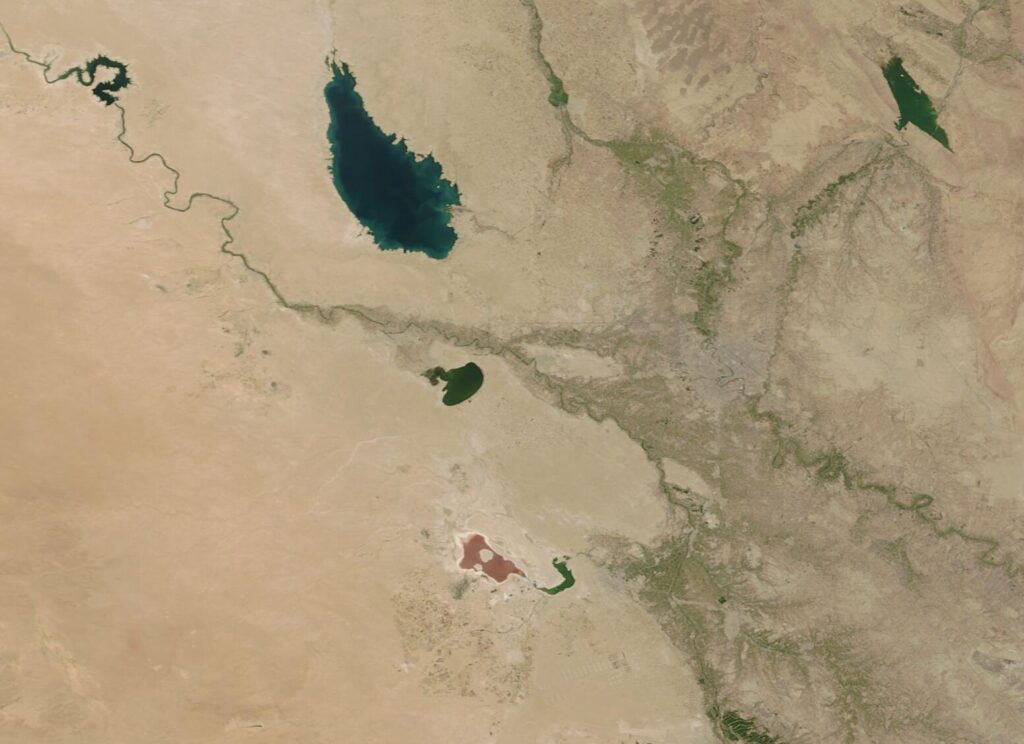
The Middle East and North Africa (MENA) hold just 2 percent of the world’s renewable freshwater for approximately 7 percent of its population. Eighty-three percent of the region’s territory faces severe water scarcity. Sixteen of the 25 most water-stressed countries on Earth are in MENA. And the crisis is accelerating.
The Jordan River, one of the most symbolically and strategically significant waterways in the world, has had over 90 percent of its flow diverted since the 1960s. In 2025, its discharge fell to 3.5 cubic meters per second, a historic minimum (for scale, its sustainable flow was once 1,500 cubic meters per second).
In 1997, Major Stephen M. Woolwine assessed the Jordan River basin as the most likely site for future violent conflict due to acute water shortages, in a monograph for the U.S. Army’s School of Advanced Military Studies. Nearly three decades later, the situation has only deteriorated. The Center for Strategic and International Studies reported in 2025 that water tables across the region are falling, stored water is evaporating at increasing rates, and subnational and transboundary tensions over water are rising.
Turkey controls approximately 90 percent of the Euphrates River’s flow and can regulate the water supply to Iraq and Syria downstream. In 2022, Iraq’s Ministry of Agriculture was forced to slash irrigation for agriculture by 50 percent, a decision that rippled through the lives of farmers and families who depend on the Tigris and Euphrates for their survival. Iraq faces a projected water deficit of 10.8 to 11 billion cubic meters annually by 2035. The Euphrates itself is projected to run dry by 2040. A 2025 report from the Center for Strategic and International Studies found that conditions in Syria’s downstream dams had nearly reached “dead pool” by 2021, meaning the reservoir level had fallen too low for water to flow through the dam at all. In Egypt, the Grand Ethiopian Renaissance Dam, completed in September 2024, could reduce Egypt’s water supply by one-third, a country that gets 97 percent of its water from the Nile.
Water scarcity connects directly to all three pillars we’ve discussed. It is a resource that authoritarian regimes can control and distribute as patronage, just like oil. In Assad’s Syria, as documented by the Washington Institute for Near East Policy, access to well-drilling permits was directly tied to family loyalty to the regime: the closer your allegiance, the more water you could access.
ISIS controlled water infrastructure as a core territorial strategy, weaponizing access to dams and water supplies in the same way it controlled oil fields. Water scarcity also deepens the sectarian tool by creating survival competition between communities, making it easier for political entrepreneurs to frame resource disputes as religious or ethnic conflicts. And foreign powers have long understood that whoever controls the headwaters controls the politics downstream.
By 2050, projections indicate that every country in the MENA region will reach “extremely high water stress.” The projected humanitarian consequences include 1.35 million excess deaths from water-related causes, 18 million internal “water refugees” displaced within their own countries, and 3.5 million people displaced across international borders.
Here is the deeper reveal. The oil era is ending.
The global energy transition is accelerating. Renewable energy is reducing demand for petroleum, and the authoritarian bargain that oil funded is already fraying. Saudi Arabia’s Vision 2030 was launched to diversify the economy, but as of 2022, the country remains as dependent on oil as it was when the plan began. Some analysts argue it is more dependent. When the oil money dries up, these regimes will lose the primary tool they’ve used for decades to buy compliance and fund repression.
And what’s waiting underneath the oil story is water. A resource you cannot drill for, cannot replace, and cannot survive without. Gulf states currently depend on energy-intensive desalination for approximately 80 percent of their freshwater. Their water security depends on their energy security at the precise moment their primary energy export is becoming economically uncertain. It is a trap with no obvious exit.
The Question That Cuts Through
The Middle East is not a simple story. It is a region of extraordinary history, cultural depth, and human resilience, and reducing it to a clash of religions or a set of bad borders does a disservice to the hundreds of millions of people who live there. But the complexity itself has been used as a shield. When something looks too complicated to understand, we stop asking questions. And that is exactly what the people who benefit from the chaos are counting on.
The systems that sustain Middle Eastern instability are not ancient. They are modern. They are maintained by specific people making specific choices to preserve their own power.
Oil wealth lets authoritarian regimes bypass the social contract that normally connects governments to their citizens.
Religious identity is manufactured into a weapon that divides populations along lines that serve political elites, not theological truth.
Foreign military intervention perpetuates the instability it promises to resolve, enriching defense contractors and sustaining strategic positioning while the people on the ground pay the price.
And beneath all of it, a water crisis is building that will outlast the oil and test whether any of these governments can survive without the wealth that has propped them up for half a century.
The next time you see a headline about conflict in the Middle East, don’t ask why they’ve always been fighting. They haven’t always been fighting, not like this, and not for the reasons you’ve been told. And we are not spectators. American tax dollars fund the military presence. American weapons arm the regimes. American foreign policy decisions shape who holds power and who doesn’t. The system that keeps authoritarian leaders in control over there is sustained, in part, by choices made over here.
Ask the question that the people in power don’t want you to ask: who stays in power because of this?
The answer will tell you more than any history book.