How Vaccine Misinformation Became U.S. Policy: The Long Road From Fringe Myth to the CDC’s Autism Reversal
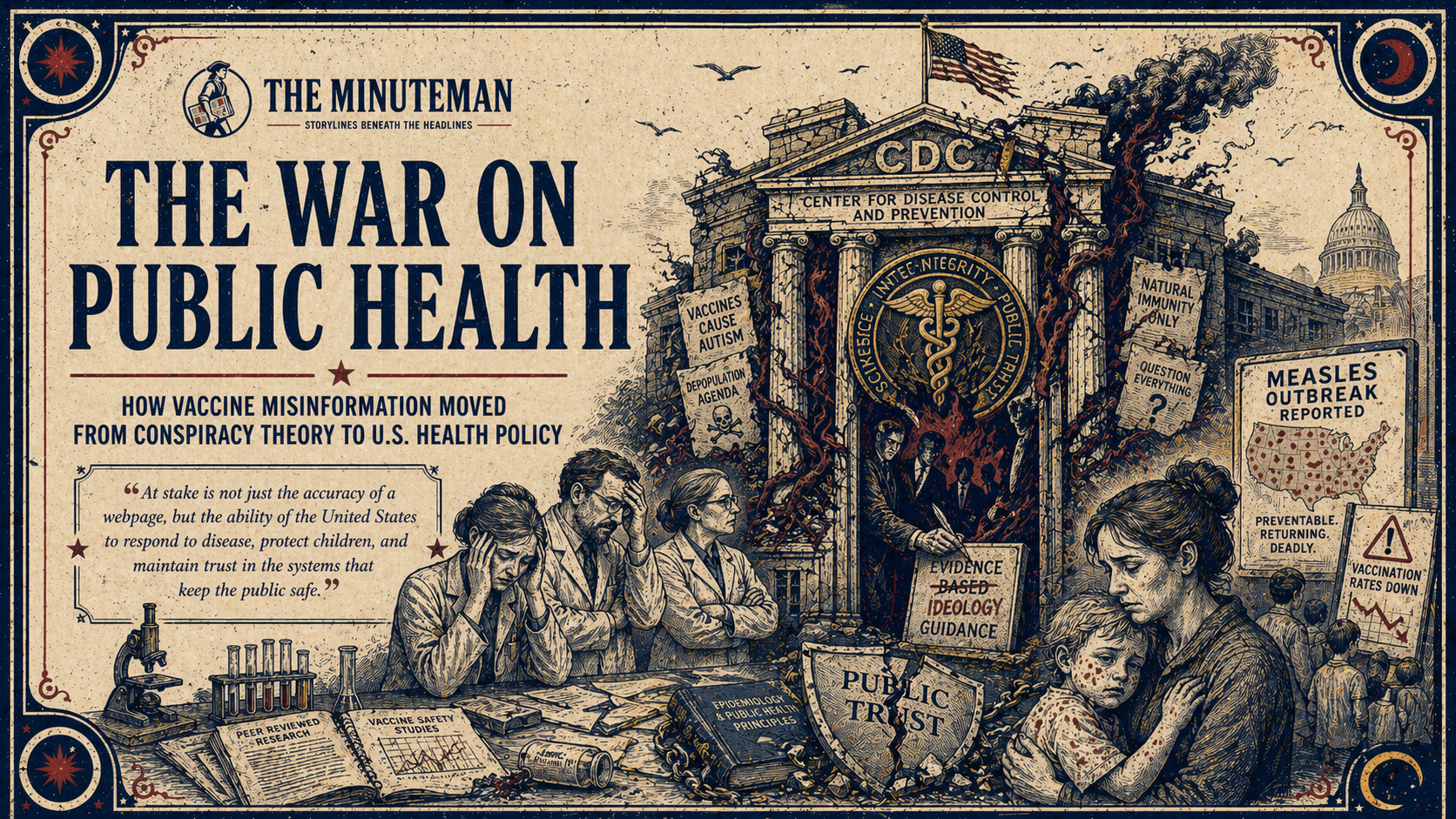
A years-long campaign to falsely link vaccines and autism has evolved from online conspiracy to federal guidance — reshaping the CDC, weakening disease surveillance, and endangering public health.
For decades, vaccines have been one of modern medicine’s most successful tools, virtually eliminating diseases that once paralyzed, disfigured, or killed millions. Yet a persistent myth — that vaccines cause autism — has survived despite overwhelming scientific evidence to the contrary.
Now, for the first time, that myth has penetrated federal policy. A recent change on the Centers for Disease Control and Prevention’s website quietly revised a long-standing statement that vaccines do not cause autism. The page now suggests that vaccines might play a role and that science has not “ruled out the possibility that infant vaccines cause autism.”
There is no new evidence behind this change. Scientific consensus remains unequivocal. What has changed is the leadership of the federal health apparatus.
NPR reports that CDC career scientists were neither consulted nor informed and that many now fear they work for an “anti-science organization.” Their alarm reflects a years-long transformation of vaccine misinformation — from fringe speculation, to political talking point, to institutional power — guided largely by Health and Human Services Secretary Robert F. Kennedy Jr.
This article traces how misinformation built momentum, how it was normalized, and how it finally breached the nation’s public health infrastructure, culminating in a CDC policy shift that misrepresents the science and puts American health at risk.
The Origins of a Myth: How Vaccine Panic Took Root
The modern wave of vaccine misinformation began long before RFK Jr. held political office. As memories of past epidemics faded, fear-based narratives began to fill the space once occupied by firsthand understanding. Polio, once a terror, became a distant historical fact. As immunization erased outbreaks, social media filled the void with emotional anecdotes and alarming but inaccurate claims.
Into that environment stepped public figures who repeated misinformation with confidence. During the 2016 election, Donald Trump suggested that children receive “horse-sized” vaccine doses and proposed spacing out shots — ideas based on no scientific evidence. These statements mirrored a growing online movement, helping transform fringe concerns into mainstream debate.
At the same time, some parents, confused by competing narratives, turned to extreme measures that bypassed scientific medicine entirely. They exchanged objects contaminated with saliva or pus from infected children in misguided attempts to “naturally” immunize their own — a practice with real dangers and no medical basis.
That confusion was then compounded by the belief that vaccines cause autism. (They do not.)
Autism and Vaccines: A Myth With No Scientific Basis
The myth began with a small 1998 study by Andrew Wakefield, which falsely claimed a link between the MMR vaccine and autism. The study was later exposed as fraudulent, the data manipulated, and Wakefield lost his medical license. Yet the myth endured.
Robert F. Kennedy Jr. became one of its most influential champions. For over a decade, he promoted the false idea that thimerosal — a preservative in some older vaccines — was responsible for rising autism diagnoses. He continued even after thimerosal was removed from nearly all childhood vaccines, and autism rates remained unchanged.
Scientists have disproven the autism-vaccine link repeatedly. As NPR reported, Dr. Demetre Daskalakis, a former senior CDC official, summarized the consensus plainly:
“Every scientist in the world… knows that vaccines do not cause autism.”
The Autism Science Foundation and decades of research confirm that autism is influenced by genetics, family history, environmental stressors, and factors during pregnancy — not vaccines.
But scientific certainty did not prevent the myth from spreading. The myth grew precisely because it was built on a premise scientists could not satisfy: the impossible demand to “prove a negative.” When scientists said there was no evidence of a link, activists reframed that responsible precision as uncertainty.
This tactic laid the foundation for what would come years later: the rewriting of federal vaccine guidance.
Real Consequences: Falling Vaccination Rates and the Return of Preventable Disease
Within the last ten years, these beliefs began to show measurable public health consequences.
Vaccination rates fell in several states, including Minnesota, where targeted misinformation within the Somali community reduced measles vaccination to 42 percent. The result was a severe outbreak — exceeding the total number of U.S. measles cases from the previous year combined.
Other countries offered cautionary examples. France saw its vaccination rate slip to 89 percent and soon endured 15,000 measles cases, including six deaths.
Preventable diseases thrive when vaccination rates dip even slightly below herd-immunity thresholds. Children with compromised immune systems — including those undergoing leukemia treatment — depend on community immunity for survival. As one parent explained to the BBC in 2025, their child lived in isolation for years until it was safe for them to be around vaccinated peers.
These real-world consequences provided a preview of what happens when misinformation influences behavior. The next phase of the story would show what happens when misinformation influences policy.
Vaccine Scheduling Panic: The Creation of False Alternatives
As vaccine skepticism spread, new “alternative vaccine schedules” emerged. Pediatrician Bob Sears popularized a slowed-down schedule that deliberately separated shots, based not on evidence but on speculation. He acknowledged there was no science behind his plan — but its perceived legitimacy sowed doubt about the standard schedule.
The CDC has long warned that spacing out doses creates unnecessary risk: it leaves children exposed to diseases for longer and undermines decades of research into optimal immunity. Yet the framing of “too many, too soon” persisted, creating a political environment where advisory panels could be pressured to revisit vaccine timing.
That crack in public confidence would later become an entry point for political influence.
The Political Rise of RFK Jr. and the Mainstreaming of Misinformation
By 2024, Kennedy had evolved from a fringe vaccine activist into a national political figure. His presidential bid attracted a diverse coalition of supporters, many drawn to a narrative of honesty and outsider integrity. But beneath that narrative was a decades-long pattern of conspiratorial thinking.
He had promoted:
- AIDS denialism
- Claims that psychiatric medications caused school shootings
- Anti-Fauci rhetoric
- The persistent myth linking vaccines to autism
He founded Children’s Health Defense (CHD), which advanced many of these ideas. After the CDC changed its website in 2025, CHD’s CEO Mary Holland celebrated, claiming the agency was finally admitting it “lied to the public” for 30 years. Her statement was false — but it demonstrated the influence her group now had inside government.
Kennedy’s rhetoric frequently dehumanized people who have autism, describing them as incapable of living full lives. Autism advocates have long rejected this framing, noting that it both misrepresents autistic individuals and undermines research into their actual needs.
His messaging was consistently contradictory: publicly claiming he was not anti-vaccine while privately urging people to confront vaccine-supportive parents, and while writing books alleging mass harm from vaccines.
His influence was no longer just cultural. It was about to become structural.
From Fringe to Federal Power: RFK Jr. Takes Over U.S. Health Policy
In 2025, President Donald Trump appointed Kennedy as Secretary of Health and Human Services. Trump promised to let him “go wild” on food, health, and medicine.
Once in office, Kennedy initiated a vast reorganization of federal public health agencies. He created the Administration for a Healthy America (AHA), merging or downsizing the CDC, FDA, NIH, and CMS. Tens of thousands of scientists and staff were fired or reassigned.
The restructuring was executed so quickly that Kennedy later admitted he did not know which programs were eliminated. Whole labs were shut down. Grants were suspended. Research into HIV, cancer, and Alzheimer’s was halted or drastically pared back.
Doge — the Department of Government Efficiency — imposed a $1 spending limit on agency credit cards, halting lab purchases, gas for fieldwork, and even basic supplies. On April 1, mass badge deactivations instantly removed thousands of federal employees.
These changes gutted the nation’s scientific ecosystem, but the most dramatic consequences emerged in vaccine policy.
The CDC Under Pressure: How Vaccine Guidance Was Rewritten
NPR reported that Kennedy’s HHS barred CDC career scientists from speaking publicly, replaced the agency’s vaccine advisory committee with individuals known for unorthodox and conspiratorial views, and began altering vaccine schedules based on politics rather than evidence.
The committee has already modified recommendations for flu and COVID vaccines and is preparing further changes.
Then came the most visible shift: the CDC quietly changed its autism page.
Where it once read, “Vaccines do not cause autism,” it now implies a lack of evidence and suggests vaccines “might” contribute — a framing indistinguishable from Kennedy’s long-running rhetoric.
“…this webpage has been updated because the statement “Vaccines do not cause autism” is not an evidence-based claim. Scientific studies have not ruled out the possibility that infant vaccines contribute to the development of autism. However, this statement has historically been disseminated by the CDC and other federal health agencies within HHS to prevent vaccine hesitancy. – CDC, updated Nov. 19, 2025
Scientists were not consulted. There was no new data. The shift was political, not scientific.
And its consequences were immediate.
Outbreaks Intensify as Public Guidance Falters
In early 2025, a significant measles outbreak in Texas killed two children. During this crisis, Kennedy falsely claimed on national television that the measles vaccine kills people every year and gives them the same symptoms as measles. Both statements are untrue.
Texas hospitals soon reported cases of vitamin A overdose, after parents turned to unproven treatments promoted by online influencers. Dallas canceled 50 vaccination clinics after its immunization program lost funding through AHA restructuring.
Other outbreaks followed:
- Whooping cough deaths in multiple states
- A hepatitis cluster in Florida, which the CDC could no longer genetically trace because the only U.S. lab capable of that work had been shut down
- Loss of zoonotic surveillance, leaving veterinarians warning that America is “flying blind” during an active bird flu threat
Each crisis was worsened by cuts that dismantled the very systems meant to detect and contain disease.
A Scientific Community in Crisis
Federal scientists interviewed by NPR and other outlets described the situation as catastrophic. They said:
- “People will die.”
- “This is a disaster.”
- “This is what it looks like when you dismantle public health.”
The CDC website change crystallized their fears. It showed that political ideology had replaced scientific integrity within the nation’s most important health agency.
That change is not just a messaging problem. It is a structural danger. When the CDC undermines its own scientific foundation, public trust erodes — and the consequences ripple outward into policy, local health departments, vaccination rates, and ultimately the safety of children and vulnerable adults.
Why This Moment Matters
Vaccines do not cause autism. This has been proven repeatedly through decades of rigorous research involving millions of children. The causes of autism lie in genetics, family history, prenatal factors, and environmental exposures — not vaccines.
The sudden suggestion that vaccines “might” cause autism is not the result of new science. It is the result of new power.
What began as a fringe misunderstanding evolved into political messaging, then into a movement, and now into federal policy under an HHS secretary who has long rejected scientific consensus. The restructuring of federal health agencies, mass firings of scientists, silencing of experts, and rewriting of CDC guidance represent a turning point for public health in the United States.
The story is not only about vaccines or autism. It is about what happens when misinformation becomes institutionalized — and what is lost when scientific infrastructure is dismantled from within.
At stake is not just the accuracy of a webpage, but the ability of the United States to respond to disease, protect children, and maintain trust in the systems that keep the public safe.

The Death of the Price Tag
The Trash Problem
Somebody Paid to Make Socialism a Slur
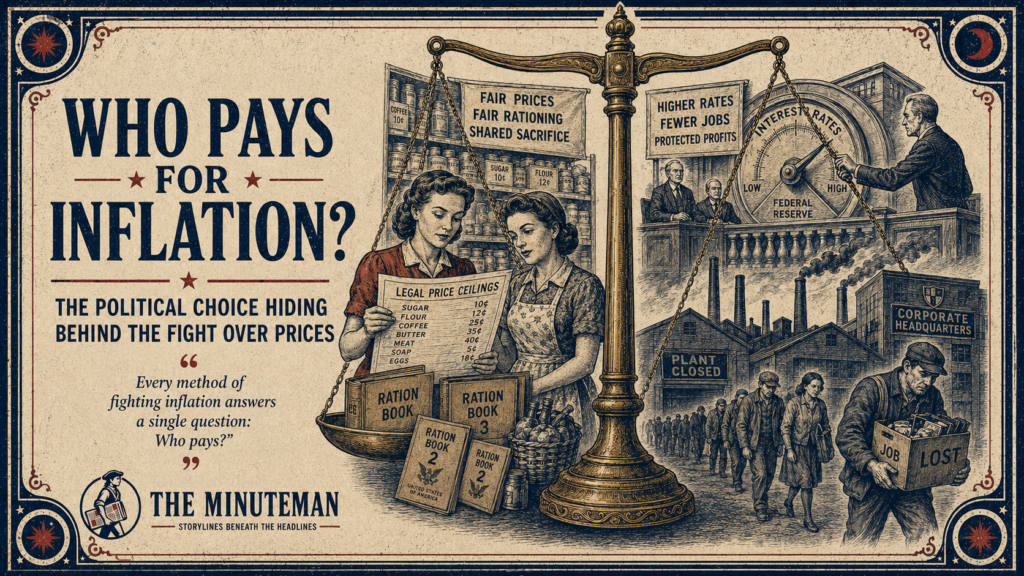
Who Pays to Stop Inflation?
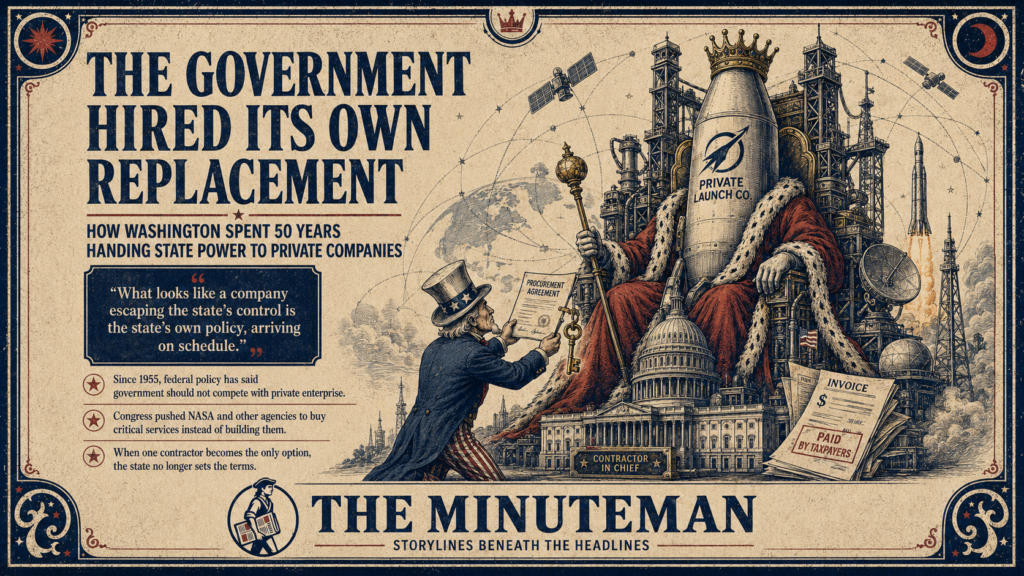
The Government Hired Its Own Replacement