Did Trump Save You Money in His First Year?
Did Washington actually save you money in Trump’s first year? Follow the real-world costs of tariffs, cut services, and a slightly smaller deficit—and what it meant for your wallet.
In Taylors, South Carolina, Glen Calder runs a small machinery factory that builds paving machines. In February 2025, he told Reuters the price of steel for his shop jumped more than 15% in two weeks. He could not simply raise his own prices by 15% to match because his customers were already hesitant to spend, partly because interest rates were still high and projects were being delayed. In other words, the cost increase hit first, and the pricing power did not show up at all.
In Baton Rouge, Louisiana, Margaret Crawford received a different kind of notice in September 2025. The reproductive health clinic where she had been getting routine care was closing, and she was told she would have to pay out of pocket or cancel an appointment. She had Medicaid insurance.
These two stories — a manufacturer squeezed by input costs and a patient losing access to care — sit at the heart of what “did the government save you money?” actually means. Because the federal ledger can show improvement while household budgets deteriorate and essential services disappear.
This is where political slogans meet lived reality.
An administration can announce billions in “savings” while families face higher prices at checkout, longer drives to see a doctor, understaffed VA hospitals, reduced food assistance, and shuttered programs their communities depend on.
The government’s balance sheet and your balance sheet are not the same thing.
And that points to the central question of Trump’s first 12 months: Did ordinary Americans — the ones who pay taxes, buy groceries, need healthcare, send kids to school, and rely on public services — actually save money and the services they need? Or did “savings” mostly mean the government collected more revenue while delivering less?
The Problem: Government “Savings” and Your Savings Are Not the Same Thing
When politicians announce they’ve “saved taxpayers money,” they’re usually referring to the federal deficit — the gap between what Washington spends and what it collects.
But that number tells you nothing about whether you have more money.
Here’s why:
The government can reduce its deficit while increasing your costs.
The government can “save money” by cutting services you depend on.
The government can shift costs from federal to state and local budgets.
None of this is abstract. Throughout 2025, Americans encountered these dynamics in job sites, grocery aisles, and the day-to-day bureaucracy of trying to keep care, keep food assistance, or keep services running during funding disruptions and policy shifts.
How Did We Get Here? The Promise of Efficiency
Donald Trump’s 2024 campaign centered on a clear fiscal promise: slash government waste, cut spending, reduce the deficit, and save taxpayers’ money.
The argument was straightforward:
- Washington had grown bloated and inefficient
- Billions were wasted on unnecessary programs, redundant agencies, and bureaucratic overhead
- By cutting waste and imposing discipline, the government could spend less and save more
- Tariffs would force other countries to “pay their fair share” and generate revenue without taxing Americans
When Trump took office in January 2025, he moved quickly to make good on these promises:
- Created the Department of Government Efficiency (DOGE) by executive order and launched a broad federal “efficiency” drive that included contract scrutiny and major disruption across agencies.
- Pursued sweeping tariff policy that — by design — raised large sums in customs duties.
- Issued executive-branch actions that paused or constrained certain categories of federal funding and contracting, creating real-world disruption even when later narrowed or clarified.
- Pushed Congress to approve a rescissions package, clawing back about $9.4 billion in previously appropriated, unspent funds.
- Entered a shutdown fight that resulted in a federal government shutdown lasting 43 days in the fall of 2025.
The administration framed all of this as fiscal responsibility — finally treating taxpayer dollars with the seriousness they deserved.
But fiscal responsibility can be measured in multiple ways:
- Does the federal deficit shrink?
- Do families keep more of their income and save money?
- Do people still have access to the services they need?
- Does the overall cost of living go up or down?
By early 2026, evidence was mounting that these measures were moving in different directions.
What Actually Happened to Your Costs in 2025
Let’s start with the most direct question: Did things get cheaper for you?

Tariffs Raised Prices on Everyday Goods
The single largest “revenue” story of Trump’s first year was tariffs. The administration imposed or expanded tariffs on large swaths of imports throughout 2025.
The government collected record customs revenue: about $195 billion in FY2025, up sharply from the prior year.
But who actually paid that $195 billion?
Despite campaign rhetoric that “China will pay” or “Mexico will pay,” tariffs are legally paid by U.S. importers — the companies that bring goods into the country — and the Congressional Budget Office concluded that tariffs raise the prices U.S. buyers pay for imported goods and for domestically produced substitutes.
What this meant in practice:
- Steel and aluminum inputs rose sharply in early 2025, hitting manufacturers like Calder Brothers first and hardest.
- Consumer and capital goods faced broad price pressure as tariffs pushed up the cost of imported goods and import-competing goods, an effect CBO explicitly modeled in its tariff analysis.
- The inflation effect in CBO’s estimate is real but uneven: the agency projected tariff-driven increases in price levels and a measurable drag on economic output compared with a no-tariff baseline.
The bottom line: if you bought anything in 2025 — and you did — you paid part of that tariff revenue through higher prices.
Healthcare Access Deteriorated in Many Communities
While tariff costs were diffuse and hard to see, policy and funding disruptions created visible harm in health care access.
The most concrete, well-documented disruption in Trump’s first year did not come from an abstract “efficiency review.” It came from a targeted federal policy change.
After Trump signed legislation in July that restricted federal Medicaid funding for certain reproductive health providers, clinics began closing or rolling back services, and Medicaid patients reported losing quick access to routine care — including services such as contraception, cancer screenings, and in some cases prenatal care.
For patients like Margaret Crawford, this wasn’t an abstract budget cut. It was a canceled appointment, a surprise out-of-pocket bill, and a scramble for a replacement provider.
The bottom line: If you relied on Medicaid-funded care at providers affected by the July restrictions, Trump’s first year brought a very direct form of “savings” on paper — and a very direct form of cost and disruption in real life.
Food Assistance Reached People Through More Rules — And Sometimes Through More Risk
SNAP (food stamps) and other assistance programs became a major arena for Trump’s “efficiency” argument in 2025, but the best-supported change is not a speculative participation figure. It is policy.
Trump’s July “One Big Beautiful Bill” expanded SNAP work requirements and narrowed some exemptions. And the shutdown fight underscored a second reality: even when benefits are protected in statute, funding crises can still create confusion, administrative stress, and public fear about continuity.
The bottom line: In 2025, the most defensible story is not “SNAP fell by exactly X million people.” The defensible story is that the rules tightened, and that tight rules often translate into real-world loss for some people — not always because they are ineligible, but because compliance is hard.
Education and Childcare Became Less Predictable — And Cuts Were Put on the Table
Federal education funding did not “quietly shrink.” It became a headline.
Reuters reported that federal education spending fell sharply during Trump’s first year as the administration and Congress pursued major cuts, including deep reductions in Department of Education outlays and large-scale cuts in enacted or proposed spending plans.
And in late 2025, real-world childcare disruptions tied to federal funding freezes and delayed payments became a news story in their own right — not as a theoretical future cost, but as immediate uncertainty for families and providers.
The bottom line: For families, 2025 was not just about what was cut. It was about whether systems that depend on predictable federal support could count on that support month to month.
Veterans Faced a Staffing Squeeze
The Department of Veterans Affairs, despite being politically untouchable in rhetoric, faced real operational pressure.
The White House issued a federal hiring freeze early in Trump’s term, and VA later publicly confirmed it was on pace to reduce staff by nearly 30,000 by the end of FY2025, with the hiring freeze cited as a driver alongside attrition and resignations.
The bottom line: If you were a veteran trying to access care in 2025, a staffing squeeze is exactly the kind of change that can translate into longer waits and more strain — even when officials describe it as “efficiency.”
What the Government’s Numbers Show (And What They Hide)
Now let’s look at what actually happened to the federal budget — because the disconnect between government accounting and household reality is the story.
Fiscal Year 2025: A Slightly Smaller Deficit
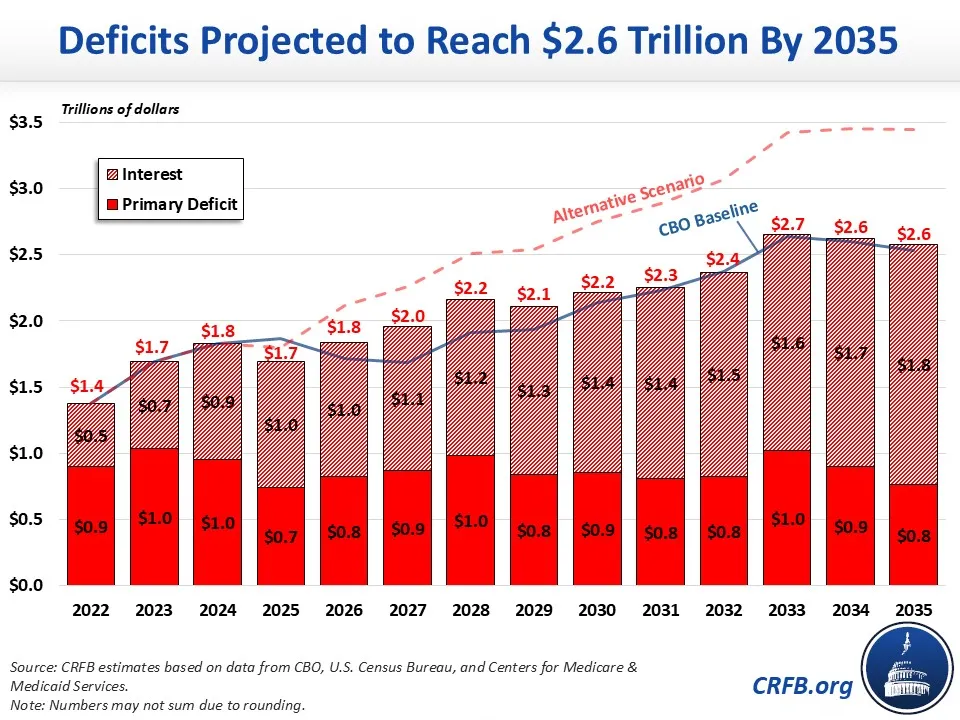
The full fiscal year that overlapped with most of Trump’s first 12 months (October 2024 – September 2025):
- Deficit: $1.775 trillion — down about $41 billion (2%) from FY2024
- Receipts: $5.235 trillion — a record
- Outlays: $7.01 trillion — also a record
- Net interest: $1.216 trillion — another record
So yes: the deficit got slightly smaller. The government borrowed less than in the prior year.
But notice what else happened: both revenue and spending hit all-time highs. The government didn’t shrink. It collected more and spent more, but the deficit narrowed because receipts rose and some outlays slowed relative to that rise.
And critically for the “did you save money?” question: one of the most dramatic receipt jumps was customs duties — tariff revenue.
Where the “Savings” Actually Came From
When you break down why the deficit improved slightly, four factors emerge:
1. Tariffs: a surge in customs revenue
Customs duties rose to roughly $195 billion in FY2025, a record driven by Trump-era tariffs.
The CBO’s tariff analysis also makes the core trade-off explicit: tariffs raise federal revenue and can reduce deficits in budget scoring, but they also raise prices and reduce the level of output compared with a no-tariff baseline.
2. Student loan accounting: real budget math that doesn’t necessarily feel like cash in your pocket
The Committee for a Responsible Federal Budget reported that a major driver of reported deficit improvement in 2025 included a large revision in the estimated cost of the federal student loan portfolio — a change in budget accounting that affects the deficit but does not automatically translate into immediate household savings.
3. The government shutdown: real disruption, complicated bookkeeping
Trump’s first year included a federal shutdown that lasted 43 days. In shutdowns, some payments and obligations can be delayed or shifted across months, complicating simple “month-to-month” interpretations of federal spending.
4. Rescissions: about $9.4 billion clawed back
Congress approved a rescissions package of about $9.4 billion in previously appropriated but unspent funds — a rare modern use of the rescission tool.
This is real deficit reduction. But at the scale of a $1.8 trillion deficit, it remains small in fiscal terms.
What This Means for the “Did You Save Money?” Question
The government’s ledger improved modestly.
But a meaningful share of the improvement came from tariff revenue — which is collected at the border and then transmitted into the economy through higher prices — and from accounting changes that can reduce reported deficits without showing up as more money in your wallet.
This is the disconnect: The government can report “savings” while you pay more and receive less.
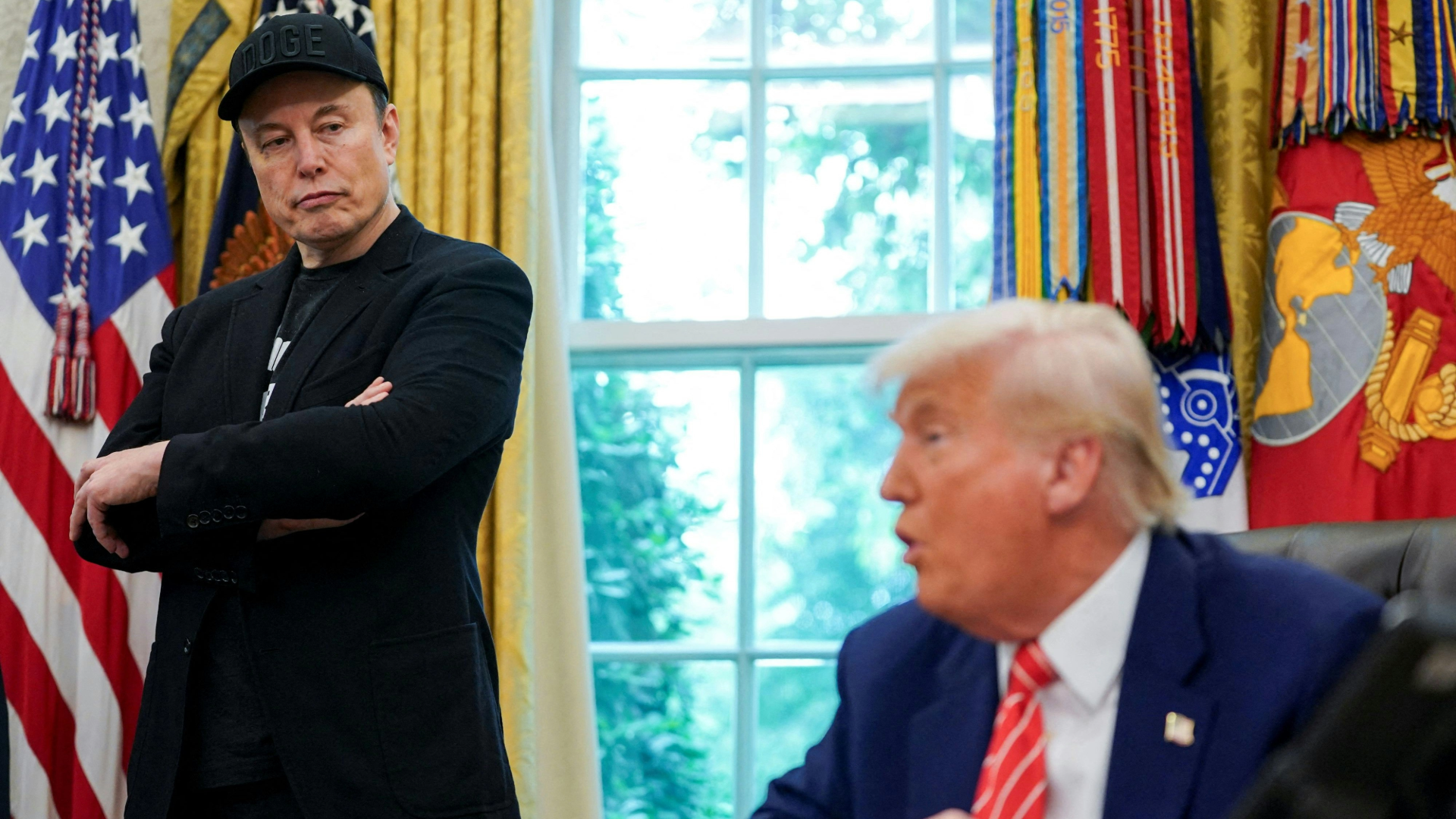
The DOGE Problem: Claimed Savings That Didn’t Materialize
If tariffs created “savings” through higher prices, the Department of Government Efficiency (DOGE) created a second kind of savings narrative: bold public claims that did not always match verified budget reality.
What DOGE Claimed
DOGE was created by executive order in early 2025 with a mandate to eliminate waste, fraud, and inefficiency.
Throughout the year, it issued a steady stream of announcements claiming large savings from canceled contracts and program changes — often described in the tens of billions.
What Independent Investigations Found
Multiple outlets examined DOGE’s claims in detail. The pattern was consistent: announced savings often did not translate into real deficit reduction and were sometimes overstated or plainly erroneous.
- Reuters documented significant errors on DOGE’s public accounting, including a high-profile entry where an “$8 billion” claim was actually about $8 million, and noted revisions and deletions after scrutiny.
- The Washington Post reported that many DOGE “savings” entries reflected misunderstandings of how federal contracts and obligations work — meaning a cancellation can be announced as “savings” even when funds were already obligated or spent.
- Other reporting similarly found that “counted” savings often lacked documentation and, even when real, would not automatically reduce the deficit absent congressional action and actual outlay reductions.
The bottom line: DOGE helped create a powerful “we found waste” story, but the best-supported reporting shows that many headline “savings” were not the same as verified deficit reduction.
Who Actually Benefited From the “Savings”?
If ordinary Americans faced higher prices and disrupted services, it’s fair to ask who actually benefited from 2025’s fiscal policy.
High-income households likely captured a disproportionate share of gains from major tax-and-spending legislation in Trump’s first year, and nonpartisan and bipartisan budget analysts said the package (often branded as the “One Big Beautiful Bill”) would increase deficits over time even as it delivered tax benefits and reshaped spending.
Corporations also stood to benefit from lower taxes and reduced regulation, but those savings do not automatically show up for consumers as lower prices or higher wages, especially when other policies, such as tariffs, push costs up.
The bottom line is that even when the government’s ledger looks better, who “wins” and who “pays” depends on where the savings come from, and tariffs, by design, redistribute costs and benefits rather than eliminating them.
The Durability Question: What If the “Savings” Disappear?
Even if you accept the government’s claim of a slightly smaller deficit, there’s a critical unresolved question: how much of that improvement is permanent?
The Supreme Court Tariff Case
A central piece of the “we saved money” narrative is tariff revenue.
But Reuters reported that the Supreme Court signaled skepticism about the legal basis for at least some of the tariffs imposed under emergency authority, raising the possibility that parts of the tariff regime could be struck down or narrowed.
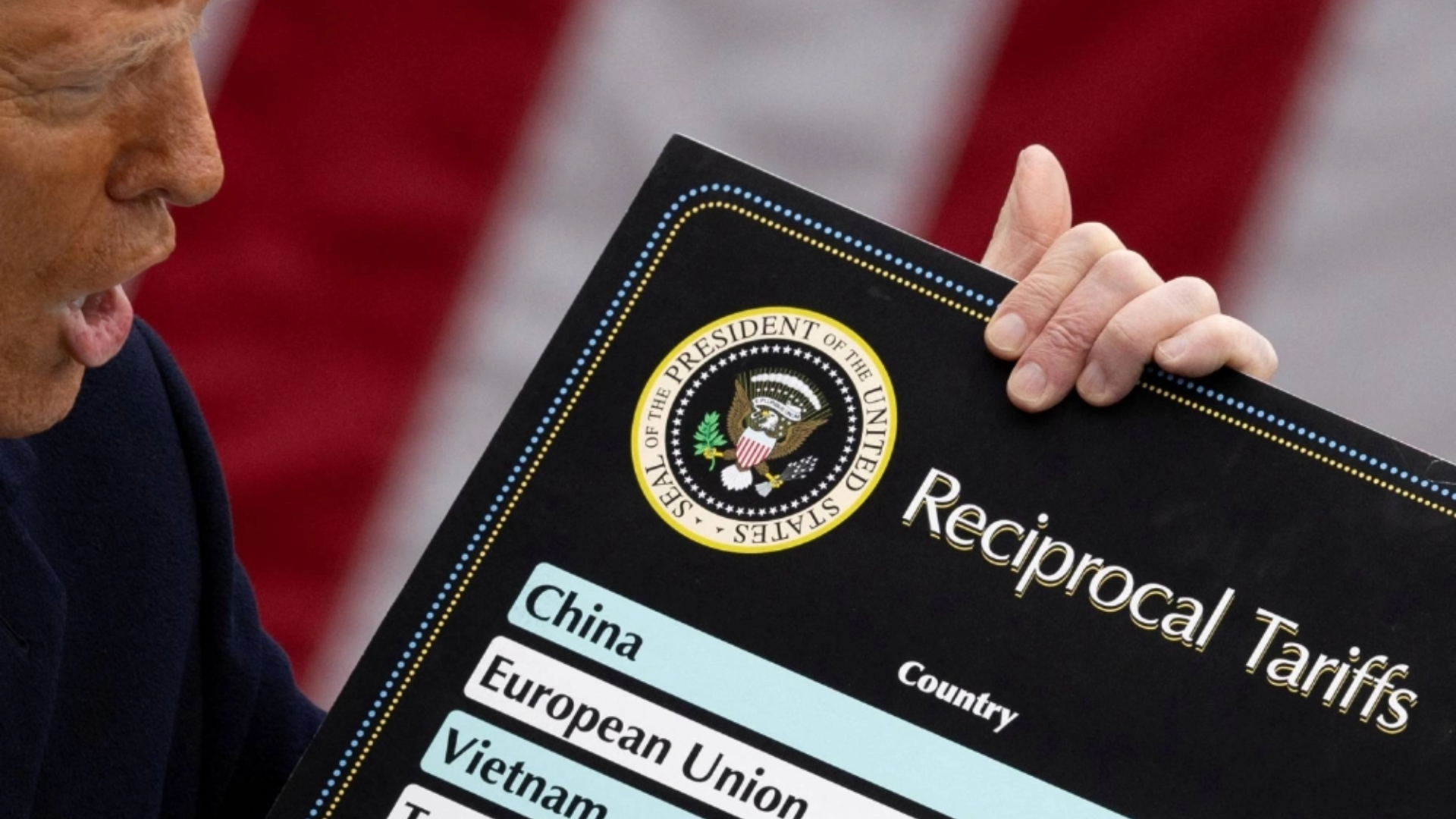
Separate legal reporting described the refund risk: if tariffs are found unlawful, importers could be entitled to substantial refunds of previously collected duties — potentially in the tens of billions — which would directly undercut any claim of durable deficit improvement from those revenues.
U.S. Trade Representative Jamieson Greer told Reuters the administration could look to other legal authorities, but that would not automatically preserve the same revenue stream on the same timeline.
What this means for you:
If importers are refunded, they might pass some savings back to consumers through lower prices — or they might not. But you won’t get back the higher prices you already paid throughout 2025.
The government might have to return the money. You won’t.
The Long-Term Deficit Picture
Even setting aside legal uncertainty, long-term deficit estimates worsened under the major 2025 tax-and-spending bill.
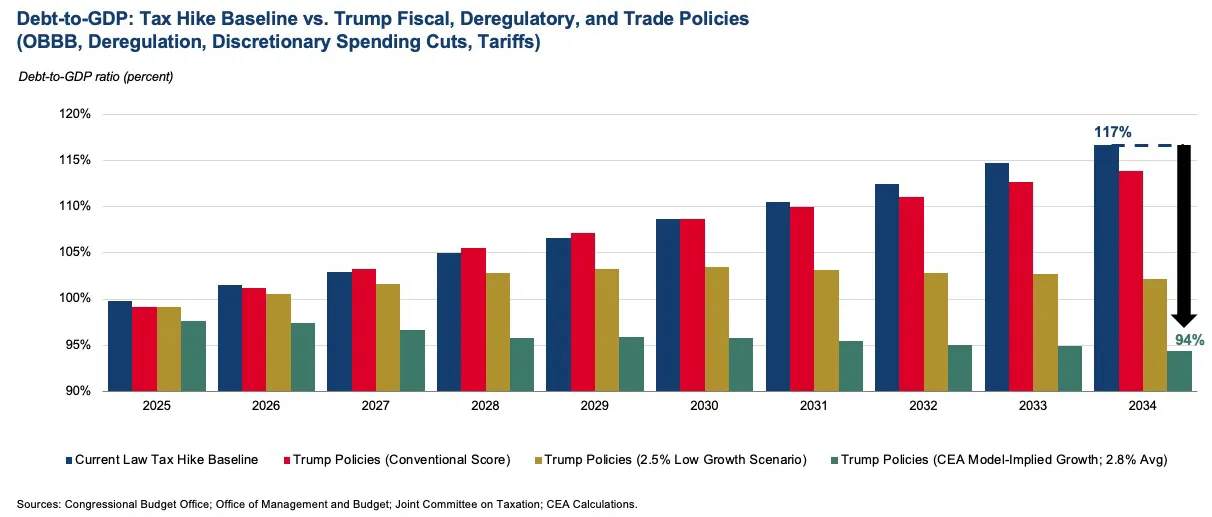
Budget analysts, including the Committee for a Responsible Federal Budget, estimated that the legislation would add roughly $3.4 trillion to deficits over a decade on a conventional basis.
Net interest costs were already at record levels in FY2025, and higher debt means higher interest costs going forward.
The bottom line: The government may have borrowed slightly less in FY2025, but major forces pushing debt higher remain firmly in place.
What the Numbers Miss: The Human Cost of “Efficiency”
The federal budget is an accounting document. It tracks money in and money out. But it can’t capture what happens when services disappear.
Public health research consistently shows that preventive care is cheaper than emergency care. Cutting funding for community health centers creates federal budget “savings” while increasing total healthcare costs borne by families, hospitals, and state governments.
Education economists estimate that every dollar invested in early childhood education generates roughly $7 to $12 in returns.
Research links childhood food insecurity to worse health outcomes, lower academic achievement, and reduced economic productivity.
This is what makes “savings” such a misleading frame: when the federal government cuts spending, it doesn’t make costs disappear. It shifts them — from federal budget to household budgets, from preventive care to emergency care, from early intervention to crisis management, from the present to the future.
For families living paycheck to paycheck, these shifts can be devastating. None of this shows up as a “cost” in federal budget documents. But it’s a cost nonetheless.”
Competing Explanations: Why Supporters Saw It Differently
It’s worth understanding why supporters of Trump’s fiscal policy genuinely believed it was helping ordinary Americans — because the disagreement isn’t just political spin.
Argument: Government Waste Is Real and Needs to Be Cut
Supporters point out that:
- Federal spending had grown dramatically over the decades.
- Many programs were ineffective or duplicative.
- Bureaucratic overhead consumed resources that could have been better spent.
- Taxpayer money was being wasted on programs that didn’t work.
This critique has merit. Government inefficiency is real. Some programs do fail. Some spending doesn’t produce results.
The counter-argument:
The question isn’t whether waste exists. It’s whether the cuts targeted actual waste or essential services.
Independent reporting found that many DOGE “savings” claims were overstated or poorly documented, and some of the most visible access disruptions came from policy choices that cut off or constrained real services — not simply “waste.”
Argument: Tariffs Make Trade More Fair
Supporters argue that:
- Other countries had been “taking advantage” of the U.S. through unfair trade practices.
- Tariffs were necessary to protect American jobs and industries.
- The revenue from tariffs came from foreign countries, not U.S. taxpayers.
The counter-argument:
CBO’s analysis and standard tariff mechanics point to the same reality: tariffs raise prices faced by U.S. buyers. Some of the burden can be shared through exchange rates or foreign pricing, but tariffs are collected from U.S. importers and transmitted into the U.S. price system.
Argument: Short-Term Pain for Long-Term Gain
Some supporters acknowledged that 2025 was difficult but argued it was necessary to:
- Reset the government to a sustainable size.
- Break dependency on government programs.
- Force efficiency that would pay dividends later.
The counter-argument:
This framing assumes the pain is limited and the payoff is real.
But in Trump’s first year, two of the most measurable forces ran in opposite directions: tariffs raised large revenue while also raising prices, and major legislation was scored by budget analysts as adding substantially to long-term deficits.
Where Things Stand Now
As of early January 2026, three uncertainties remain. December 2025 Treasury data is expected to be published on January 13, 2026. The Supreme Court’s decision on tariff authority could force refunds of over $100 billion, retroactively erasing much of 2025’s deficit improvement. And real-world service cuts are accelerating: healthcare access continues deteriorating as clinics close and Medicaid rolls shrink, food insecurity is rising as SNAP participation drops, and veterans groups are reporting worsening wait times and access problems.”
So, Did Washington Save You Money in Trump’s First Year?
The most honest answer requires separating claims from evidence and government accounting from household reality.
What the government’s numbers show:
✓ The federal deficit decreased slightly in FY2025 (about $41 billion, or 2%).
✓ Customs duties surged to about $195 billion, a record driven by tariffs.
✓ Rescissions produced about $9.4 billion in genuine clawbacks.
✓ Student loan re-estimates materially affected deficit accounting.
✓ A 43-day government shutdown distorted comparisons and created disruption.
What happened to your costs:
✗ Tariffs pushed up costs for many goods, and CBO modeled price increases and economic drag.
✗ Medicaid patients lost access to routine care after policy changes drove clinic closures and service rollbacks.
✗ Federal staffing constraints, including at VA, tightened capacity.
✗ Work requirements for SNAP (and later Medicaid) expanded under 2025 policy.
What independent analysis found:
✗ CBO’s tariff analysis supports the core trade-off: deficits can improve while price levels rise.
✗ Investigative reporting found DOGE’s claimed savings were frequently overstated, poorly documented, or corrected after scrutiny.
✗ Budget analysts scored major 2025 legislation as adding trillions to long-term deficits.
What remains uncertain:
? The Supreme Court could reshape the tariff revenue picture through legal limits and refunds.
? Long-run effects of tightened work requirements and service contraction are still unfolding.
The Bottom Line
The federal government borrowed slightly less in FY2025. That’s a fact.
But for the question that actually matters — did you save money? — the answer for many Americans is no.
If you bought anything in 2025, you likely paid part of record tariff collections through higher prices.
If you relied on Medicaid-funded care at providers hit by the 2025 restrictions, you may have faced fewer options and higher barriers.
If you’re at the top of the income ladder or positioned to benefit from the administration’s mix of tax policy and regulatory posture, the story may look different.
But if you’re in the broad middle and lower portions of the income distribution — the people politicians claim to be helping when they talk about “taxpayer savings” — 2025 often meant paying more, getting less, and absorbing costs the government no longer wanted to bear.
The government’s ledger improved modestly. Your life may still have gotten more expensive and more precarious.
Both can be true. And in 2025, both were.