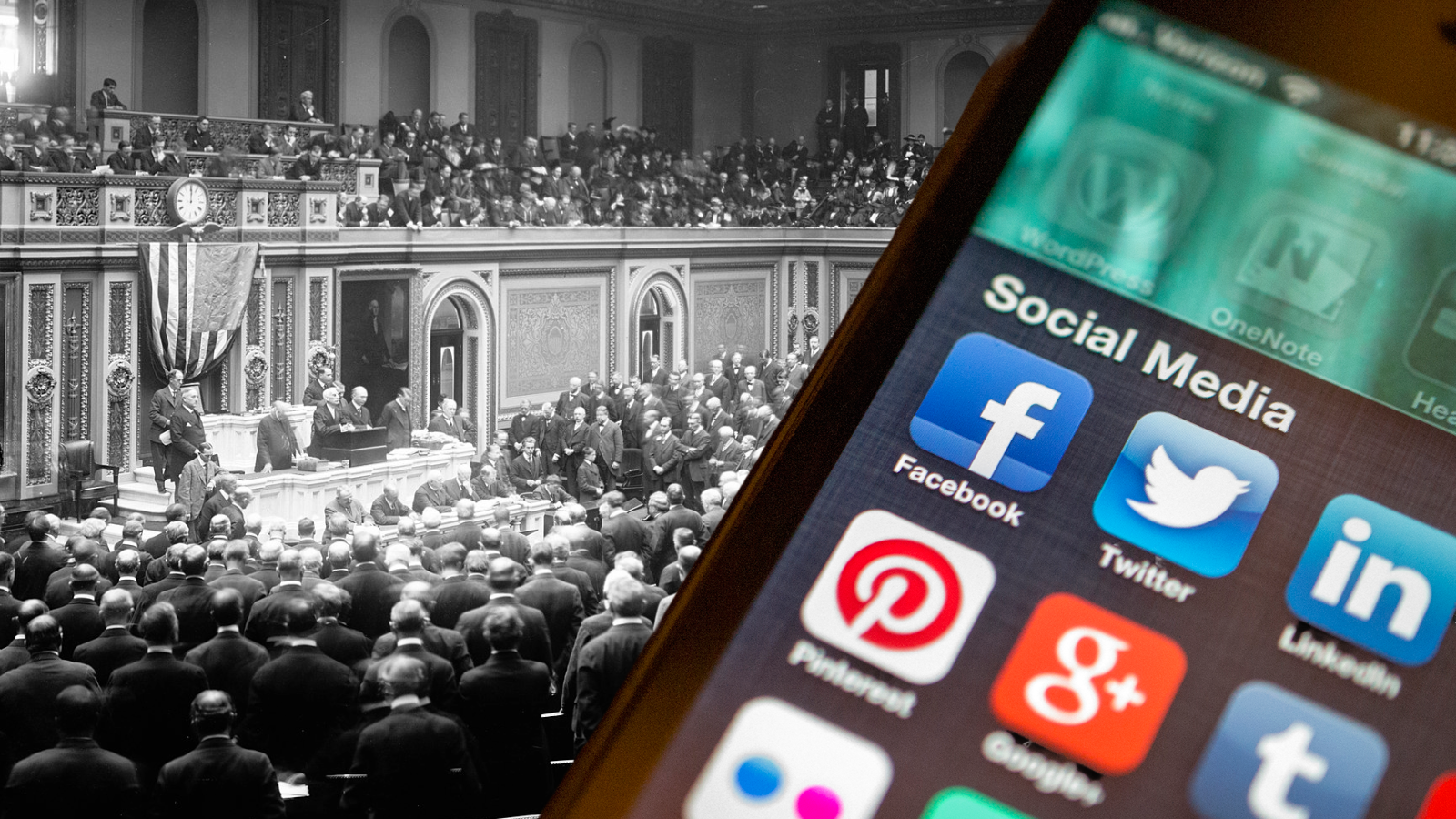
The Lie That Becomes the Law: How the Noncitizen Voting Myth Traveled from Social Media to the Floor of Congress
The noncitizen voting myth was never about election security. It is the clearest example of how an emotional lie gets amplified on social media, manufactured into a political grievance, and converted into legislation that suppresses the votes of the very citizens it claims to protect.
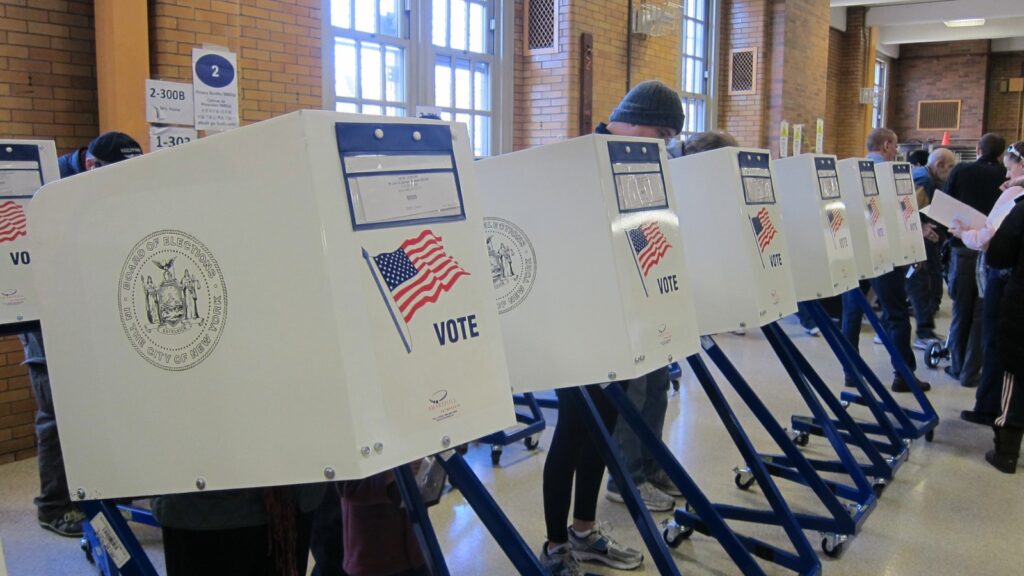
On February 12, 2026, the U.S. House of Representatives passed the Safeguard American Voter Eligibility Act by a vote of 218 to 213. The name of the bill tells you how it was sold. It requires every American to present documentary proof of citizenship, a passport or a birth certificate, before they can register to vote in a federal election. The stated purpose is to prevent noncitizens from casting ballots.
Here is what the Heritage Foundation, the conservative think tank that helped draft Project 2025 and has long advocated for stricter voting laws, found when it built a database to track this problem: 99 confirmed cases of noncitizen voting since 1982. Ninety-nine. Over forty-three years. In the 2024 election cycle, their database recorded one.
Utah reviewed its entire voter registration list, more than two million names, and found one noncitizen registration and zero noncitizen votes. Georgia audited 8.2 million registered voters and identified twenty noncitizens who had registered, nine of whom had voted in prior elections. A federal citizenship verification tool returns a noncitizen flag on 0.04 percent of cases checked.
When Kansas tried a similar law, more than 31,000 citizens had their voter registrations suspended or blocked. One of the plaintiffs who challenged the law in court testified that the cost of obtaining a replacement birth certificate would determine whether she could pay rent that month. She was not a noncitizen. She was an American who did not have the right paperwork, and the law treated her like a threat.
Noncitizen voting is already illegal under federal law. It carries penalties of up to five years in prison, fines, and deportation. It almost never happens because the risk is enormous and the reward is one vote. The SAVE Act was not written to solve a real problem. It was written to solve the appearance of one.
The noncitizen voting myth was never about election security. It is the clearest example of how an emotional lie gets amplified on social media, manufactured into a political grievance, and converted into legislation that suppresses the votes of the very citizens it claims to protect. The SAVE Act will not stop noncitizens from voting. They already were not. But it will make it harder for millions of real citizens to cast a ballot.
How does a lie this easy to disprove end up on the floor of Congress? How does it survive Heritage’s own data, state-level audits, and federal verification tools, and still get 218 votes? The answer is not ignorance. The answer is a pipeline, one that starts on social media, runs through the algorithms of the largest platforms on earth, picks up speed through repetition and emotional engagement, and arrives at the doorstep of legislators who know exactly what they are signing and why.
This is how that pipeline works.
In 2018, three MIT researchers published a study in Science that would become one of the most cited papers in the field of information studies. Soroush Vosoughi, Deb Roy, and Sinan Aral analyzed roughly 126,000 stories shared on Twitter by about three million people over more than a decade. Their central finding was blunt: false news spreads farther, faster, deeper, and more broadly than the truth, in every category of information and often by an order of magnitude. False stories were 70 percent more likely to be retweeted than true stories. True stories took about six times as long to reach 1,500 people.
The researchers tested whether bots were the cause. They were not. Bots spread true and false information at roughly the same rate. The difference was human. People were drawn to false stories because they were novel. They triggered surprise, fear, and disgust, emotions that make you want to share what you just saw. True stories, by contrast, triggered anticipation and sadness, emotions that make you sit with the information rather than pass it along.
This is the demand side of the problem. There is an instinct in social media behavior, not unique to any ideology, to engage with information that provokes an emotional reaction. And the lie that noncitizens are voting in American elections in large numbers provokes a specific kind of reaction: it feels like a betrayal. It activates the sense that something has been stolen. Your country. Your voice. Your vote. That feeling does not require evidence. It requires a story that matches the feeling, and the story is everywhere.
Think about how you experience social media. You are not sitting down to read. You are scrolling, and the platform is deciding, in real time, what to show you next. The algorithm is not interested in what is true. It is interested in what will keep you on the screen for another thirty seconds. Every platform runs on this same basic engine: rank content by engagement, show people whatever makes them react, sell advertising around the reaction. Polarizing content drives higher engagement. Higher engagement means more eyes on ads. The math does not care about accuracy.
This is what makes social media different from any information system that came before it. The printing press let people distribute ideas. Radio and television let people broadcast them. Social media does not just distribute or broadcast. It replicates. An algorithm takes a single post and delivers it to a thousand people. If fifty of those people engage with it, the algorithm takes it to ten thousand more. If the engagement holds, it goes to a hundred thousand. Then a million. Then tens of millions. This is not speech in any traditional sense. This is engineered amplification, and the content that gets amplified the most is the content that triggers the strongest emotional response.
When Elon Musk posts about noncitizen voting on X, he is not speaking into a room. He is pulling a lever. His false and misleading claims about U.S. elections accumulated more than two billion views on the platform he owns in the months leading up to the 2024 election alone, according to an analysis by the Center for Countering Digital Hate. Two billion. That number is not the result of people choosing to seek out his opinion. It is the result of an algorithm built to surface engagement, running on a platform whose owner has direct control over how that algorithm behaves.
We know this because of the Super Bowl.
In February 2023, President Biden posted a tweet during the Super Bowl that received 29 million views. Musk posted one that received roughly nine million. According to reporting from Platformer and Rolling Stone, Musk flew from the Super Bowl in Phoenix to Twitter’s headquarters in the Bay Area that night. At 2:36 in the morning, his cousin James Musk sent a message to engineers calling them in to solve a “high urgency problem.” Eighty engineers were pulled onto the project. By the following afternoon, they had deployed a code change that boosted Musk’s posts by a factor of one thousand, using a tool called the “power user multiplier.” It was applied to one account: Musk’s. An engineer who questioned the decision was fired on the spot.
This is important to understand. The owner of one of the largest social media platforms on earth, a platform used by the president of the United States, by members of Congress, by journalists and voters and ordinary people trying to figure out what is happening in their country, manually altered the algorithm to put his own voice above everyone else’s. And he did it because his Super Bowl tweet got fewer views than the president’s.
That same person has since spent more than $250 million supporting Donald Trump’s presidential campaign, currently serves as an advisor in the Trump administration, and posts about noncitizen voting with the regularity of someone running a content calendar. His claims have been debunked by Heritage’s own data, by state audits, by the Cato Institute, by the Brennan Center, and by every serious analysis of the question. But the claims keep coming because they perform well. They trigger the fear and disgust that the MIT study identified as the engines of virality. And the algorithm, designed by Musk’s own engineers, makes sure those posts reach everyone.
Do we think Elon Musk believes noncitizens are voting in meaningful numbers? It is a fair question, but it may not be the right one. Whether he believes it is less important than whether he benefits from it. And the evidence suggests he does.

Musk is not the only one amplifying this. But his case illustrates something the MIT researchers could not have anticipated when they published their study in 2018: the collapse of the distance between the person who owns the platform, the person who funds the political campaign, and the person who advises the president. Musk is all three. When he posts a false claim about election integrity, it is not a citizen speaking. It is an infrastructure operating.
And the infrastructure extends beyond any one person.
In November 2025, X introduced a feature that displayed the country of origin for accounts. What it revealed, at least initially, was that some of the most prominent MAGA accounts on the platform appeared not to be American. MAGANationX, with nearly 400,000 followers and a bio reading “Patriot Voice for We The People,” showed a location in Eastern Europe. An Ivanka Trump fan account called IvankaNews, with one million followers, showed Nigeria. A caveat: the feature turned out to be unreliable. Three NBC journalists found it displayed countries they had recently traveled to, not where they were actually based. So the location labels are not proof. But the broader pattern is well documented. The Centre for Information Resilience, an independent nonprofit research organization, identified more than a dozen accounts that had stolen photos of European models and influencers and used them to pose as young American women who supported Trump. Some of these accounts used AI-generated images. Foreign-operated influence accounts targeting American political discourse are not new and not in dispute. What is new is a platform that rewards them with reach.
People abroad, pretending to be MAGA, building audiences, making money from engagement, and pushing content that shapes what Americans believe about their own elections. This is the marketplace at work. Where there is demand for a story, someone will supply it. The person supplying it does not need to believe it. They need to know it will perform.
The demand did not appear out of nowhere. COVID-19 built the floor it stands on.
Between 2020 and 2022, public health officials told Americans one thing, then changed it, then changed it again. Masks were unnecessary, then essential, then dependent on the type of mask. The virus spread through surfaces, then it did not. Schools were unsafe, then they were probably fine. The vaccines prevented transmission, then they reduced symptoms, then the messaging shifted again. None of this was dishonest in the way the noncitizen voting claim is dishonest. It was the nature of a novel virus: the science changed because the data changed. But what mattered was not the science. What mattered was the experience.
The experience was: the experts kept changing their story. And if the experts kept changing their story about a virus, maybe they were also wrong about elections. Maybe they were also wrong about immigration. Maybe the whole system was less reliable than it claimed to be.
A RAND Corporation study found a statistically significant decline in public trust in the CDC during this period. A KFF tracking poll found that by 2025, only 61 percent of Americans trusted the CDC “a great deal” or a “fair amount,” down from 66 percent in 2023, with the sharpest drop among Republicans. Roughly 40 percent of adults felt the CDC was paying too much attention to politics when issuing COVID guidelines.
COVID did not create distrust in institutions. But it accelerated it, and it created a template. The template was simple: if you can find one example of the official story changing, you can use it to discredit every official story. The noncitizen voting myth slots into that template perfectly. The government says it does not happen. The data says it does not happen. And millions of people, conditioned by two years of watching official guidance shift in real time, hear “the government says it doesn’t happen” and think: they said that about masks, too.
This is the soil the pipeline grows in. Not ignorance, exactly, but a bruised relationship with expertise. Social media did not create the bruise. But it found it, pressed on it, and made money every time someone flinched.
What happens when a lie gets enough traction on social media? It starts showing up in government.
In February 2025, Musk posted on X: “Who is confirming that gold wasn’t stolen from Fort Knox? Maybe it’s there, maybe it’s not.” The post got enormous engagement. Within days, President Trump announced that Musk would be going to Fort Knox to check whether the gold was still there. “If the gold isn’t there,” Trump said, “we’re going to be very upset.” Treasury Secretary Scott Bessent responded that the government audits Fort Knox every year and that all gold was present and accounted for. It did not matter. The tweet had performed. The president had responded. And then, after a few weeks, everyone went quiet. There was no visit. There was no missing gold. There was never going to be. The point was the spectacle, not the answer.
In December 2025, a 23-year-old YouTuber named Nick Shirley published a 43-minute video alleging fraud at Somali-American child care centers in Minnesota. The video offered little evidence. It went viral. Within days, right-wing influencers in at least seven other states began filming themselves investigating child care centers, almost all of them run by people of Somali descent. The Minnesota Office of Inspector General conducted compliance checks at nine of the centers referenced in the video and confirmed they were operating normally. The video had already done its work. It had triggered federal attention, driven threats against Somali business owners, and established, in the minds of millions of viewers, that something suspicious was happening even though the investigation found nothing.
This is the feedback loop. A claim starts on social media. It gains traction because it is emotional and novel. It reaches enough people that politicians feel pressure to respond. The response gives the claim legitimacy, even if the response amounts to nothing. And the next time someone posts a similar claim, the audience is larger and the skepticism is smaller, because last time, the government took it seriously.
The Trump administration takes its cues from this cycle. If something is trending on X, the administration is likely to engage with it. Not because the claims have merit, but because the engagement is the point. The spectacle is the product.
And this is where the pipeline delivers its payload.
The SAVE Act requires documentary proof of citizenship to register to vote. That sounds reasonable until you look at who does not have those documents. According to the Brennan Center for Justice, roughly nine percent of eligible voters, more than 21 million citizens, do not have ready access to documentary proof of citizenship. An estimated 69 million married women do not have a birth certificate that matches their current legal name. If you took your spouse’s name and your birth certificate still has your maiden name, you now have a problem. You need additional documentation, maybe a marriage certificate, maybe a court order, maybe both, to prove that you are who you say you are. The burden falls disproportionately on women.
It falls on transgender Americans too. If you have changed your name to match your gender identity and your birth certificate still reflects your birth name, the SAVE Act creates the same mismatch. The documentation burden is real, the cost is real, and the likelihood that you will simply not bother to navigate the bureaucracy is exactly what the people who wrote this bill are counting on.
Elderly Americans, particularly those born at home in rural areas, may not have birth certificates at all. This is especially common in the South. People who have moved into assisted living or in with family members may need to update their voter registration but face significant barriers to producing the required documents. Low-income Americans who cannot afford a passport ($165 for adults) and may not have easy access to their birth certificate are effectively priced out of the franchise.
Supporters of the SAVE Act argue that requiring proof of citizenship is common sense. Representative Chip Roy, who introduced the bill, called it straightforward: only citizens should vote in American elections, and the current system of simply asking registrants to sign a statement affirming citizenship is not enough. Polling consistently shows that over 80 percent of Americans support some form of voter ID requirement, and that support cuts across racial and political lines. Supporters also point out that several states and localities have extended voting rights to noncitizens in local elections, creating administrative confusion that could, in theory, lead to registration errors in federal races. These are not bad-faith arguments. The principle that voting should be limited to citizens is not controversial.
But the SAVE Act does not just affirm that principle. It creates a documentation requirement that millions of citizens cannot meet. And we do not have to guess what happens when states have tried this before. In Kansas, a similar proof-of-citizenship law led to more than 31,000 voter registrations being suspended or blocked. One plaintiff in the case testified that paying for a replacement birth certificate would affect whether she could pay rent. The 10th U.S. Circuit Court of Appeals struck the law down in 2020, finding it created an unconstitutional burden on the right to vote. The people blocked from registering were not noncitizens. They were Americans who did not have the right paperwork.
The SAVE Act is not a coincidence. It is a product, the final output of a pipeline that started with a lie, ran it through social media until it felt true, and delivered it to Congress gift-wrapped as election security.
As of this writing, the bill’s future is uncertain. Senate Majority Leader John Thune said in late February 2026 that there was no clear path for the SAVE Act in the upper chamber. But the bill already passed the House once, narrowly, and it will come back, because the pipeline that produced it has not stopped running. The lie is still circulating. The demand is still there. And the next version of the bill may be better written, harder to challenge, and easier to pass.
So what do we do about it? This is the part where an article is supposed to offer solutions. Here is the honest version.
We have tried content moderation. Platforms attempted to label misinformation, remove false claims, and reduce the reach of certain kinds of content. What happened was predictable to anyone paying attention. People who believed the claims saw the moderation as proof that the claims were true. If “they” are trying to suppress this, then “they” must be afraid of it. Fact-checking became evidence of conspiracy. Every label, every removal, every reduced-reach decision fed the narrative that elites were hiding the truth. You cannot fight this instinct by suppressing the content. Suppression does not kill the rumor. It gives it a persecution story, and persecution stories are the most potent fuel for viral spread.
We have tried counter-speech. Election officials, nonpartisan organizations, and journalists have published corrections, explainers, and data. The data is clear: noncitizen voting does not happen at any meaningful scale. But election officials are not influencers. They do not have millions of followers. They do not have algorithms built to amplify their messages. And they are fighting emotion with fact, which is like bringing a dictionary to a bar fight. The fact might be correct, but the person throwing punches does not care.
There is research that suggests a different approach might work. Researchers at Harvard’s Kennedy School tested something called prebunking, the idea that you can inoculate people against manipulation by teaching them to recognize the techniques before they encounter them. In a field study on Instagram, users who received prebunking content were 21 percentage points better at identifying emotional manipulation in news headlines, and the effect lasted five months. The principle is simple: when you see something online that makes you feel strongly, that is the moment to be most skeptical. The emotional reaction is the red flag, not the evidence.
There is an analogy worth considering. When you walk into a restaurant and see a health grade posted in the window, you make a decision based on that grade. You might eat at a B. You probably will not eat at a C. The grade was not assigned by the restaurant. It was assigned by a third party, an independent inspector, based on a set of transparent criteria. The grade is public. The criteria are knowable. And the system works because it gives consumers information at the moment of decision.
Is there a version of that for social media? A third-party trust rating, independent from both the platform and political interests, based on transparent criteria like content moderation practices, algorithmic transparency, and accuracy of information in high-engagement posts? NewsGuard, an independent organization, already rates news websites on a 100-point scale using journalistic criteria. The EU’s Digital Services Act requires large platforms to submit to independent audits and publish transparency reports. These are not fantasies. They are functioning systems. The question is whether they can be scaled, funded, and made visible enough to matter at the point where a person is scrolling and deciding what to believe.
The honest answer is: maybe. But probably not fast enough, and probably not at the scale that would be required to counteract a platform owned by a billionaire who has every incentive to keep the pipeline running. Elon Musk did not buy Twitter because it was a threat to democracy, despite what he said at the time. He bought it because it had power, and he wanted that power for himself. After he took over, a large portion of left-leaning users left. There is no competitor to X at equivalent scale today. One of the largest social media platforms in the world has become a right-wing political project. Research published in 2025 found that exposure to X’s “For You” algorithm shifted users’ political views toward conservatism, and that the effect persisted even after users switched back to a chronological feed. A separate audit during the 2024 election found that right-leaning content was systematically amplified over left-leaning content. The platform is populated by users who agree with its direction or are being nudged toward agreement by an algorithm built to push them there.
Two men, Musk and Mark Zuckerberg, own the two largest social media ecosystems on earth. Both positioned themselves with the Trump administration. Musk spent $250 million on the 2024 campaign and took an advisory role. Zuckerberg contributed $1 million to the inauguration fund and changed Meta’s content moderation policies, citing Trump’s re-election as a “cultural tipping point.” On social media platforms, the First Amendment belongs to the company, not the user. The platform decides what gets amplified. The platform decides what gets suppressed. And the platform’s owner gets to make those decisions based on whatever serves his interests, political or financial or both.
William Randolph Hearst owned newspapers. He used them to inflame public opinion and push the country toward the Spanish-American War. We have studied that period as a cautionary tale for more than a century. But Hearst’s papers reached millions. Musk’s platform reaches billions, and it does not just deliver content. It engineers engagement. It studies what makes each user react and feeds them more of it. It does not just show you something that makes you angry. It learns that anger keeps you scrolling, and it builds a profile around that anger, and it sells access to that profile to advertisers and political campaigns alike.
We are not going to convince these billionaires to be better people. That much is clear. The question is whether we can build systems, ratings, regulations, educational programs, funding models for long-form journalism, that create enough friction in the pipeline to slow it down. Right now, a lie can travel from a social media post to the Oval Office to the floor of Congress in a matter of weeks. The SAVE Act is proof. The Fort Knox stunt is proof. The Minnesota daycare panic is proof.
The pipeline works. It works because the platforms are designed to reward emotional content, because the people who own the platforms have political interests, because the audience has been conditioned to distrust the institutions that might correct the record, and because the politicians on the receiving end have every reason to convert the lie into legislation.
The noncitizen voting myth is not the disease. It is the symptom. The disease is a system in which the loudest, most emotionally provocative voice wins, not because it is right but because the infrastructure was built to make sure it does. And until we address the infrastructure, the pipeline will keep running, and the laws it produces will keep landing on the people least equipped to fight back.