-
-
They’re Not Hacking Your Computer. They’re Hacking You.
A worker in Hong Kong thought he was on a video call with his company’s CFO and colleagues. He was not. Every face and every voice had been generated by AI, and by the time the illusion broke, $25.6 million was gone. This is the new cybersecurity threat: not hackers breaking into your machine, but attackers learning how to manipulate the human being sitting in front of it.
-
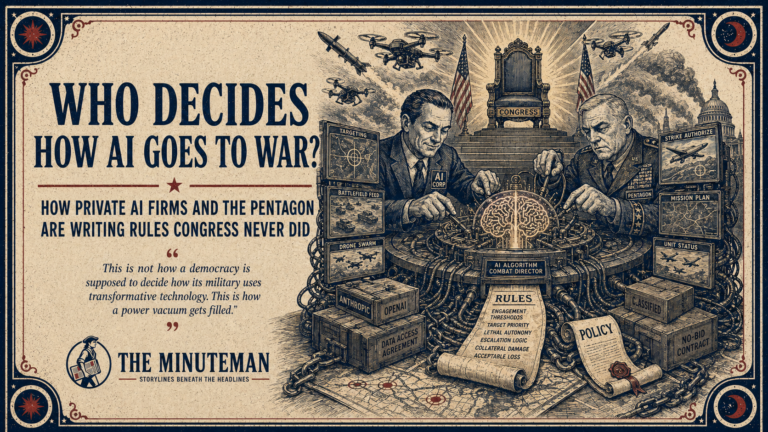
Who Decides How AI Goes to War? Right Now, Nobody You Elected.
On February 27, 2026, the Pentagon blacklisted Anthropic for refusing to give the military unrestricted access to its AI. Hours later, OpenAI signed a deal on nearly identical terms. The media wants you to pick a hero and a villain. But the real story isn’t about which company is right. It’s about why two private companies were negotiating the rules of AI in warfare at all, and where Congress has been while the most powerful technology since nuclear energy gets handed to the most powerful military on earth with no binding laws governing how it’s used.
-
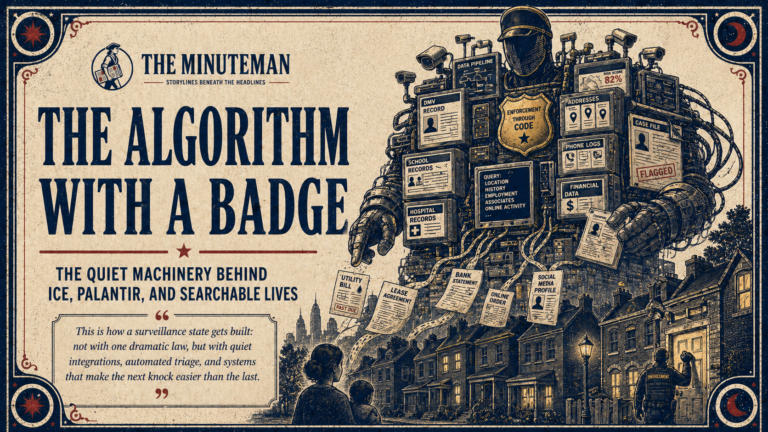
How a Surveillance State Gets Built: Palantir, ICE, and Your Private Data
Your private data was never meant to become a map to your front door, but that’s what happens when government power meets private-corporation tooling built for speed and scale. Palantir helps ICE stitch together ordinary records, turn them into searchable profiles, and move those profiles through workflows that end in targeting and arrests, often far beyond the “worst of the worst” story the public gets sold. This is how a surveillance state gets built: not with one dramatic law, but with quiet integrations, automated triage, and systems that make the next knock easier than the last. The question isn’t whether the technology is impressive, it’s what it makes possible.
-