

public infrastructure

  • The Trash Problem

    Every bag of trash you leave at the curb gets weighed, priced, and driven somewhere. Where it lands isn’t chance. It follows almost the exact map federal regulators drew when they graded neighborhoods for lending in the 1930s, the practice known as redlining. That’s the trash problem: the poorest places take in the most of it, get paid a dollar a ton for keeping it, and lose far more than that in property values and school funding for decades after.
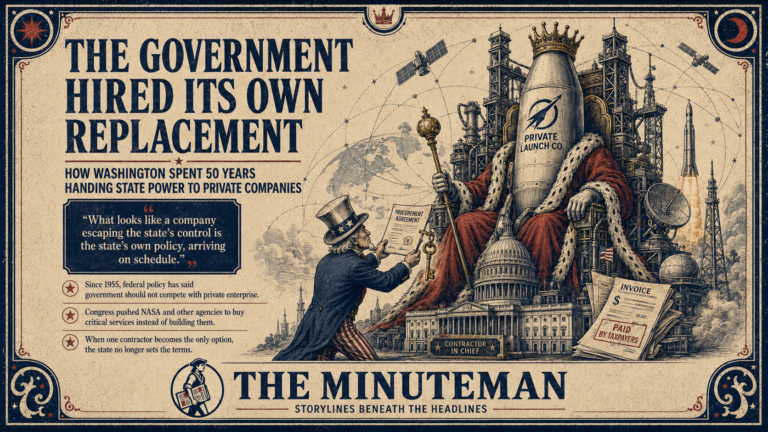
  • The Government Hired Its Own Replacement

    Everyone calls it corporate capture: a government outmaneuvered by companies that got too rich to regulate. That story runs the sequence backward. The dependence wasn’t seized from the state. The state handed it over, on purpose, in public, in writing, across fifty years, with both parties holding the pen. The capture story has a villain. The truth is worse: nothing was broken. It worked exactly as designed.

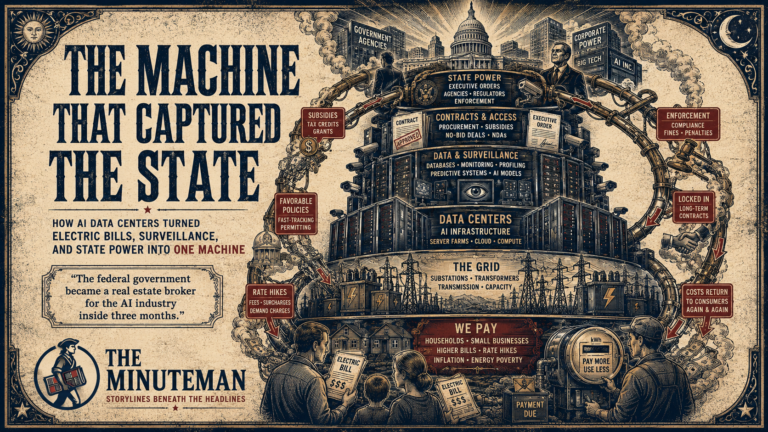
  • The Machine That Captured the State

    Somewhere in Virginia, a windowless building the size of an airport draws the power of a small city, and you’re paying for it. Residential electric bills are up forty percent since 2021. The same servers raising your rates are running deportation maps for ICE. The data center, the electric bill, the federal contract, and the surveillance state have become one machine, and almost no one has explained how the pieces connect.