
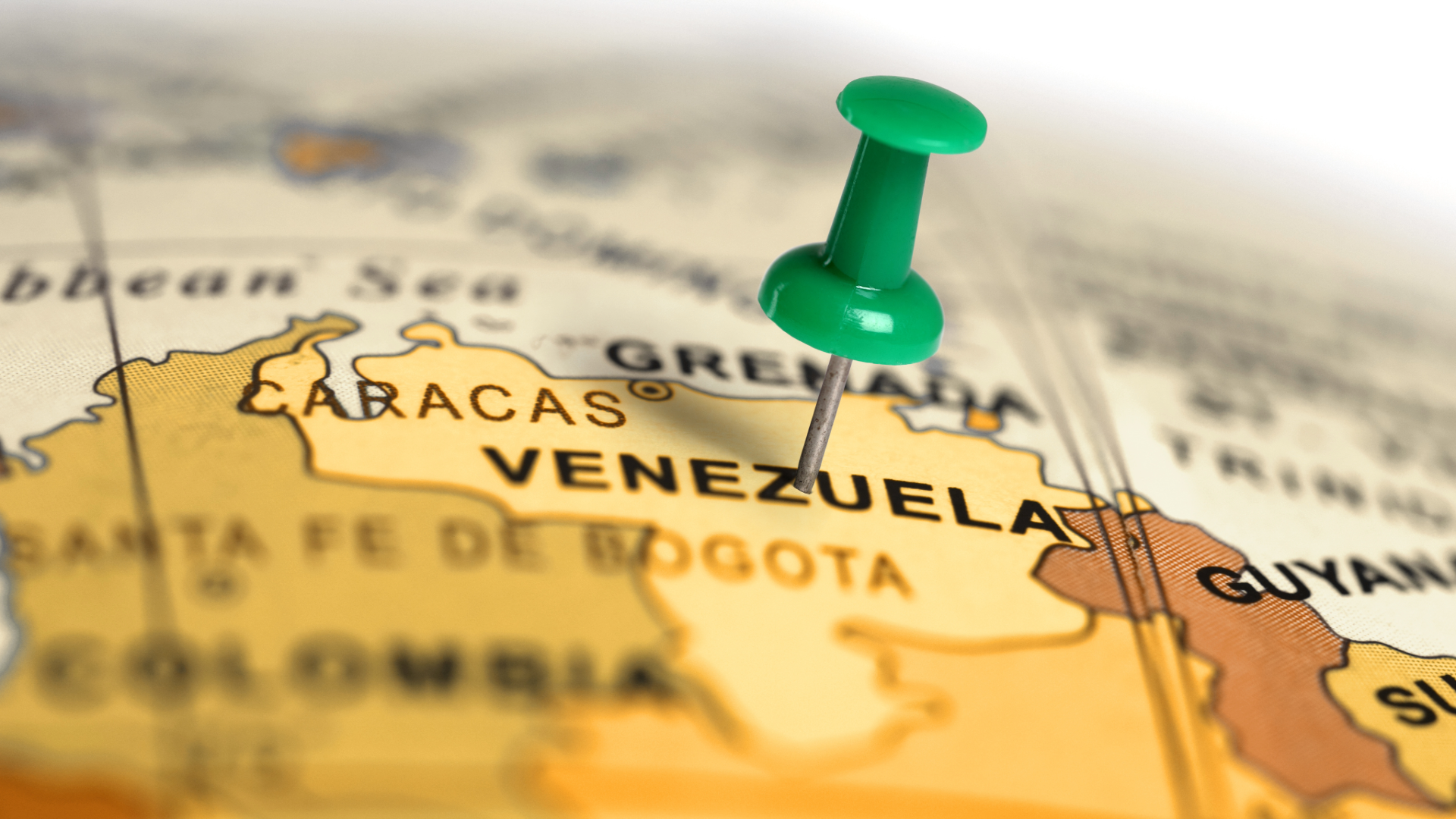
U.S.–Venezuela, Explained: A Dangerous Showdown Over Oil, Strikes, and the Law
In late 2025, Venezuela is back at the center of a fast-escalating confrontation with the United States—one that mixes oil, sanctions, disputed elections, migration pressures, and a dramatic new U.S. campaign of intercepting oil tankers and striking boats accused of drug trafficking.
This is the “full picture” in plain English: what’s happening now, how the two countries got here, what each side says it’s doing, and where legal experts (including U.N. officials) say the U.S. may be crossing lines.
What’s happening right now
The U.S. is stopping and seizing tankers linked to Venezuelan oil exports
Multiple major outlets report that U.S. forces—especially the U.S. Coast Guard, backed by a broader U.S. military buildup—have intercepted and in some cases seized tankers carrying Venezuelan crude (often described as part of a “shadow/dark fleet” used to evade sanctions).
This has already slowed Venezuelan oil loading and shipping, pushed some ships to turn around, and sparked diplomatic blowback from buyers—especially China, which has publicly called at least one seizure a “serious violation” of international law.
The U.S. is conducting lethal strikes on “drug boats” near Venezuela (and elsewhere)
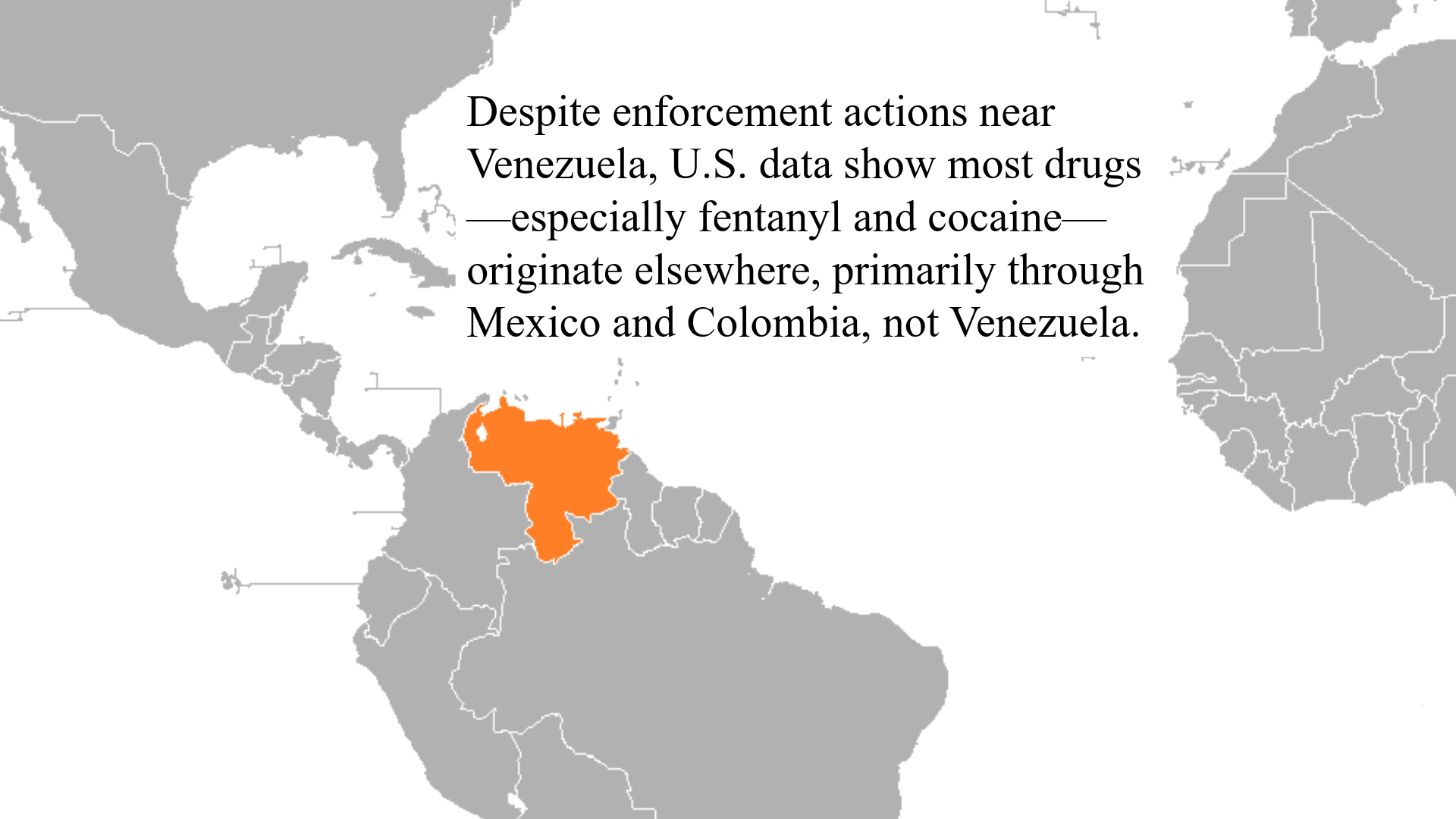
Early reporting on the first publicly disclosed strikes in September 2025 indicated U.S. forces hit vessels allegedly transporting drugs, killing at least 17 people.
Since then, the death toll has climbed sharply; a December 2025 CRS brief says the strikes have reportedly killed more than 80 people. Critics argue the U.S. has not publicly released sufficient evidence to prove these targeted vessels posed an imminent threat.
Venezuela’s internal crisis remains the backdrop
Venezuela’s political legitimacy crisis deepened after the July 28, 2024 presidential election, which international observers and several governments criticized as not free or fair; the opposition and outside analyses argued opposition candidate Edmundo González won, while the government declared Nicolás Maduro the winner and moved forward.
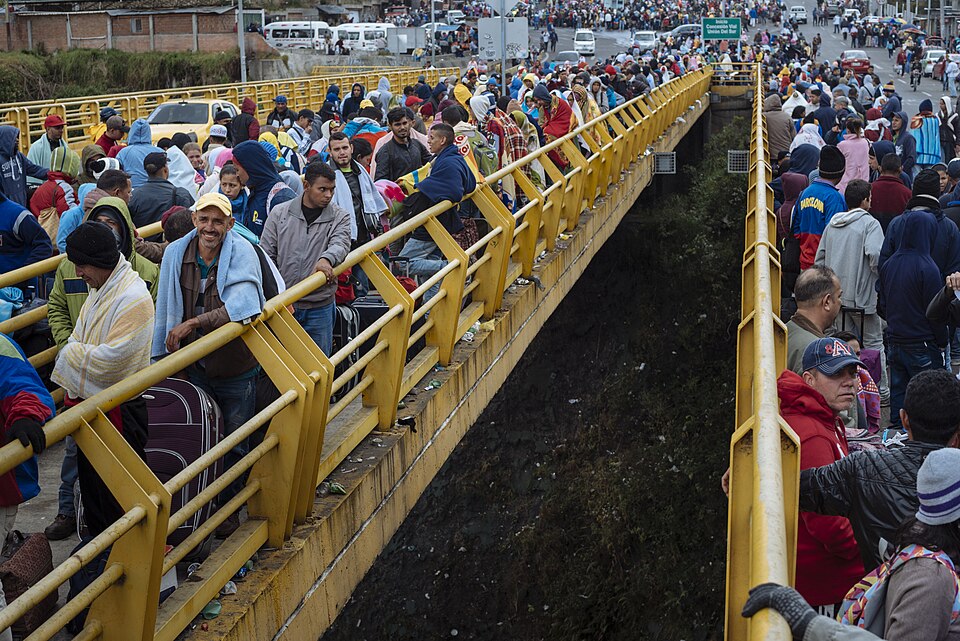
Meanwhile, Venezuela’s humanitarian and displacement crisis continues: nearly 7.9 million Venezuelan refugees and migrants are reported globally.
Why the U.S. says it’s doing this
U.S. policy arguments cluster around three claims:
- Democracy and human rights: U.S. policy has long aimed to pressure Caracas over authoritarian governance, corruption, and repression—using sanctions, diplomatic recognition choices, and support for civil society. CRS summarizes these sanction authorities and rationales.
- Drugs and “narco-terrorism”: The U.S. Justice Department charged Maduro and other officials in 2020 with narco-terrorism and related crimes (alleging partnership with armed groups and drug trafficking).
- In 2025, the Trump administration revived a “maximum pressure” posture and publicly framed strikes and interdictions as counter-narcotics.
- Sanctions enforcement and oil revenue denial: Venezuela’s economy is heavily oil-dependent; constraining export revenue is seen in Washington as leverage on the regime. Recent reporting explicitly describes interdictions/seizures as part of a campaign to choke off sanctioned oil flows.
Why Venezuela (and others) say the U.S. is doing this
Venezuela’s government argues:
- The U.S. is violating Venezuelan sovereignty and pursuing regime change.
- The tanker actions amount to “piracy” or theft.
- The boat strikes are unlawful and escalate toward war.
Those claims are echoed—at least in part—by criticism from international actors (notably China) and by U.N. experts who have condemned U.S. strikes as lacking legal basis.
How we got here: a clear U.S.–Venezuela timeline
1830s–mid-1900s: formal ties, then oil turns Venezuela into a strategic partner
The U.S. recognized Venezuela and established diplomatic relations in 1835.
Over the 20th century, Venezuela’s rise as a major petroleum producer made it economically and strategically important to the U.S. and to global energy markets.
1976: Venezuela nationalizes oil and creates PDVSA
On January 1, 1976, Venezuela nationalized its petroleum industry and created the state oil company PDVSA.
This matters today because many U.S. political arguments about “stolen oil” trace back to disputes over nationalization, expropriation, and compensation—issues that later fed into litigation around Venezuelan assets abroad.
1999–2013: Hugo Chávez, anti-U.S. politics, and a petrostate model
Hugo Chávez reshaped Venezuela domestically and internationally, using oil revenues to fund social programs and projecting influence regionally, while political polarization and institutional concentration increased.
A key turning point: Chávez’s consolidation of control over PDVSA after the 2002–03 turmoil, which many analysts argue weakened the company’s technical capacity over time.
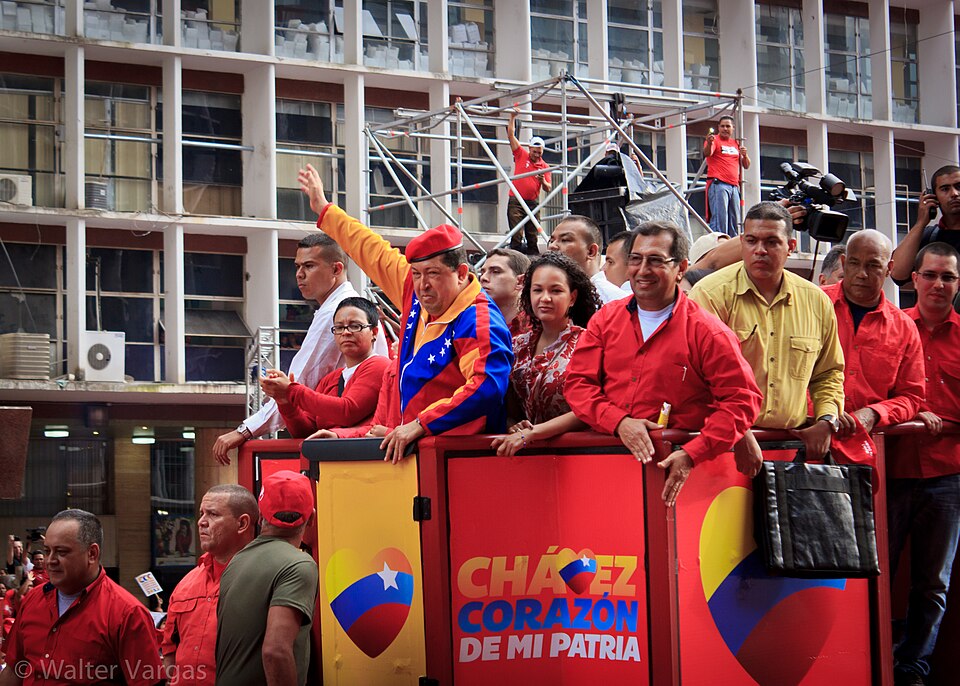
[WikiMedia Commons, Walter Vargas from San Cristobal, Venezuela.]
2007: a second wave of nationalizations triggers major legal fights
Chávez expanded nationalization in the Orinoco oil region, pushing some U.S. oil majors out and leading to international arbitration claims and awards (notably involving ConocoPhillips).
2014–2019: protests, repression, and a sanctions spiral
As Venezuela’s crisis worsened (with oil prices falling in 2014 and governance disputes intensifying), the U.S. and partners increased sanctions and diplomatic pressure. CRS details layered sanction authorities and the policy debate over targeted vs. broad sanctions.
2019–2023: peak confrontation (Guaidó era) and tightening oil sanctions
The U.S. in 2019 recognized opposition leader Juan Guaidó as interim president (support later waned internationally), while broader oil-related sanctions reshaped Venezuela’s export options and the status of Venezuelan assets abroad.
2023–2024: sanctions relief-for-elections—and then reversal
In October 2023, the U.S. temporarily eased some oil-and-gas sanctions via OFAC General License 44, explicitly tying continuation to election-related commitments.
In April 2024, the U.S. allowed that broad authorization to lapse and issued a wind-down license (GL 44A), citing failures to meet conditions such as allowing the opposition to run its candidate of choice.
2024–2025: disputed election, renewed pressure, and military escalation at sea
After the disputed 2024 election and condemnation by multiple governments, relations further deteriorated.
By late 2025, the confrontation shifted dramatically from sanctions-and-diplomacy to interdictions and lethal strikes, plus talk of a “blockade.”
The core questions, answered
1. Does the U.S. have any right to this hostility—and to “taking oil tankers”?
What the U.S. is likely relying on
There are a few different “lanes” the U.S. could claim:
- Domestic law + court orders: Some reporting frames Coast Guard actions as court-authorized enforcement of U.S. sanctions.
- Maritime law concepts: If a vessel is stateless, fraudulently flagged, or violating registration rules, states sometimes claim greater authority to board/interdict. (Recent reporting describes false flags/identity masking and AIS tracking shutdowns as part of the “dark fleet” pattern.)
Are tanker boardings/seizures legal under international law—or just under U.S. sanctions law?
This is one of the most important “missing questions,” because it separates:
- U.S. domestic enforcement (sanctions + court processes), from
- international maritime legality, which is stricter about high-seas interference with shipping.
International condemnation (China calling seizures a serious violation) reflects this fault line.
The big international-law problem
Even if the U.S. has strong domestic legal paperwork, international law is harder: in general, stopping a foreign-flagged merchant ship on the high seas typically requires flag-state consent or a recognized exception (piracy, statelessness, certain treaty-based drug interdiction rules, U.N. Security Council authority, etc.).
That’s why multiple legal analyses and international reactions treat the “blockade” framing—and seizures of ships bound for third countries—as legally fraught and potentially escalatory.
Translation:
- “Sanctions enforcement” can be lawful inside U.S. jurisdiction.
- “Stopping ships on the open ocean” is a much bigger step—and is where claims of illegality/piracy get traction, depending on the facts of each boarding.
2. What about the drug trafficking claims and “air strikes on boats”?
This is where the legal criticism is sharpest.
The administration argues the strikes disrupt drug routes and apply pressure to Maduro. But recent reporting also emphasizes a central criticism: the U.S. has not consistently shown public, independently verifiable evidence for each strike target, even as the strike count and death toll rise.
What critics say
- U.N. independent experts have condemned U.S. strikes in international waters as lacking legal basis and amounting to extrajudicial executions, warning that preparations for covert/direct military action against a sovereign state would be an even graver U.N. Charter breach.
- AP and other reporting summarize expert views that a “second strike” on survivors of an initial attack could be plainly criminal.
- Human Rights Watch argues the strikes constitute unlawful killings and calls for investigations and accountability.
- Legal analysis at Just Security and Lawfare lays out why suspected narcotics trafficking does not, by itself, create a legal basis to use military force against civilians at sea.
What the U.S. says
Reporting indicates the administration has invoked self-defense concepts under Article 51 of the U.N. Charter and has described the fight as against “narco-terrorists.”
The legal fight turns on whether the targeted boats posed an imminent threat, whether the U.S. had law-enforcement alternatives (interdiction and arrest), and whether the situation is being (credibly) treated as an armed conflict.
What evidence is being presented—publicly and independently—that each targeted boat was (a) trafficking drugs and (b) posed an imminent threat?
Public evidence: U.S. Southern Command statements and some released video exist, but AP reports the U.S. often does not provide specific confirming evidence for each target.
Independent corroboration: Human Rights Watch’s Q&A and U.N. experts’ statements show the concern: even if some boats were trafficking, that alone doesn’t prove a legal basis for lethal force—especially absent an imminent threat.
If interdiction and arrest were feasible, why choose lethal force?
Traditional counter-narcotics at sea is usually law enforcement: stop/board/seize/arrest.
Critics’ answer: Human Rights Watch and U.N. experts argue lethal force is not justified just because someone is a suspected trafficker; international human rights law generally governs, requiring strict necessity (like imminent threat to life).
Administration’s answer: It frames targets as tied to “narco-terrorism” and argues a more forceful posture is necessary—an argument heavily contested by legal analysts.
Who authorized each strike, under what domestic authority, and with what congressional oversight?
Domestic authority dispute: A key controversy is the administration’s claim that it is engaged in a kind of armed conflict with cartels/narco-traffickers—an argument many legal experts reject.
Congressional oversight: There’s active pushback:
- The House narrowly defeated efforts to rein in the Venezuela campaign, including a war-powers push.
- War Powers measures exist in Congress (see the example text on Congress.gov directing removal of forces from hostilities within/against Venezuela absent authorization).
3. Is the U.S. breaking the law?
Possibly—depending on the facts, and several credible bodies say yes. But “breaking the law” here isn’t one simple checkbox; it’s multiple legal regimes:
- U.N. Charter (use of force): Outside narrow exceptions (self-defense against an armed attack or U.N. Security Council authorization), using force against another state’s interests is generally unlawful.
- Law of the sea: High-seas interdiction of foreign-flag ships is restricted; “blockade” language is especially loaded because blockades are traditionally acts of war under the law of naval warfare.
- International human rights law (right to life): If the people on those boats are civilians (even suspected criminals), lethal force is generally limited to situations like imminent threat to life—not punishment or deterrence. This is the core of the “extrajudicial killing” criticism.
4. Is the U.S. committing war crimes?
“War crimes” has a specific meaning: it generally requires an armed conflict governed by the law of armed conflict (LOAC). If there is no armed conflict, the issue is more likely categorized as unlawful killing/extrajudicial execution under human rights law, not “war crimes.”
That said:
- The Trump administration has reportedly characterized parts of this as armed conflict with cartels (a controversial claim), while U.N. voices have argued the strikes are occurring outside armed conflict.
- Even in armed conflict, intentionally attacking civilians or conducting unlawful “double-tap” strikes can be a serious LOAC violation—hence the emphasis by experts on investigating what happened and whether survivors were targeted.
It’s more accurate to say credible experts and institutions are alleging unlawful killings and potential serious violations, but there has not (so far) been an international court ruling establishing “war crimes” as a legal conclusion.
5. What is the off-ramp?
Right now, the posture reads as maximum pressure: weaken Maduro by choking oil revenue and pairing that with a high-profile counter-narcotics force.
Historically, an off-ramp typically requires:
- A negotiated political pathway (credible election standards + protections) paired with calibrated sanctions relief (the GL 44 → GL 44A episode shows how explicitly the U.S. ties relief to political conditions).
- Clear rules limiting the use of force (and transparent evidentiary standards) to avoid escalation and civilian harm.
6. What happens to Venezuelans if oil exports collapse further—and where do displaced people go?
Oil is Venezuela’s economic oxygen. Sustained disruption can worsen living conditions and fuel outward migration.
Venezuela already has nearly 7.9 million refugees and migrants worldwide, mostly across Latin America and the Caribbean. More economic shock tends to raise migration pressure and strain regional systems.
[WikiMedia Commons, UNICEF Ecuador]
The consequences: why this is dangerous
- Escalation risk: Calling something a “blockade,” deploying major naval assets, and using lethal force at sea creates a high risk of miscalculation—especially if Venezuelan forces respond, or if third-country ships and crews are caught in the middle.
- Humanitarian blowback inside Venezuela—and regionally: Oil revenue disruptions can worsen inflation and shortages in an import-dependent economy, with knock-on effects for migration flows and regional stability.
- Global precedent: turning the “war on drugs” into a cross-border armed force: If states normalize using military strikes as a deterrent tool against suspected traffickers outside armed conflict, it erodes long-standing constraints on force and due process. That’s exactly the precedent U.N. experts and human rights groups are warning about.
- Great-power friction: China’s condemnation shows the risk of the Venezuela standoff becoming a broader geopolitical clash—especially if seizures affect Chinese-bound cargoes.
What this could mean inside the United States
Will U.S. gas prices change?
Most baseline forecasts still point down—unless disruption grows.
- The U.S. Energy Information Administration (EIA) has forecast lower average retail gasoline prices into 2026 (in its STEO tables and related analysis), largely due to lower crude prices and improving fleet fuel economy.
- But this Venezuela confrontation can create short-term spikes: oil prices jumped when the U.S. intensified the blockade and seized/pursued tankers, because markets price in supply risk.
Why Venezuela matters to prices even if the U.S. produces lots of oil: Venezuela exports heavy crude; disruption can tighten certain refinery inputs, which can ripple into refined products (including diesel) depending on what substitutes are available and at what cost.
Other “at-home” impacts people overlook
- Diesel and shipping costs: If refined products tighten, freight can get pricier—showing up indirectly in the cost of goods.
- Immigration and border pressure: A worsened Venezuelan economy tends to increase outward migration, eventually affecting U.S. immigration systems and domestic politics.
- War powers and precedent: A sustained campaign of strikes/interdictions raises core questions about congressional authorization and executive power—now actively contested through War Powers measures and votes.
- Risk of wider conflict (and costs): Military operations carry budget/readiness costs and raise escalation risk—especially if Venezuela or aligned states retaliate, or if third-country ships/crews are harmed.
- Great-power friction: China’s response signals a risk of spillover into broader U.S.–China tensions (trade, diplomacy, security), not just Venezuela policy.
Bottom line
Venezuela is in a deep political and humanitarian crisis—but in late 2025, the U.S. response has shifted from sanctions-and-diplomacy to high-risk coercion at sea, including tanker interdictions and lethal strikes that credible legal and human-rights voices say may lack a clear legal foundation.
Even if Washington’s aim is to pressure Maduro and disrupt trafficking, the approach raises three immediate dangers: escalation (including miscalculation and third-country ships caught in the middle), civilian harm and legal blowback, and worsening conditions that drive migration and instability—with ripple effects that can reach Americans through oil-price volatility, diesel and shipping costs, border pressures, and war-powers precedent.
The key thing to watch is whether the U.S. narrows the use of force and produces transparent evidence, or whether “blockade” logic becomes a lasting norm that’s hard to contain.
This was brilliant. I keep hearing about this in the news and honestly had no idea what to think about it.