Rep. James Talarico vs. FCC Censorship: The Late Night TV Interview CBS Wouldn’t Air
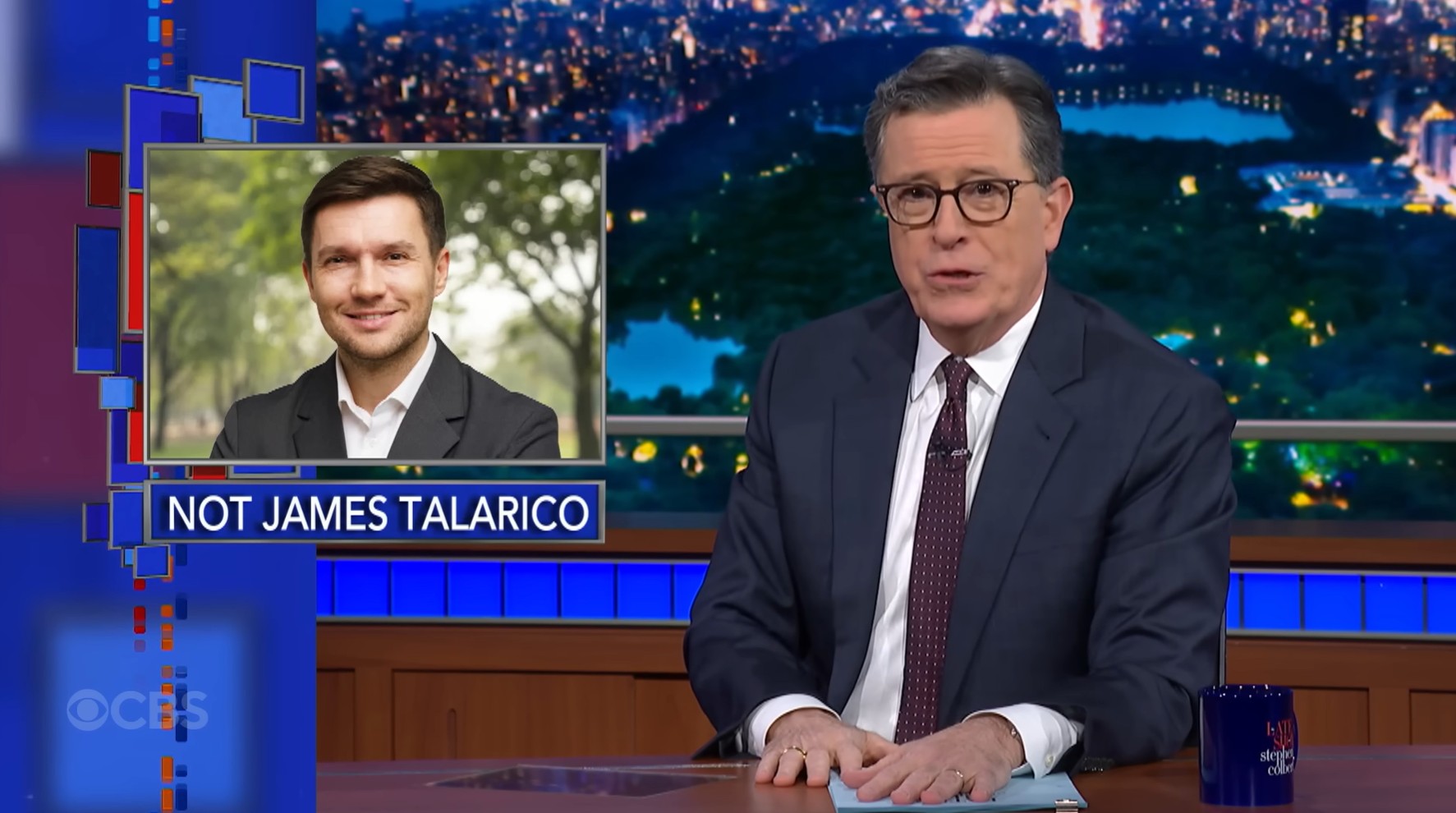
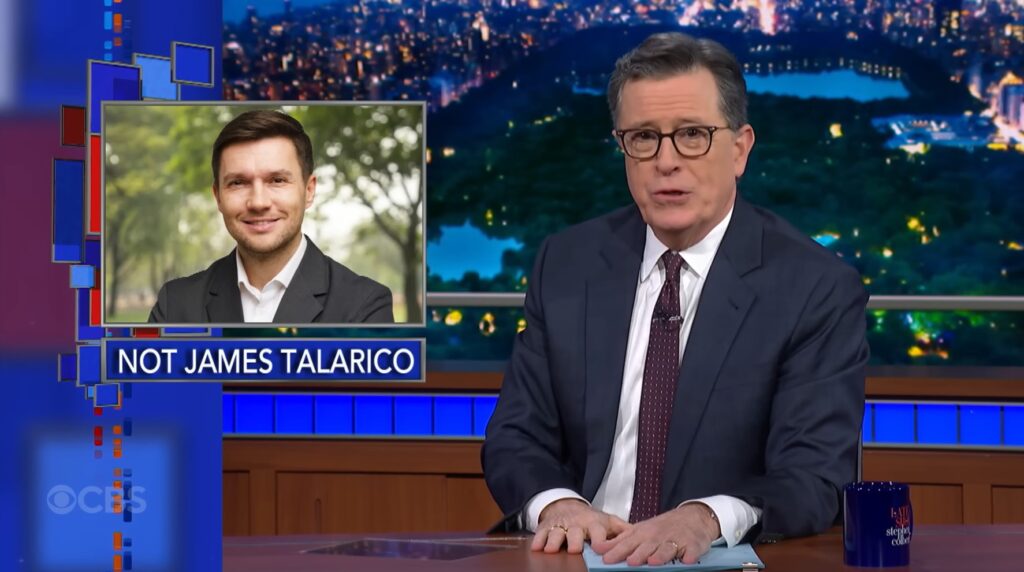
On Monday night, Stephen Colbert did something late night hosts almost never have to do: he took a guest interview that had already been taped and moved it off broadcast television.
Colbert said CBS would not let him air his sit-down with Texas Rep. James Talarico, a Democrat running for U.S. Senate, because network lawyers feared the interview could trigger the Federal Communications Commission’s “equal time” requirement. The interview went up on YouTube instead, where the FCC’s broadcast rules do not apply.
CBS, for its part, pushed back on the idea that it “banned” anything, saying it provided legal guidance and options for compliance.
That clash, between a comedian’s show and a network’s lawyers, is the news hook. But the larger story is why this happened now, what it says about the direction of broadcast regulation in an election year, and why a relatively young Texas lawmaker has suddenly become a national character in a fight over who gets to speak, where, and under what rules.
The rule behind the “refusal”
The “equal time” rule is shorthand for Section 315 of the Communications Act. The basic idea is straightforward: if a broadcast station gives airtime to one legally qualified candidate, competing candidates can request “equal opportunities” on comparable terms.
It is also easy to misunderstand.
The rule is not the old Fairness Doctrine, which was about balancing viewpoints on controversial issues and was eliminated decades ago. Equal time is narrower: it is about candidate access.
Historically, a big part of how broadcasters lived with Section 315 was by leaning on exemptions for “bona fide” news programming, including news interviews. That is why candidates can appear on certain interview formats without automatically detonating a pile of make-good requests.
What changed, and what made Colbert’s situation combustible, is that the FCC’s Media Bureau issued new guidance in January that warns stations they may trigger equal opportunities when they air certain late-night and daytime talk show segments involving candidates.
In other words, the risk calculus shifted. A network lawyer can look at an interview with a candidate and see not just a booking, but a compliance problem that could ripple into programming, ad sales, and affiliate headaches.
Reuters reported that FCC Chair Brendan Carr denied “censoring” the interview and argued there were ways to comply, including offering time to other candidates or limiting the broadcast footprint where the candidate is running.
But even if you accept that narrow framing, the effect is hard to miss: when rules get tighter or enforcement feels more aggressive, the path of least resistance for a broadcast network is often to say no.
That is the quiet power of regulation. It does not always have to ban speech. Sometimes it just makes speech expensive.

Why this matters beyond one interview
If you are a viewer, the practical question is not “who won the argument, Colbert or CBS?” It is what happens next.
Late-night television has long functioned as a civic side door. It is where politicians try to seem human. It is also where they sometimes get asked the kind of questions that feel taboo in formal settings because the tone is looser and the audience is broader.
When that space shrinks on broadcast, the conversation does not disappear. It migrates.
It moves to platforms like YouTube, podcasts, and social media, which are less constrained by broadcast-era rules. That can be liberating. It can also be fragmenting, because the shared mass audience is smaller and more siloed, and the incentives for virality are different than the incentives for public accountability.
So the Colbert-Talarico dust-up is a story about one candidate and one show. It is also a story about the United States slowly renegotiating where civic speech “counts,” which institutions are willing to host it, and what kind of pressure makes them back away.
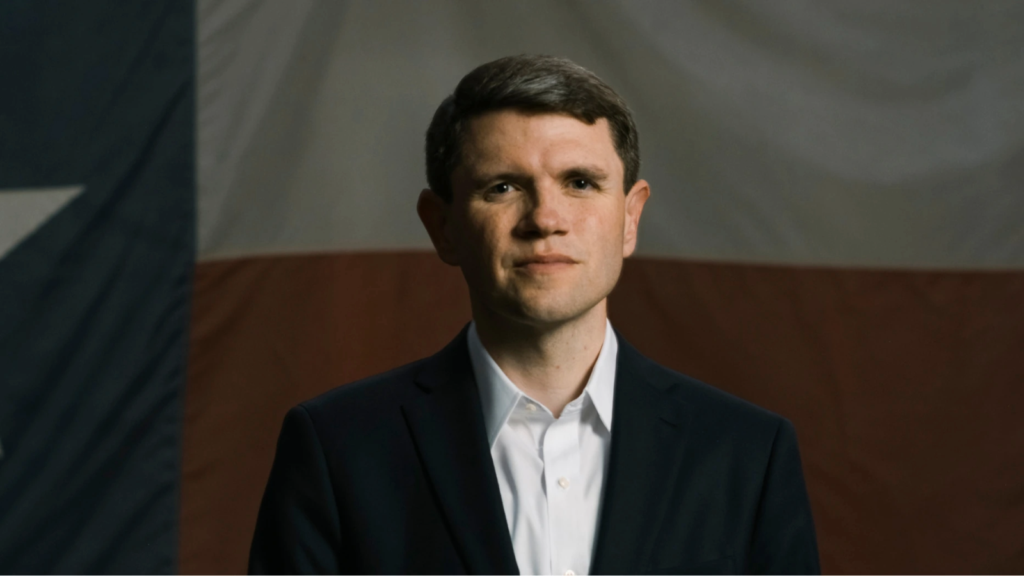
Who is James Talarico?
If you only encountered James Talarico through this controversy, you might assume he is a national figure. In formal terms, he is not, at least not yet.
He is a member of the Texas House of Representatives, first elected in 2018, and he represents a district in the Austin area (House District 50).
His official biography and public reporting emphasize three things:
- He is a former public school teacher.
- He has a résumé that signals both Texas roots and elite education, with degrees from the University of Texas at Austin and Harvard.
- He has woven faith into his public identity in a way that is unusual for a Democrat in a state where religion is often treated as Republican terrain. The Texas Tribune has described how his “progressive take on Christianity” helped make him an online sensation, and how he is trying to translate that into electoral strength.
That last point matters because it helps explain why he is suddenly everywhere.
Talarico does not just argue policy. He argues moral frames.
When debates over public education collide with culture-war politics, he often positions himself as someone fluent in the language of faith and skeptical of attempts to turn government into a tool for religious performance. Clips of him challenging Republican bills, including measures tied to religious displays in classrooms, have circulated widely online.
Whether you agree with him or not, that is a potent mix in Texas politics: a Democrat who talks like a teacher, sounds like a preacher, and aims his critique at the idea that power should get to define what “real” faith looks like.
What he is actually trying to do in Texas
Talarico’s current committees and roles underscore the lane he is running in.
Public education is central. His official bio highlights his teaching background, and he has been active in education debates at the Capitol. The Texas Tribune’s directory entry also lists him serving on committees that touch education and workforce development, reinforcing a focus on schools and economic mobility.
Now he is campaigning for a bigger office, and with that comes a strategic challenge that is older than modern media: how do you introduce yourself to millions of voters when the gatekeepers of attention are cautious, crowded, or hostile?
Sometimes you buy ads. Sometimes you build a grassroots machine. Sometimes you get lucky with a viral moment.
And sometimes the fight over whether you are allowed to appear on television becomes the viral moment.
That is what happened here.
The human stakes that get lost in the legalese
Equal time rules were designed with a reasonable fear in mind: that a powerful broadcaster could tilt an election by giving one candidate access and denying it to others.
But what counts as “access” has always been a moving target.
A formal candidate debate is clearly political. A campaign ad is clearly political. A sit-down on a comedy show sits in the gray zone where culture and politics overlap, and where the public often learns about a candidate before it ever reads a platform.
When regulators or networks treat that gray zone as a compliance minefield, the people who feel it first are not lawyers. It is viewers who lose a venue where politics is explained in plain language, and candidates who do not have the money or the institutional backing to dominate more expensive channels.
That does not mean every candidate deserves a late-night booking. But it does mean the cumulative effect of risk-avoidance can favor the already-famous, the already-wealthy, and the already-saturated.
This is where the Colbert story loops back into the larger theme of modern politics: the fight is not only over votes. It is over distribution.
Who gets a microphone that reaches beyond their own followers?
Competing explanations, and what we can say with confidence
There are two broad interpretations of what happened.
Interpretation one: this is censorship by pressure.
Colbert has argued that the network’s decision reflects a climate in which media organizations preemptively restrict themselves because they fear political blowback. Others have pointed to the FCC’s posture and the way it can reshape behavior without issuing a direct order.
Interpretation two: this is conservative lawyering in a murky regulatory environment.
CBS says it offered legal guidance, not a political veto. The FCC chair has framed the situation as a question of compliance choices, not government suppression.
Both can be true in practice. A company can be motivated by legal caution and still produce an effect that looks and feels like self-censorship. The key point is not the purity of intent. It is the incentives.
If the safest move is to keep candidates off broadcast entertainment formats, the culture will adapt quickly. Networks will book fewer candidates. Shows will take fewer risks. Campaigns will route their messaging elsewhere.
And that is precisely why this story is bigger than one interview.
The bottom line
James Talarico did not become a national name solely because of his platform. He became a national name because the rules of broadcast politics, rules most Americans never think about, suddenly snapped into view on a stage built for jokes.
That is the irony of this moment: in an era where trust in institutions is thin, one of the few places where politicians still face broad, unscripted exposure is late-night television. When that exposure becomes legally radioactive, the public square does not become fairer. It becomes narrower.
Talarico’s rise, and the controversy that propelled it, is a reminder that the battle for democracy often looks like a battle over paperwork. But the real stakes show up later, when a country realizes it has fewer shared places to argue, to question, and to understand what is being done in its name.