-
-
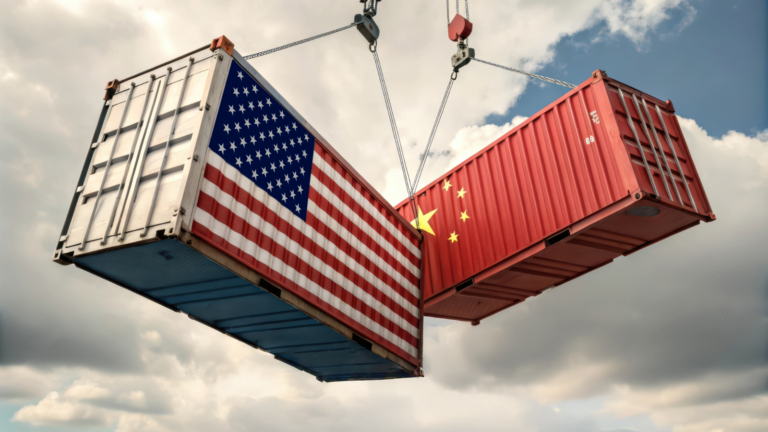
The Supreme Court Just Declared Trump’s Tariffs Illegal. So Why Is There Still a 15% “Global Tariff” on the Table?
The Supreme Court just blew up one of Trump’s biggest tariff weapons, ruling that his IEEPA “emergency powers” tariffs were imposed under the wrong law. Then came the whiplash: a newly announced global tariff that could reach 15%. If that sounds contradictory, it isn’t, at least not legally. Here’s what tariffs really are, which ones the Court struck down, how a president can still launch new ones, and why the fallout shows up in your prices, your job, and your ability to plan.
-
Iran in 2026: The currency crash, the uranium clock, and the thin line between a deal and a war
Gunfire at a mourning ceremony. A currency that can lose credibility overnight. A nuclear program that has turned diplomacy into a countdown. Iran is slipping into a moment where every lever of pressure is being pulled at once, and each move carries the risk of lighting the next fire. As protests flare and the state responds with force, Washington weighs strikes, Tehran hardens its stance, and the world is left staring at a single, terrifying question: which breaks first, the talks, the regime, or the region?
-
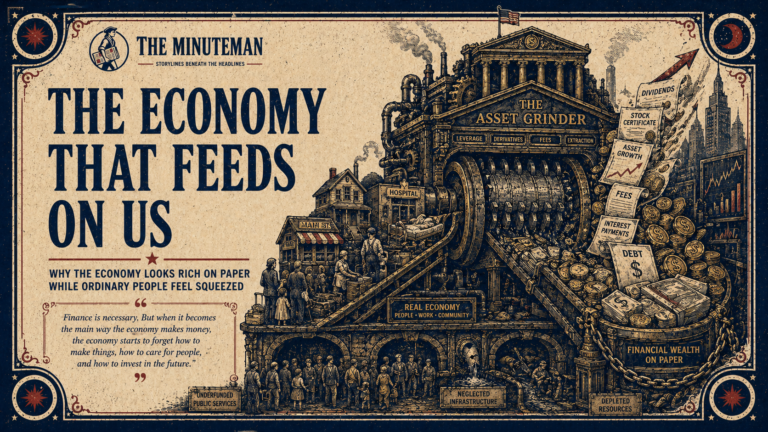
Why The Economy Feels Broken: It’s Over-Financialized
A starter home is no longer just a starter home. It is a yield target. A hospital is no longer just a hospital. It is a balance-sheet play. Over-financialization is the quiet shift that turned the basics of life into tradable “assets,” rewarding extraction over creation and leaving the real economy thinner, pricier, and more fragile. This piece explains how we got here, who benefits, who pays, and what it would take to rebuild an economy that makes things again instead of just making fees.
-
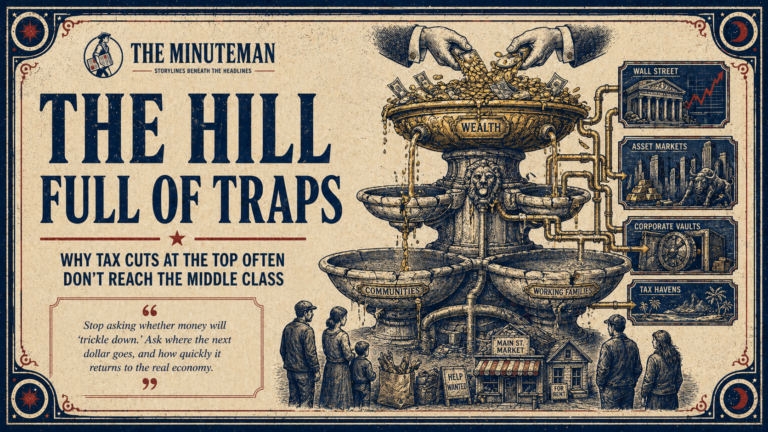
The Myth of Trickle-Down Economics: Why the Next Dollar Doesn’t Reach the Middle Class
Cut taxes at the top, the argument goes, and the benefits will flow down through investment, jobs, and higher wages. Everybody wins. But the economy does not run on promises. It runs on what people do with the next dollar. That is what “marginal propensity to consume” really means. When a family living close to the edge gets an extra thousand dollars, it tends to become tires, groceries, a dentist appointment – in other words, it becomes a paycheck for another person. When a household that is already comfortable gets that same thousand, it is more likely to become savings. The money does not vanish. It just takes a route that does not have to pass through a local cash register.
-
Did Trump Save You Money in His First Year?
Steel prices jump in two weeks. A clinic shuts its doors. Washington calls it “savings.” But when the deficit shrinks because tariffs bring in record revenue and programs get cut, whose balance sheet improves, and whose gets crushed? In Trump’s first year, the federal ledger looked better on paper. For many families and small businesses, life got more expensive, more uncertain, and harder to navigate.