-
-
-
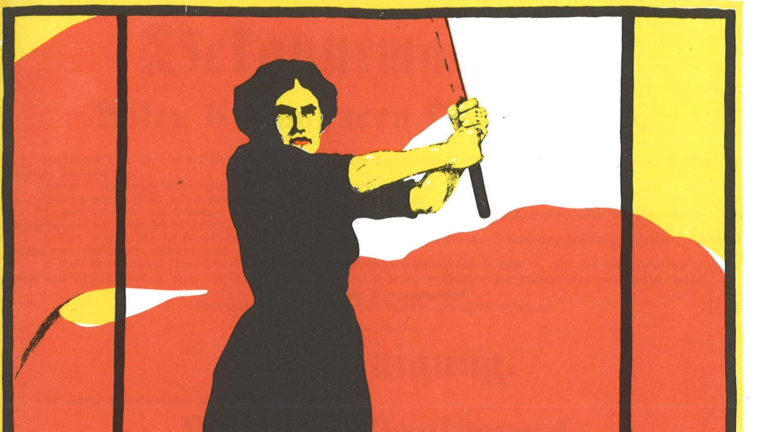
International Women’s Day Began as a Fight for Power. In a Time of War, It Could Be One Again
International Women’s Day did not begin as a feel-good celebration. In the United States and abroad, it grew out of labor struggle, demands for political power, and, during World War I, resistance to armed conflict and the systems that fueled it. As conflict again deepens in the Middle East, that history reminds us that celebrating women has often meant also recognizing their role in resisting violence, demanding peace, and challenging the forces shaping the world around them.
-
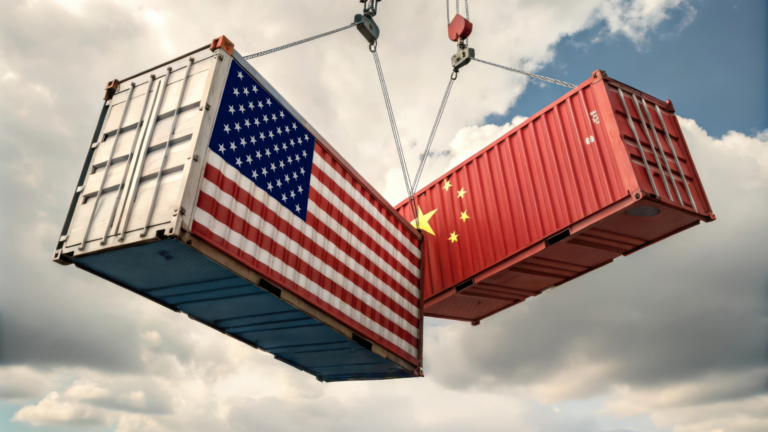
The Supreme Court Just Declared Trump’s Tariffs Illegal. So Why Is There Still a 15% “Global Tariff” on the Table?
The Supreme Court just blew up one of Trump’s biggest tariff weapons, ruling that his IEEPA “emergency powers” tariffs were imposed under the wrong law. Then came the whiplash: a newly announced global tariff that could reach 15%. If that sounds contradictory, it isn’t, at least not legally. Here’s what tariffs really are, which ones the Court struck down, how a president can still launch new ones, and why the fallout shows up in your prices, your job, and your ability to plan.
-
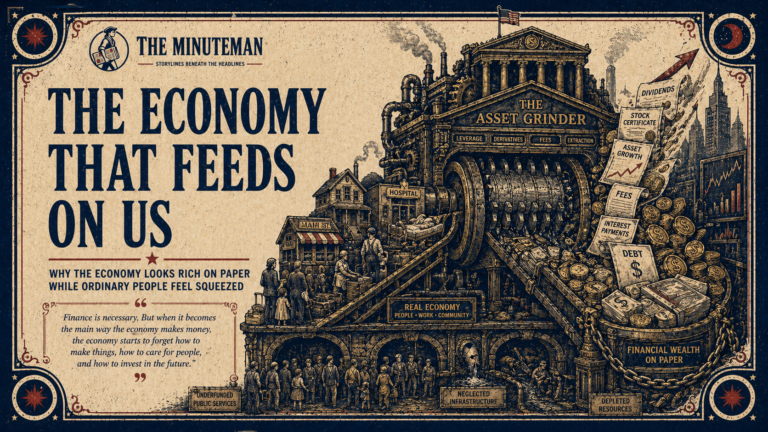
Why The Economy Feels Broken: It’s Over-Financialized
A starter home is no longer just a starter home. It is a yield target. A hospital is no longer just a hospital. It is a balance-sheet play. Over-financialization is the quiet shift that turned the basics of life into tradable “assets,” rewarding extraction over creation and leaving the real economy thinner, pricier, and more fragile. This piece explains how we got here, who benefits, who pays, and what it would take to rebuild an economy that makes things again instead of just making fees.
-
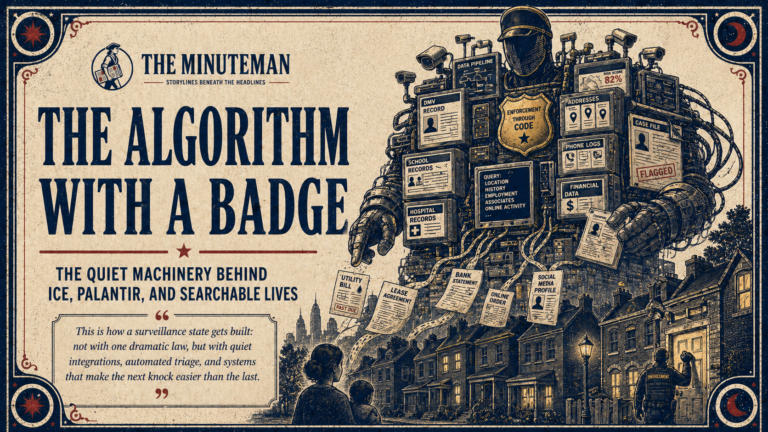
How a Surveillance State Gets Built: Palantir, ICE, and Your Private Data
Your private data was never meant to become a map to your front door, but that’s what happens when government power meets private-corporation tooling built for speed and scale. Palantir helps ICE stitch together ordinary records, turn them into searchable profiles, and move those profiles through workflows that end in targeting and arrests, often far beyond the “worst of the worst” story the public gets sold. This is how a surveillance state gets built: not with one dramatic law, but with quiet integrations, automated triage, and systems that make the next knock easier than the last. The question isn’t whether the technology is impressive, it’s what it makes possible.
-
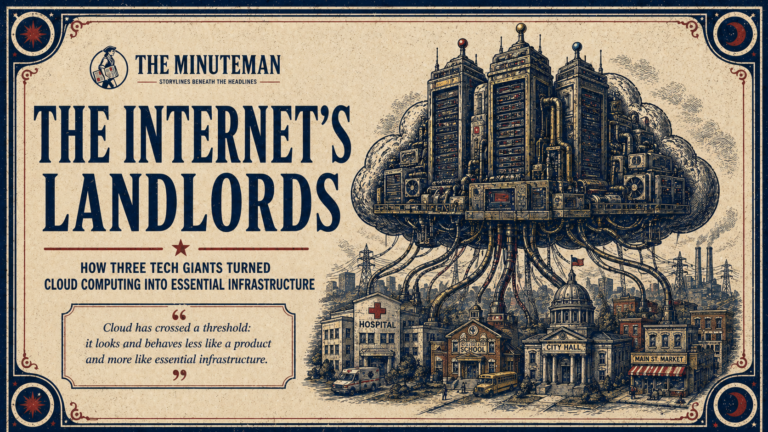
The Cloud Is America’s New Critical Infrastructure. Three Companies Run Most of It.
Beneath the apps and headlines sits a quieter reality: more of modern life now runs on three cloud platforms. Amazon, Microsoft, and Google didn’t “take over the internet” so much as win the race to build the world’s default plumbing, and their scale brings real benefits, from security to speed. The real worry isn’t whether these companies are good or bad. It’s how much everything else depends on them, and how hard it is to leave once your data, software, and workflows are stitched into the same stack.
-
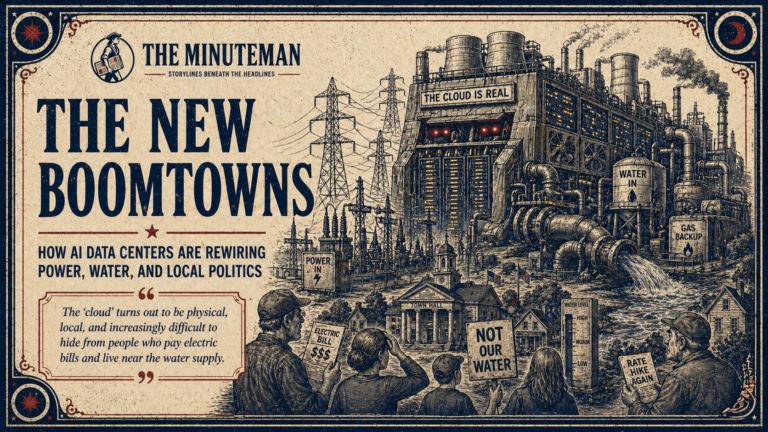
The New Boomtowns: How AI Data Centers Are Rewiring Power, Water, and Local Politics
AI data centers look like ordinary warehouses, but inside they function like nonstop factories for computation, turning electricity into heat at a scale that forces tough local tradeoffs. In fast-growing clusters, they can strain power grids, push expensive upgrades, and intensify fights over who pays, while cooling demands raise new questions about water use in places already under stress. The debate is no longer abstract. It is about infrastructure, rates, reliability, and whether the AI boom gets built in a way that communities can actually live with.
-
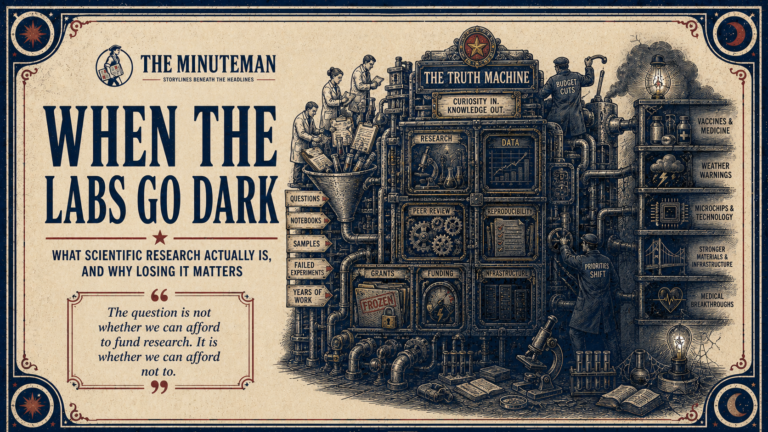
When the Labs Go Dark: What Scientific Research Actually Is — And Why Losing It Matters
In late January 2025, a communications pause rippled through the National Institutes of Health and into the hidden machinery of American science, delaying reviews, stalling timelines, and forcing researchers to make decisions in the dark. Most of us only see research when it becomes a cure, a technology, or a warning that keeps us safe. This is the story of what research actually is, why it takes so long, and what quietly breaks when the system that produces truth is treated like a switch that can be flipped on and off.
-
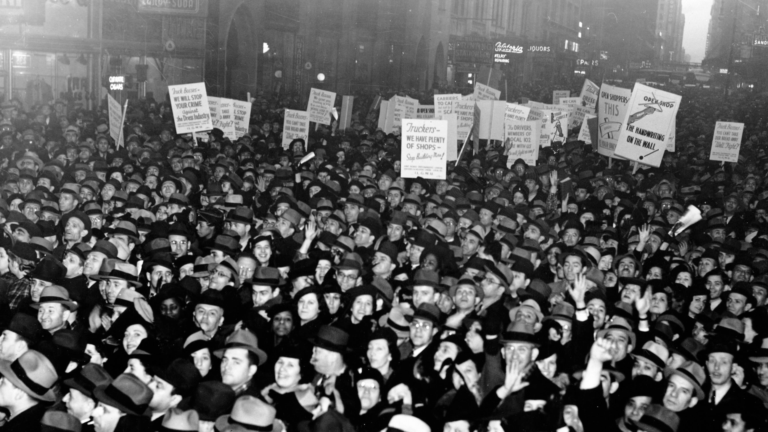
How Labor Unions Changed Work in America
From deadly factory fires to Hollywood walkouts, American unions have long been at the heart of battles over what work is worth and who gets a say. This story follows their rise, the protections they helped win, the forces that weakened them, and why workers and employers are still clashing over organized labor’s future.
-
-
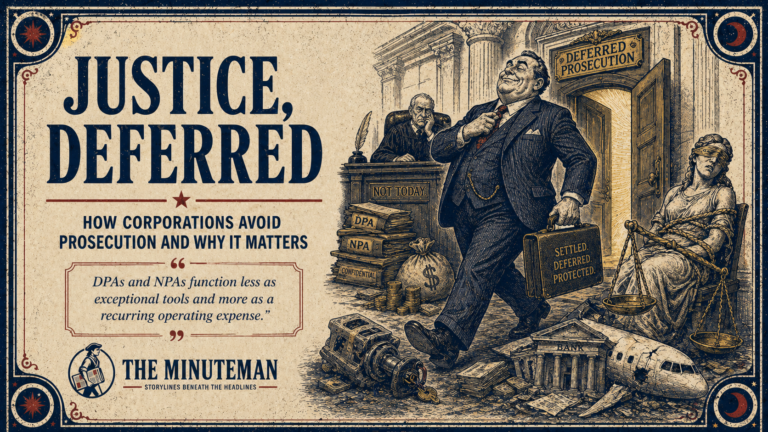
Deferred Prosecution Agreements: How Corporations Avoid Prosecution—and Why It Matters
Deferred Prosecution Agreements—known as DPAs—were meant to help small, first-time offenders get a second chance. Instead, they’ve become the corporate world’s ultimate loophole. From GM’s deadly ignition switches to HSBC’s cartel money laundering and Boeing’s fatal aircraft failures, this investigation explores how billion-dollar companies repeatedly avoid prosecution, pay manageable fines, and move on—while victims are left without justice.