-
-
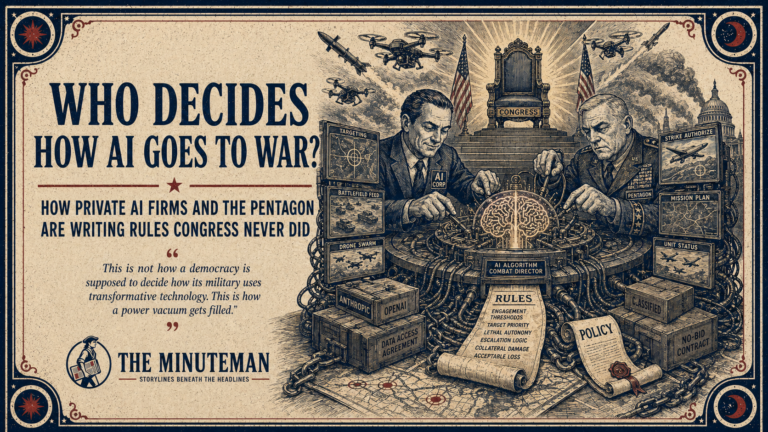
Who Decides How AI Goes to War? Right Now, Nobody You Elected.
On February 27, 2026, the Pentagon blacklisted Anthropic for refusing to give the military unrestricted access to its AI. Hours later, OpenAI signed a deal on nearly identical terms. The media wants you to pick a hero and a villain. But the real story isn’t about which company is right. It’s about why two private companies were negotiating the rules of AI in warfare at all, and where Congress has been while the most powerful technology since nuclear energy gets handed to the most powerful military on earth with no binding laws governing how it’s used.
-
-
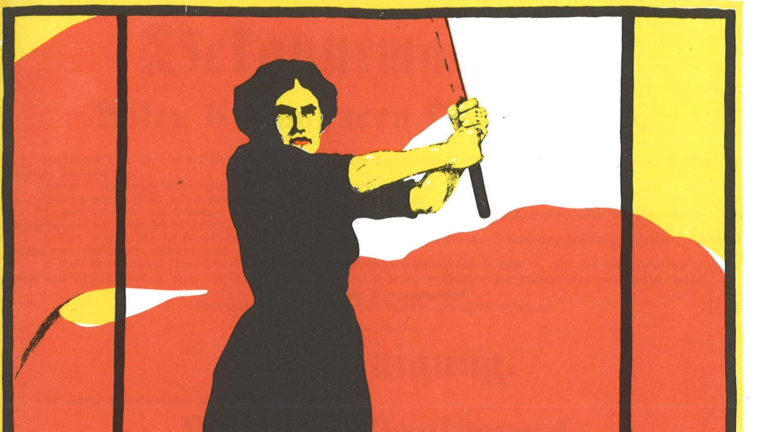
International Women’s Day Began as a Fight for Power. In a Time of War, It Could Be One Again
International Women’s Day did not begin as a feel-good celebration. In the United States and abroad, it grew out of labor struggle, demands for political power, and, during World War I, resistance to armed conflict and the systems that fueled it. As conflict again deepens in the Middle East, that history reminds us that celebrating women has often meant also recognizing their role in resisting violence, demanding peace, and challenging the forces shaping the world around them.
-
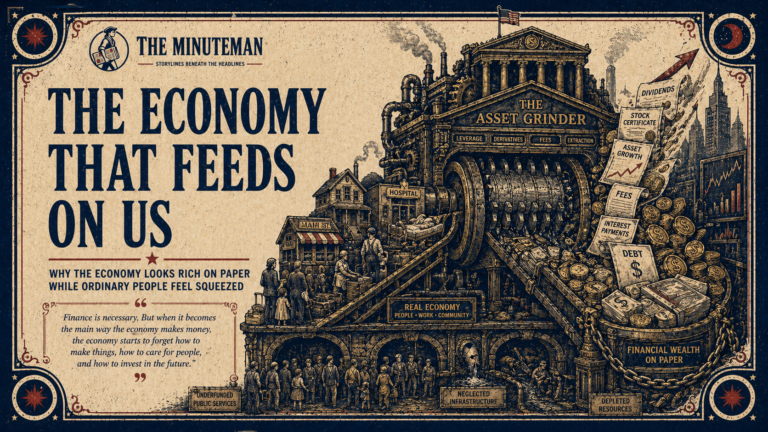
Why The Economy Feels Broken: It’s Over-Financialized
A starter home is no longer just a starter home. It is a yield target. A hospital is no longer just a hospital. It is a balance-sheet play. Over-financialization is the quiet shift that turned the basics of life into tradable “assets,” rewarding extraction over creation and leaving the real economy thinner, pricier, and more fragile. This piece explains how we got here, who benefits, who pays, and what it would take to rebuild an economy that makes things again instead of just making fees.
-
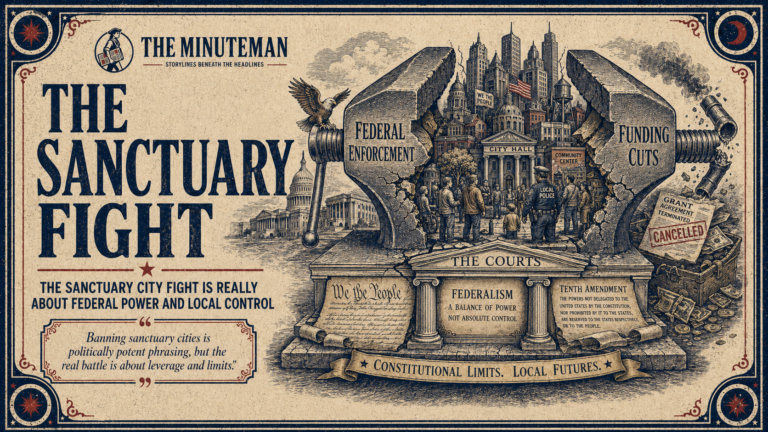
Sanctuary Cities, Federal Power, and the Real Fight Behind the “Ban”
Sanctuary city policies are often framed as politics, but they are really a bet on public safety. Research generally finds these policies do not increase crime, and in some cases reduce it. But Washington keeps coming back to the same pressure points, grants, lawsuits, and threats of withheld funding, and the same constitutional question: how far can the federal government go to compel local cooperation before courts say it has crossed the line?
-
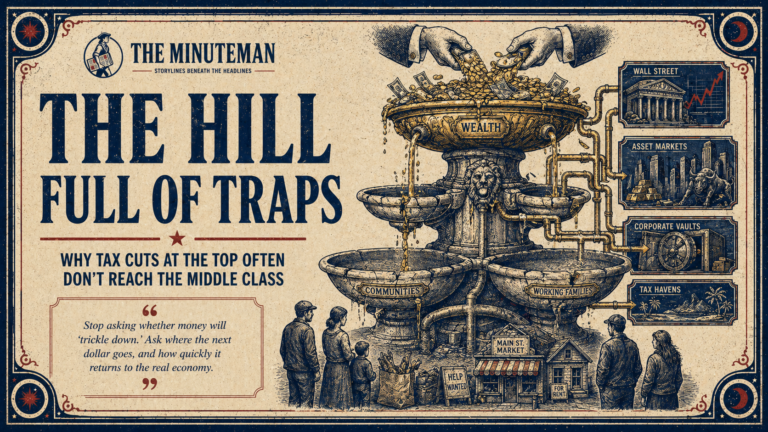
The Myth of Trickle-Down Economics: Why the Next Dollar Doesn’t Reach the Middle Class
Cut taxes at the top, the argument goes, and the benefits will flow down through investment, jobs, and higher wages. Everybody wins. But the economy does not run on promises. It runs on what people do with the next dollar. That is what “marginal propensity to consume” really means. When a family living close to the edge gets an extra thousand dollars, it tends to become tires, groceries, a dentist appointment – in other words, it becomes a paycheck for another person. When a household that is already comfortable gets that same thousand, it is more likely to become savings. The money does not vanish. It just takes a route that does not have to pass through a local cash register.
-
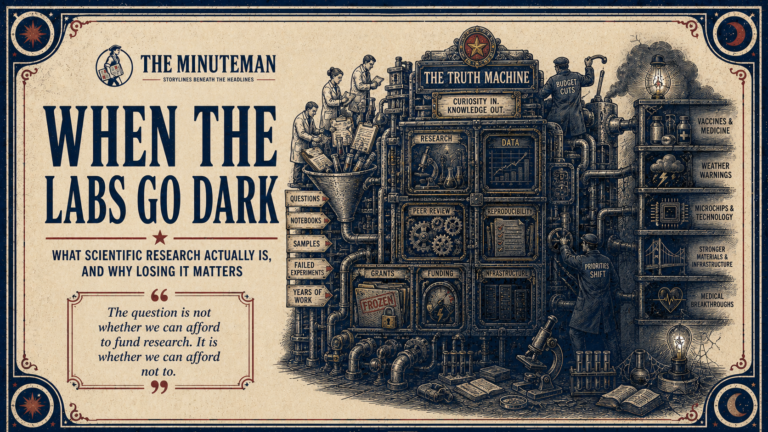
When the Labs Go Dark: What Scientific Research Actually Is — And Why Losing It Matters
In late January 2025, a communications pause rippled through the National Institutes of Health and into the hidden machinery of American science, delaying reviews, stalling timelines, and forcing researchers to make decisions in the dark. Most of us only see research when it becomes a cure, a technology, or a warning that keeps us safe. This is the story of what research actually is, why it takes so long, and what quietly breaks when the system that produces truth is treated like a switch that can be flipped on and off.
-
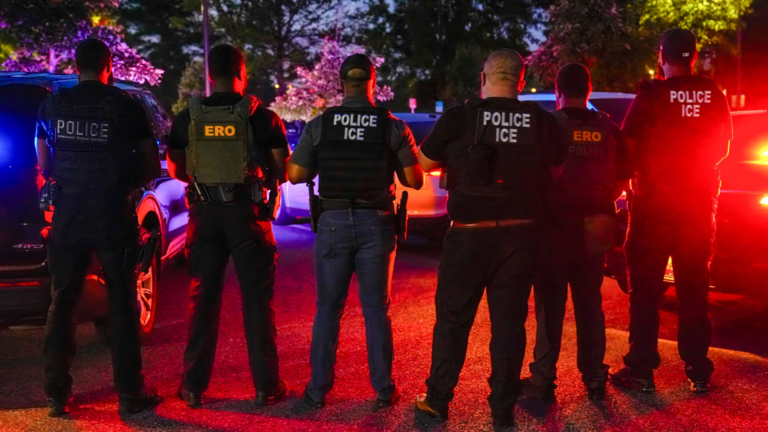
ICE and the Immigration Equation: How Targeted Priorities Can Restore Trust—and Strengthen a Country Built by Newcomers
The immigration system is strained—and how ICE enforces the rules can either build trust or deepen fear. Immigration can still be one of America’s biggest long-term advantages, but only if enforcement supports a credible, fair process. So what should ICE do to protect public safety and system integrity without undermining that advantage?
-
-
-
What a Fed Interest Rate Cut Means: Risks and Rewards for Borrowing, Markets, and Your Wallet
When the Federal Reserve cut interest rates by 25 basis points, it wasn’t just a financial headline — it was a shift that will ripple through borrowing, spending, markets, and the broader economy. Understanding how and why rates move reveals who benefits, who feels the squeeze, and how these subtle changes steer the nation’s economic future.